
Article Text
Please comply with the laws and regulations of the country in question regarding the possession and use of drugs.
Learning Advocacy and Civil Movement Strategies from Jennawae of Normal Canada
table of contents
- Introduction
- From the moment you feel something is wrong, you can change society.
- In other countries, "speaking up" is considered a respectable job.
- These activities carry risks, especially in Japan.
- The situation in the United States
- The situation in Europe
- The situation in Taiwan
- The situation in Canada
- Purpose and structure of this article
- What exactly is "advocacy"? Let's confirm the definition.
- Terminology Clarification
- Theories and strategies that support citizen movements
- Pathway Model of Influence
- Harvard Kennedy School Framework
- The feeling that something is morally wrong can be the starting point for advocacy.
- The story of Canada, which took 38 years to change its laws.
- A long journey from the 1980s to 2018
- Overall Timeline
- Why did it take 38 years? The five obstacles we faced.
- The deep-rooted nature of social stigma against drugs.
- Headwinds under a conservative government (2006-2015)
- The difficulty of cross-sectoral institutional reforms
- Building a legal foundation through multiple constitutional lawsuits
- Generational values gap
- Effects of interactions from multiple angles
- [Exclusive Interview Part 1] From Civil Disobedience to Medical Legalization (1980-2008)
- introduction
- Civil disobedience strategy (1980s-present)
- Question
- Reply
- The Victoria Cannabis Club: A movement that began with compassionate care (1996–present)
- Victoria Cannabis Buyers Club (VCBC)
- Gradual transformation of the legal status of VCBC's activities
- A series of legal battles led to the birth of the medical marijuana program (2003).
- Case law R. v. Parker (2000)
- Case law R. v. Hitzig (2003)
- Case law Allard v. Canada (2016)
- Policy shifts arising from pain management
- The difficulties under a conservative government: the struggle against "tough on drugs" policies
- Interview Part 1 Summary
- Three strategic points of Canadian civil rights movements
- "Civil disobedience" as a catalyst for social change
- Let's review the conditions for "civil disobedience" once again.
- Applicability and limitations in Japan
- Alternative approaches
- You don't have to do everything at once.
- Why did we start with medicine?
- What is the "salami tactic" of gradually undermining someone?
- Exploring approaches that are easily applicable and accepted in Japan.
- Utilizing "Constitutional Litigation and Legal Measures"
- Differences between the Canadian and Japanese judicial systems
- Why Legal Action Still Matters
- Examples of legal action in Japan
- How to create a successful civic movement
- Total
- Comment:
From the moment you feel something is wrong, you can change society.
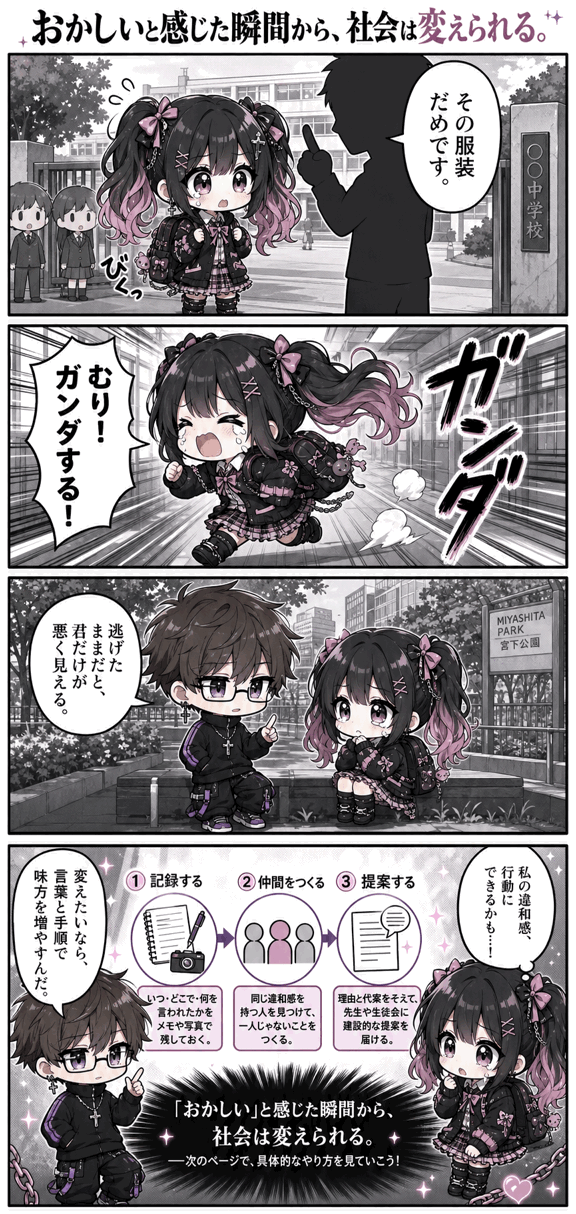
Have you ever thought, "Isn't this strange?"
But many people stop there. They think, "There's nothing I can do," or "Speaking up won't change anything."
In fact, in countries where the concept of "law" is deeply rooted, there is a proper system for bringing that "wrong" thing to society There is more than just demonstrations and petitions. It's about taking data and talking to policymakers.Advocacy and Lobbying parliament are common rights in many democratic countries, including the United States, the EU, Australia, and Taiwan.
In other countries, "speaking up" is considered a respectable job.
Western countries have inherited legal thought and culture that dates back to ancient Greece, approximately 2500 years ago. While Japan also had laws based on Confucianism, such as the Ritsuryo system, before the Meiji Restoration, Japan only truly adopted modern Western law during the Meiji period. Even using the enactment of the Civil Code in 1896 as a baseline, it has only been about 130 years. (Note that planning for institutional development began around 1869, in the early Meiji era, making it approximately 160 years since then.)
Therefore, Japan lacks laws defining lobbying and advocacy, and there remains an atmosphere that "political speech is risky." In contrast, in countries with advanced legal systems, citizen participation in policymaking, including boycotts and strikes, is widely understood as a legitimate right supported by modern constitutionalism and the idea of popular sovereignty.
This historical background includes the ideal of citizen participation, symbolized by the French Revolution and the Declaration of the Rights of Man.
As an extension of these ideas, advocacy and lobbying are positioned as institutional means to make democracy function.Established areas of specializationIt is developing into this.
These activities carry risks, especially in Japan.
Before we dive into the details of citizen movements in this article, let us first explain some important risks you should understand.
UN warns of serious threat of online violence against women activists
Civil activism poses particular risks, such as online violence against women, and in JapanAnonymous culture also leads to abusive criticismTherefore, this article is intended to provide information, but safety comes first and we do not recommend any extreme activities.
"The growing use of social media and AI is driving an increase in 'technology-facilitated violence against women.'" UN Women report "Tipping Point" (2024)
Even if done for the public good, criminal penalties and damage claims can still be incurred.
In 2022, a former employee of Osaka Ohsho was convicted of fraudulent obstruction of business after making a accusation on social media, and in October 2024, was sentenced to one year in prison. Even if the facts are for the public interest, there is a risk of criminal penalties and damage claims if procedures and conditions are not followed.
Thus, civic activism in Japan carries at least two risks.
FirstSocial risksFurthermore, violence on social media is a serious problem, and activists are particularly vulnerable to organized harassment.
SecondLegal risksEven if the accusation is made for the public good, you may still face criminal penalties and be ordered to pay damages. When deciding whether to take action, please prioritize your own safety above all else.
The situation in the United States
In the United States, lobbying is an activity that is subject to registration and disclosure under the law. Lobbying Disclosure Act Or, in 2007 Honest Leadership and Open Government Act As a result, certain lobbyists and lobbying organizations are required to register and disclose their activities. Actual registration and disclosure information is publicly available at US House Lobbying Disclosure.
Under this system, private entities such as think tanks, NPOs, industry associations, and corporations employ experts and strategically develop policy recommendations and interest representation activities through research, public relations, and lobbying of parliament.
The situation in Europe
In the EU, the European Commission introduced the Transparency Register in 2008, which has since developed as a joint system with the European Parliament. Currently, it operates as a system to ensure transparency in influence activities within the policy-making process. The official registration system can be found at the EU Transparency Register. For more information, please visit the European Commission's official website (Transparency Register). Under this system, diverse entities such as civil society organizations, businesses, industry associations, and think tanks conduct policy-making activities based on the premise of ensuring transparency.
The situation in Taiwan
In Taiwan, the Lobbying Act was enacted in 2007. This law mandates registration and disclosure of information regarding lobbying activities directed at policymakers.
This is due to Taiwan's transition from an authoritarian regime to a democracy in the 1980s and 90s. During the democratization process, political systems were reviewed, and the lobbying system was established as one of the systems aimed at improving transparency in policymaking.
The situation in Canada
In Canada, lobbying is defined by law, and a registration and regulatory framework is in place. The current legal basis is Lobbying Act (Canadian Lobbying Act) That's right. Furthermore, Canada's federal lobbying regulations have evolved from their predecessor, the Lobbyists Registration Act, which came into effect in 1989.
In Canada, which is detailed in this article, a civil movementIt took 38 years to fundamentally change the country's policies.We have a proven track record.
Purpose and structure of this article
This article will explore the history of NORML Canada, a civil rights organization focused on drug policy and human rights protection, over its approximately 38-year history, and the experiences of those who have actually been involved in the movement in Canada.Exclusive interviews with key peopleBased on this, we provide the following:
- Practical knowledge: Specific methods such as civil disobedience, constitutional litigation, and stakeholder strategies
- Theoretical Support: Views of American researchers and experts, and Japanese legal scholars
- International comparison: Comparative analysis with global success stories
- Practical Guide: Concrete steps you can start taking in Japan today
Attention point
This interview isThe voices of those who actually changed policyYou will gain practical knowledge that has worked in the field, rather than just textbook theory.
What exactly is "advocacy"? Let's confirm the definition.
Terminology Clarification
First, let's clarify the main concepts used in this article regarding citizen movements—groups of citizens seeking change—and the means by which they communicate their will to policymakers.
| the term | Definition | Example : |
|---|---|---|
| Advocacy | General organized activities to promote specific policies or social change | Campaigns, awareness-raising activities, research and media strategies |
| Lobbying | Activities that directly engage with policymakers, legislators, and government officials. | Petitions, meetings with lawmakers, and submission of policy proposals |
| Civil Disobedience | The nonviolent and peaceful disobedience of laws that are perceived as unjust | The practice of illegal but morally justifiable actions such as sit-ins. |
| Grassroots Movement | A grassroots movement in which ordinary citizens participate voluntarily | Signature campaigns and study sessions in local communities |
| Constitutional Litigation | A lawsuit alleging that a law violates the Constitution | Procedures for seeking constitutional rulings or remedies on the grounds of human rights violations |
In this article, we will consider citizen movements as a broad category, and treat advocacy as one means of conveying those wills to policymakers.
Theories and strategies that support citizen movements
Pathway Model of Influence
The Theory of Change Institute, which specializes in evaluating nonprofit organizations, Six pathways (theories) leading to policy changeI am organizing this.
| Pathway | Outline | Characteristics | Timeline |
|---|---|---|---|
| Large Leaps | A groundbreaking research or a symbolic event can drastically change policy. | Strong evidence impact | short |
| Policy Window | Seizing the moment when the political situation, public opinion, and awareness of the issues align to bring about policy change. | Timing dependent | short |
| Coalition (formation of an alliance) | Citizen groups, researchers, and companies collaborate to expand their influence. | Network type | long |
| Power Politics | Direct policy decisions through politicians, political parties, and power structures | Political power and lobbying | short |
| Messaging and Frameworks | Changing how we talk about the problem and reshaping public opinion and values | Media Narrative | long |
| Grassroots movement | Political pressure is created through citizen mobilization and social movements. | ボトムアップ | long |
Harvard Kennedy School Framework
Professor Marshall Ganz of the Harvard University School of Government points out that effective advocacy only yields results when three elements are in place: "stories that generate empathy through personal experiences (e.g., patients themselves talking about problems with the treatment system)," "a strategy that outlines a concrete roadmap to legal reform and budgetary measures," and "an organizational structure that allows volunteers and experts to share roles and continue their activities."
Three Elements of Effective Advocacy
Marshall Ganz, Harvard Kennedy School
- Story: An emotional story
- Strategy: A realistic goal-achievement plan
- Structure: Sustainable organizational structure
important: these areThey are not mutually exclusive, and combining them increases their effectiveness international success.
The feeling that something is morally wrong can be the starting point for advocacy.
Have you ever felt, "Isn't there something wrong with this law?", but then thought, "But there's nothing I can do"? Many people can probably relate to that experience. However, that very feeling of "something's wrong" can be the first step towards changing the system.
There are several entry points to bring about change within the Japanese legal system. One of them isconstitutional litigation.
constitutional scholarNobuyoshi AshibeThis argues that constitutional litigation is not merely a means of seeking redress for individual rights, but rather has an institutional function of maintaining and developing the overall constitutional order.
Nobuyoshi Ashibe - Theory of Constitutional Litigation
In other words, a lawsuit initiated by a single party can trigger changes in the systems of society as a whole.
Another option isLobbying parliamentIn Japan, many people feel a sense of unease about "directly influencing politics," and this stems from a structural problem: the lack of lobbying laws in Japan makes such activities opaque. However, it is a legitimate democratic procedure for citizens to express their opinions to the legislature on issues that directly affect their lives. This culture is not yet as deeply rooted in Japan as it is in Europe and the United States, which is why it is something we need to be mindful of.
The Canadian "constitutional litigation strategy" introduced in this article may be applicable in Japan as well, based on Article 11 (Enjoyment of Fundamental Human Rights), Article 13 (Respect for the Individual), and Article 25 (Right to Life) of the Constitution. This is not a story from a distant country, but a method that can be referenced in Japan today, so please read on.
The story of Canada, which took 38 years to change its laws.
A long journey from the 1980s to 2018
The evolution of drug policy in Canada goes beyond mere institutional reforms,A historic turning point in which civil movements in developed countries fundamentally rewrote national policiesIt is highly regarded internationally as an example of how years of persistent advocacy and social dialogue by citizens have culminated in comprehensive institutional reforms spanning criminal policy, public health, and economic policy, and is even considered one of the pinnacles of advocacy in modern democracy.
Overall Timeline
Why did it take 38 years? The five obstacles we faced.
The deep-rooted nature of social stigma against drugs.
In Canada in the 1980s, just like in Japan today,Strong prejudice against marijuana usersFor example, there have been cases where simply having a history of drug use has put people at a disadvantage when applying for employment or public positions, and there has been a tendency to label people as "potential criminals," so even if they are using drugs for medical purposes, it can lower their social standing.
Influence and stigma
Even medical cannabis users may engage in behaviors such as concealing or justifying their use to avoid prejudice and misunderstanding from those around them.
Satterlund, Lee & Moore, “Stigma Among California's Medical Marijuana Patients” (2015)
Headwinds under a conservative government (2006-2015)
What is a conservative government?
This government is based on the idea of "cherishing the existing social structures and traditions" (conservatism). It tends to prioritize stability and continuity over rapid change.
- Prioritizing "stability over change"
- They value family, country, and tradition.
- We also call for a gradual and cautious approach to institutional reforms.
On the other hand, excessive caution can be criticized for "postponing necessary reforms."RegressionIt is called and is used to mean "an attitude of not wanting to move forward."
Japanese conservative government
Since the conservative merger in 1955, the Liberal Democratic Party (LDP) has generally held power in Japan. The LDP is generally considered a conservative party, and one of its fundamental principles is to value existing social systems and traditions. There have been periods when non-LDP governments have been in power, such as the Hosokawa administration in 1993 and the Democratic Party of Japan administration from 2009 to 2012, but these were all short-lived, and the LDP has since returned to power.
The Conservative Party, which held power from 2006 to 2015,A "tough stance on drugs"We strongly emphasized this.
- Passage of comprehensive crime bill (Safe Streets and Communities Act/Bill C-10)
- Strengthening sentencing, including the introduction of minimum legal penalties for certain drug offenses.
- Stricter enforcement of the Medical Marijuana Program (MMPR)
During this period, policies aimed at increasing punishment were implemented, making it extremely difficult for citizen movements to achieve policy changes.
The difficulty of cross-sectoral institutional reforms
What was needed was a comprehensive system reform that spanned criminal policy, public health, and economic policy, so rather than rushing into a complete overhaul,The approach of "medical use" is one that easily gains social understanding.It had to be started in stages.
| Stage | Target | Social acceptance (overview) |
|---|---|---|
| Phase 1 (2001) | For medical use (patients with severe symptoms) | high |
| Phase 2 (2013-2016) | Expansion and review of the medical system | 中 |
| Phase 3 (2018) | Legalization including for personal use | medium to low |
このThe phased approach is known in political science as "salami tactics."This is a classical method called
Building a legal foundation through multiple constitutional lawsuits
The accumulation of lawsuits filed by individual citizens eventually became a force that rewrote the laws of the entire country.
"In Canada,Congress rarely changes laws aloneIn many cases, a law is amended only after a constitutional lawsuit has determined that the law unduly restricts human rights.
Jennawae Cavion, NORML Canada 2025
Major precedents
- R. v. Parker (2000)Ontario Court of Appeals recognizes the right to use medical marijuana.
- R. v. Hitzig (2003)Federal court rules government health care program unconstitutional
- Allard v. Canada (2016): Ruling Recognizing the Right to Personal Cultivation
[Regarding the notation of case law]
In Japan, court precedents are generally referred to by names such as "Case XX," but in common law countries like Canada, criminal cases are referred to as "R. v. XX." "R" stands forRegina (Queen)or sending us a message onRex (King)It means and represents the nation (The Crown). "v." means versus, that is,State/Prosecutor vs. DefendantThis illustrates the following structure.
Generational values gap
In the 2010s,The rise of the younger generationwithChanging global trendsThis provided a tailwind. In fact, in the United States, Colorado and Washington legalized private-use marijuana in referendums in 2012, and legalization has continued to spread since then. (Reference: US GAO)Internationally, Uruguay became the first country in the world to legalize the production, sale, and use of the drug under state control in 2013. (Reference: Reuters)Canada legalized cannabis nationwide on October 17, 2018, by enacting the Cannabis Act. (reference: Government of Canada).
Furthermore, a Pew Research Center poll found thatThe younger the generation, the more supportive they are of legalizationThis has been consistently demonstrated. This "generational gap" is considered one of the factors that leads to an overall increase in support over time (generational change increases political feasibility).
| generation | Year of birth | Support for marijuana legalization (Pew / data compiled around 2017-2018) |
|---|---|---|
| Millennials | 1981-1996 | 71 % |
| Gen X | 1965-1980 | 66 % |
| Baby Boomers | 1946-1964 | 56 % |
| Silent Generation | 1928-1945 | 35 % |
Effects of interactions from multiple angles
The reasons for the success of the Canadian civil society movementRather than using a single method, we implemented multiple strategies simultaneously.There is a particular thing.
| Strategic Category | Specific method | Main Actors | Advantages |
|---|---|---|---|
| civil disobedience | Operating an unlicensed dispensary or openly using cannabis | Compassion Club, Individual Activists | Stimulating social debate |
| legal means | Constitutional litigation, administrative litigation | Patient groups and human rights lawyers | Establishing legal legitimacy |
| Political lobbying | Lobbying and petitioning lawmakers | Organizations such as NORML CANADA | Emergence on the policy agenda |
| Public opinion formation | Media Strategy, Patient Testimonials | Patients themselves, support groups | Eliminating stigma |
| scientific basis | Medical research, statistical analysis | University researchers and doctors | Scientific support for policies |
| International cooperation | Introducing overseas cases and participating in international conferences | Advocacy Organizations | Utilizing global trends |
important
They areRather than one organization shouldering everything, roles should be divided and collaboration should be promoted.This was made possible by
[Exclusive Interview Part 1] From Civil Disobedience to Medical Legalization (1980-2008)
introduction
This time, I was involved in civic activities in Canada.key personWe spoke to him.
Despite the sudden request, we are truly grateful that you understood the purpose of this project and willingly agreed to be interviewed.
In this interview, we will delve not only into the company's philosophy, but also into the conflicts and strategies it faced at the time, and how it interacted with society.
NORML Canada, a successor to NORML which was founded in the United States in 1970, has been active at the Canadian federal level since the late 1970s. While NORML in the United States operated through provincial branches and networks, NORML Canada is an independent organization that covers all of Canada, working towards the common goal of drug law reform through public education, research, and legislative and judicial advocacy.
Part 1 covers the "path to medical legalization" from the 1980s to around 2008.The project will revolve around the following:
Interviewee profile
Jennawae Cavion, Executive Director, NORML Canada
- At the forefront of civil society movements and policy advocacy in Canada
- As Executive Director of NORML Canada, I lead organizational management, policy recommendations, and dialogue with the government and parliament.
- Involved in multiple legal battles over civil rights and institutional reforms as both a party and an advocate.
- He continues to engage in advocacy activities, spanning from grassroots movements to institutional lobbying.
About NORML Canada
-
Official site:

- Twitter (X): @NORMLCanada
- Instagram (※18 years and older): @normlcanada
Civil disobedience strategy (1980s-present)
Question
Thank you very much for taking the time out of your busy schedule to be with us today. First of all, I would like to express my deepest respect for the work you have done up until now.
Please tell us about any particularly pivotal events or major challenges in the civil rights movement during the period from 2003, when the medical marijuana system was introduced, to 2018.
Reply
In 2003, Canada introduced its first medical cannabis system, after approximately a decade of civil disobedience.
Civil disobedience here means The act of openly breaking a law that one believes to be unjust, and trying to change the law itself by having many people do the same.This is one of the major factors that led to the acceptance of cannabis in Canada.
originallyMedical marijuana serves the goal of the civil rights movement: full legalization of marijuana.It had a strategic aspect.The AIDS epidemic of the 1980s accelerated everything.People with life-threatening conditions, such as cancer patients and AIDS patients, actually had a desperate need for cannabis.
The AIDS epidemic didn't launch the medical cannabis movement, but it did.An iconic example of civil disobedienceAt the time, the government did not officially recognize it. However, people"My right to medical care is more important than burdensome and unreasonable laws."I thought so.
The Canadian civil society movement met these exact conditions: they acted openly, without hiding, without violence, and at the risk of arrest, all to protect the constitutional values of "life and health."
Experts' perspectives and the theoretical background of "civil disobedience"
American political philosopherJohn RawlsIn his book, "A Theory of Justice,"Civil disobedience as a legitimate means of resistance in a democratic societyWe position it as such.
"Civil disobedience is a public, nonviolent, conscientious yet political act contrary to law, usually done with the aim of bringing about a change in the law or policies of the government." John Rawls, A Theory of Justice, revised ed (Harvard: Harvard University Press, 1999) at 320
Important conditions
- publicness: Don't hide, ask questions to society
- non-violence: No physical violence
- conscientiousness: Based on moral conviction
- Acceptance of legal consequences: Be prepared to be arrested and punished
Canadian civil society movements have sought toIt was perfectly fulfilling.
Furthermore, Rawls's "A Theory of Justice" is not limited to American thought; it is also widely shared as a theoretical premise in Japanese legal philosophy. For example, in Hirohide Takigawa, Makoto Usami, and Yuhiro Oya's "Philosophy of Law" (Yuhikaku), Rawls and "A Theory of Justice" are treated as separate chapters, and the examination of fundamental concepts such as justice, liberty, equality, and human rights is developed with Rawls's theory as the central focus.
Furthermore, the intellectual foundation of Japanese society has historically been rooted in a Confucian tradition that emphasizes the virtue and fairness of those in power. The idea that admonition and correction can be justified when those in power act morally is, in a different form, similar to the normative thinking presupposed by Rawls's theory of justice, in that it evaluates power based on a "just social order."
Therefore, the perspective of understanding civil disobedience as a legitimate political act in a democratic society is not a unique overseas idea, but can also be positioned as an extension of Japanese legal and philosophical discussions and even historical values.
The Victoria Cannabis Club: A movement that began with compassionate care (1996–present)
In fact, just yesterdayVictoria Cannabis Club celebrates its 30th anniversaryThe club was founded in 1996 and is located in British Columbia, Western Canada.
Originally,"Compassionate care" for people at the end of life or in serious difficultiesIt started from. Many peopleI went to court prepared to be arrested., practicing what we call "peaceful civil disobedience."
I never did anything violent, I was just trying to do the "right thing."
here,The problem that "law" and "morality" do not necessarily coincideJust because it's the law doesn't mean it's right, it just means it was supported in the past at that time.
Back thenThere are many unlicensed dispensaries (cannabis dispensaries)And, especially in the early days, they provided marijuana to their members.
Case study: Details of the Victoria Cannabis Club
Victoria Cannabis Buyers Club (VCBC)
Victoria Cannabis Buyers Club (VCBC) is a community-based access center for healthcare users, located in Victoria, British Columbia, Canada. Gagnon et al. (2023) case study (VCBC founded in 1996)
| Establishment | 1996 |
|---|---|
| Place | Victoria, British Columbia |
| People involved in the launch | Ted Smith (reported as founder) Times Colonist (cites Ted Smith as founder) |
| Membership | For reference, some local media have reported that the number of people in recent years has exceeded 8,000 (estimated, based on reports). Capital Daily (membership has grown to more than 8,000) |
| Main activities (typical examples) | Membership-based access model, consultation and information provision, community support, policy and social outreach, appeals to institutional restrictions and litigation response, etc. Times Colonist (reporting on lawsuit against state) |
Gradual transformation of the legal status of VCBC's activities
- Around 1996 to 2001: Because the activities began before the federal health care access system was established, they were classified as illegal under the system (before the system was introduced). Canada Gazette (MMAR was established and organized in 2001)
- 2001-2018: Even though medical systems (such as MMAR) existed, "unlicensed dispensaries (non-system access points)" like VCBCs were not officially part of the system, and legal tensions continued.
- Since 2018: The Cannabis Act has been enacted, leading to stricter state regulations and enforcement. It has been reported that VCBC has become subject to crackdowns, administrative measures, and seizures for "unlicensed sales." Times Colonist (reporting on the seizure and execution by state authorities)
The strategic significance of the "Compassion Club" model
This model isThis is not merely an illegal act, but an initiative that takes various considerations to gain social understanding.
| Strategic Elements | Specific content | Advantages |
|---|---|---|
| Target Selection | Limited to terminally ill and seriously ill patients | High moral legitimacy and difficult to criticize |
| Membership system | Not for general sale, only for those with medical needs | Avoiding criticism of "profit-making" |
| transparency | Open to the media and accepting interviews | Stimulating social debate |
| Collaboration with medical professionals | Cooperation from doctors and nurses | Guarantee of medical validity |
| Community Building | Mutual support among patients | Visualizing the voices of those involved |
A series of legal battles led to the birth of the medical marijuana program (2003).
By 2003, enough legal battles had accumulated that the law was changed.
As a result,Allow medical programs "only in the most serious cases"The decision was made that...
moreoverAround 2008, the scope of treatment expanded beyond fatal diseases like cancer and AIDS to include serious chronic lifelong illnesses like arthritis and multiple sclerosis, as well as pain management..
In this backgroundCanada's opioid crisis in the early 2000sThere was also the overprescription of powerful painkillers, causing serious harm to many people.Cannabis gained attention as a more natural and non-fatal option.
Analysis of major precedents
Case law R. v. Parker (2000)
OutlineTerry Parker, an epileptic, claims that marijuana is the only way to control his seizures. He was arrested for cultivating it for personal use, but the Ontario Court of Appeals ruled that the government's denial of medical access was unconstitutional.
Key points of the ruling
"The prohibition on the possession of marijuana constitutes an infringement of the right to liberty and security of the person." Ontario Court of Appeal, 2000
影響This was the direct trigger for the federal government to introduce a medical marijuana program.
Case law R. v. Hitzig (2003)
Outline: Several patients have filed a lawsuit alleging that the government's medical program is essentially dysfunctional (doctors refusing to prescribe drugs, supply shortages).
Key points of the ruling
"The absence of a legal supply of marijuana was inconsistent with the principles of fundamental justice." "It infringes upon the freedom and physical safety of those who need medical marijuana because there is no legal source." Hitzig v. Canada, 2003 CanLII 30796 (ON CA). The Court held that the absence of a legal supply of medical cannabis violated section 7 of the Canadian Charter of Rights and Freedoms.
影響: The government is improving the system and reforming it into a more effective program.
Case law Allard v. Canada (2016)
Outline: Patients protest against government ban on personal cultivation and forcing purchases only from licensed producers.
Key points of the ruling
"This system places patients in a position where they have to choose between their liberty and their health in order to have access to an adequate supply of medicine." Allard v. Canada, 2016 FC 236 Federal Court of Canada Justice Michael Phelan 2016-02-24
影響: The right to personal cultivation is recognized, expanding patient options.
Relationship to the opioid crisis
Policy shifts arising from pain management
Canada's opioid crisisImportant social contexts supporting cannabis legalization.| Years | Apparent opioid-related deaths / opioid toxicity deaths | Evidence link |
|---|---|---|
| 2016 | 2,861 | In the PHAC (Health Promotion and Chronic Disease Prevention in Canada, 2018) document, it states "2,861 in 2016". |
| 2017 | 3,987 | Canadian government (June 2018 infographic): "3,987 apparent opioid-related deaths in 2017" |
| 2018 | 4,588 | PHAC Health Infobase (National report: apparent opioid-related deaths) “4,588 deaths in 2018” |
Note: The above figures are based on indicators such as "apparent opioid-related deaths / opioid toxicity deaths" used in surveillance by PHAC (Public Health Agency of Canada). The numbers may fluctuate even within the same year depending on the time of compilation and the definition (accidental only / provisional value / final value after update).
Cannabis vs. Opioids
- Deaths due to cannabis overdose: 0 of(No records worldwide)
- Lethal dose of cannabis: A theoretically possible amount, but practically impossible to ingest.
The idea that medical cannabis could be a safer alternative to opioids in chronic pain management is supported by clinical research. For example, patient studies have shown that cannabis use may contribute to pain relief and significantly reduce the risk of opioid dependence and fatal overdose. Reiman et al. (2017), Cannabis as a Substitute for Opioid-Based Pain Medication Furthermore, Dr. Mark Ware's research at McGill University Health Centre (MUHC) includes an evaluation of the safety and effectiveness of cannabis in the management of chronic pain, indicating that this perspective is also being considered at the expert level. McGill University – Mark Ware Profile
Reasons why an opioid crisis did not occur in Japan
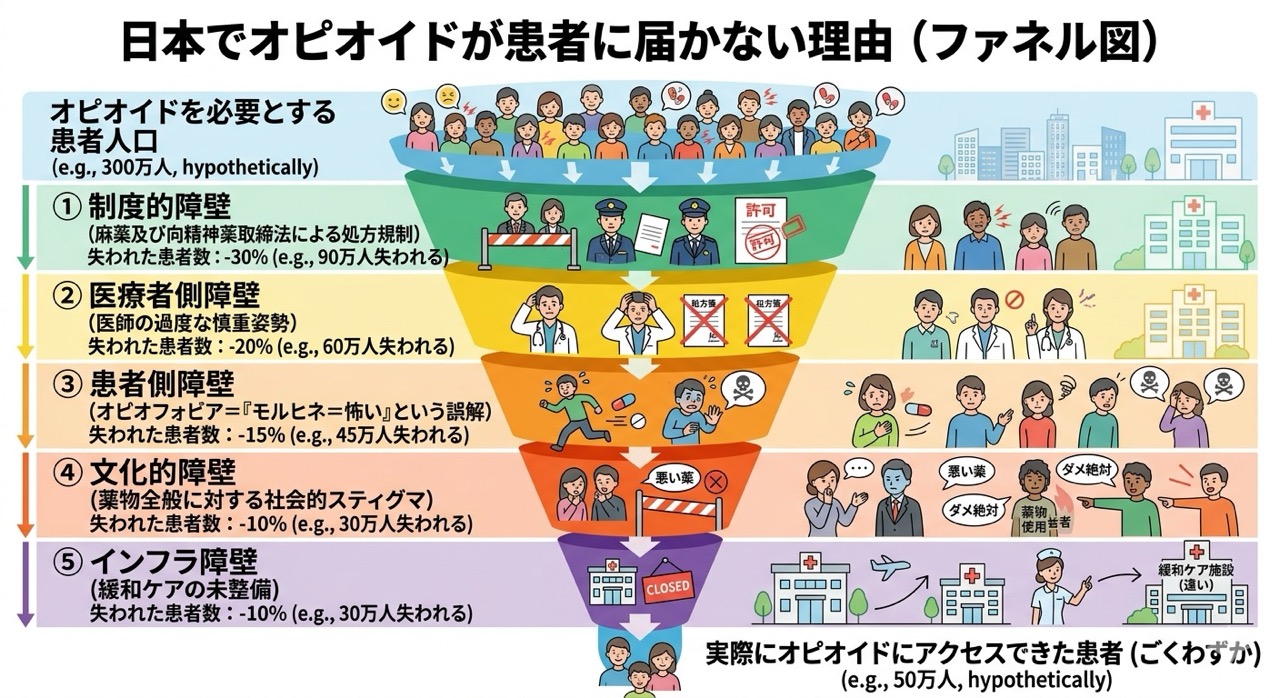
While the opioid crisis that has become severe in Canada and the United States is not outwardly occurring in Japan, a different problem has arisen: patients are unable to obtain the opioids they need.
| point of view | Message | Evaluation |
|---|---|---|
| Strict Prescription Regulations | Under the Narcotics and Psychotropic Substances Control Law, the prescription and management of medical opioids are strictly restricted. | Suppressing abuse and over-prescription |
| Doctors' cautious approach to prescribing | Due to concerns about the risk of addiction, doctors tend to be more cautious than necessary when prescribing opioids. | There is an aspect where it can restrict even patients who need it. |
| Social and cultural aversion | The strong social stigma against drugs in general is suppressing the abuse of prescription drugs. | While this contributes to curbing abuse, it can also cause patients to hesitate in seeking medical attention. |
| Lack of palliative care | Many cancer and chronic pain patients do not receive adequate pain management. | There is a risk that the patient's suffering will be left untreated. |
| Opiophobia (excessive fear of addiction) | The misconception that "morphine = scary" is widespread, preventing essential palliative care from reaching those who need it. | It can be a cause of unnecessary suffering. |
Important Perspectives
According to a nationwide survey in Japan by Hasegawa-Moriyama et al. (2024), for patients with advanced cancerThe supply of opioids in Japan remains remarkably low.Studies have shown that severe pain frequently persists even with low-dose prescriptions. Hasegawa-Moriyama M, et al. (2024) High prevalence of severe pain is associated with low opioid availability in patients with advanced cancer: Combined database study and nationwide questionnaire survey in Japan. Neuropsychopharmacology Rep, 44(3):502-511. PMID: 38735866
Drug-related harm and social change in Japan
In Japan, serious harm caused by pharmaceuticals, such as drug-induced AIDS, drug-induced hepatitis, and the thalidomide scandal, has triggered social change.
The difficulties under a conservative government: the struggle against "tough on drugs" policies
Back thenThe conservative government is in power, and they have a "tough on drugs" stance.This was strongly emphasized. As a result, a comprehensive criminal law was passed, and regulations regarding marijuana became even stricter.
However,Canada does not have a private prison system like the United States.It's all public.It's a situation we simply cannot comprehend: cannabis growers sometimes receive harsher sentences than criminals who actually harm children.
At this time, medical programs existed,In reality, it is extremely difficult to operateIt was almost impossible to get a doctor to prescribe it."The system exists but cannot be used"That's how it was.
Harper Conservative Government Policies (2006–2015)
major policy
| Years | policy | Message | 影響 | 外部 リンク |
|---|---|---|---|---|
| 2006 year~ | "Tough on Crime" Campaign | Policy direction and public relations strategy that put strict punishment at the forefront | Public opinion in favor of tougher penalties grows, and conflict over drug policies intensifies | |
| 2012 | Omnibus Crime Bill (Safe Streets and Communities Act, Bill C-10) | Strengthening of sentencing for various crimes, including drug offenses (expansion of minimum sentences) | Introducing minimum sentences for certain drug-related offences |
Justice Laws: SC 2012, c.1
Parliament of Canada: Bill C-10 |
| 2012 (enforcement) | Introduction of minimum sentences for cannabis cultivation (under certain conditions) | Setting minimum penalties according to the number of plants cultivated, commercial purposes, etc. | The minimum prison sentence will be fixed if profit-making or organizational activity is recognized. |
Controlled Drugs and Substances Act (Amendment)
*Minimum sentences are applied depending on the number of drugs, commercial intent, criminal record, etc. |
| 2013 | Medical Practice Change (MMPR) | Abolish individual cultivation in principle and switch to a licensed producer system | Patient access restructuring and legal disputes over system conformity |
Canada Gazette: SOR/2013-119
Allard v. Canada (2016 FC 236) |
| 2016 (Judgment) | Allard judgment | A complete ban on home cultivation for medical patients is ruled unconstitutional | Patients' cultivation rights are restored to a certain extent. | Federal Court: Allard v. Canada |
| 2015 (Political Shift) | Change of government due to legalization pledge | Liberal Party wins on promise of cannabis legalization | Policy shift to legalization in 2018 |
Paradoxical effect
These hardline policies have been criticized for leading to legal challenges from healthcare user groups and civil society organizations (e.g., the Allard case) and for increasing support for political parties advocating legalization. In the 2015 federal election, the Liberal Party won on a platform of legalization.
Advocacy groups turn adversity into opportunity
Under the Conservative government, the citizens' movement evolved its strategy.
Changes in tactics
| Traditional tactics | Evolution under a Conservative Government |
|---|---|
| blatant illegal activity | Working to the fullest extent possible within legal frameworks |
| Direct political criticism | Actively disseminating scientific data |
| Government lobbying | Approaching opposition parties and local governments |
| media exposure | Emphasis on the patient's personal story |
Important learnings
Headwinds are an opportunity to refine your movement.
Challenges in system design revealed by the "25-year gap"
For many years, the medical use of cannabis was not permitted in Japan, but in recent years, efforts to establish a system have finally begun.The amended Cannabis Control Act (Act No. 84 of 2023), enacted in December 2023.As a result, it is now legally possible to use pharmaceuticals containing cannabis-derived components (THC) under a licensing system.
However,Strict regulations on cannabis itself remain unchanged.Furthermore, even now, more than two years after the legal amendment, no cases of actual approval and use have been confirmed, and due to the lack of established review and supply systems,The system is not keeping up with the reality.continues.
This situation mirrors the transitional period Canada experienced in the late 1990s and early 2000s. Even then in Canada, despite court rulings granting access for medical purposes, the necessary systems and supply chains were not in place, limiting the opportunities for patients to actually access medical care.The system exists, but it's unusable.This situation arose, and patient groups and citizen groups took on the role of effectively bridging the gap between them.
On the other hand, in Canada, since 2006, the conservative government has...“Tough on Crime” policyThis was promoted, and in 2012, some drug crimes were...minimum sentenceWith the introduction of measures such as [specific examples of] [specific measures], criminal policy was actually moving in a stricter direction.
Still,The institutional framework will continue to be maintained for medical use and research purposes.Research by universities and research institutions also continued. A system was in place to seek corrections through constitutional lawsuits if there were any shortcomings in the system, and improvements were gradually accumulated.
This is a major difference from Japan. Even in Canada at the time, which adopted a strict punitive stance, access to medical care and research was still open. If you only compare the systems...A delay of approximately 25 yearsThat may be true, but it's only a superficial figure. From the perspective of research infrastructure, human resources, and accumulation of clinical data,The gap continues to widen without narrowing.Even if the system is changed, the research infrastructure and personnel that do not currently exist will not be created in a short period of time.It will take a long time to catch up with Canada.It is considered.
Interview Part 1 Summary
What we can learn from successful examples of citizen movements
- civil disobedienceNon-violent, open, and conscientious violation of the law is a powerful tool for stimulating social debate
- Salami Tactics: A step-by-step approach starting from an easily accepted angle (medical care)
- The importance of constitutional litigation: The primary mechanism by which courts encourage legal change
- social justificationA social crisis (the opioid crisis) provides a context that facilitates the acceptance of alternative policies.
- Dealing with adversity: Evolving strategies and fighting the long-term battle even under a conservative government
Three strategic points of Canadian civil rights movements
From the interview in Part 1:The universal principles that have enabled the Canadian civil society movement to succeedThese will be extracted. These are not limited to drug policy,Strategic insights applicable to any social change.
"Civil disobedience" as a catalyst for social change
Let's review the conditions for "civil disobedience" once again.
In Canadian civil rights movements, they acted openly, without violence, accepting the risk of arrest, resorting to civil disobedience after trying other means, and in order to protect constitutional values such as life and health.
Important: Four conditions for civil disobedience to be established
- Openness: Openly questioning society
- Non-violence: No physical violence
- Conscientiousness: based on moral conviction
- Readiness: Accepting the legal consequences
If even one of these is missing, it simply becomes an "illegal act."
Applicability and limitations in Japan
Important points to note in the Japanese cultural and legal context
in Japan,Civil disobedience is not recommended as a primary tactic..however,Understanding the concept is importantand"Strategic deviations" within the legal framework(e.g., actively utilizing gray areas) is worth considering.
| 要素 | Canada | Japan | Things to consider |
|---|---|---|---|
| A tradition of civil disobedience | Strong (influence of the civil rights movement, etc.) | Weak (emphasis on harmony) | Low social acceptance |
| The effectiveness of constitutional litigation | High (courts urge legal reform) | Limited (judicial negativity) | The direct impact on legal reform is small |
| Risk of arrest | Relatively low (light sentence) | High (99.9% conviction rate) | The personal sacrifices may be too great |
| Media handling | There is also a lot of sympathetic reporting | Critical reporting based on prejudice is prevalent. | Difficulty in forming public opinion |
Alternative approaches
Tactics that could work in Japan
- Utilizing "gaps in the system": Activities that are not clearly illegal, but are in a gray area
- Pilot Program: Experimental initiatives utilizing the special zone system, etc.
- Introducing overseas models: Presented as a "global standard" rather than "unique to Japan"
- Bringing experts and knowledgeable people to the forefront: Not a citizen movement, but an "expert recommendation"
You don't have to do everything at once.
Why did we start with medicine?
The spectrum of social acceptability
The Canadian movementThe most acceptable "end-of-life care"It started from here.
What is the "salami tactic" of gradually undermining someone?
In political science, big goalsA method of slicing thinly and achieving it little by littleThis is called the "salami tactic."
Canada's Salami Tactics
| Stage | Slice Thickness | Opposition strength | Probability of success |
|---|---|---|---|
| 1th section | Terminally ill patients only | weak | high |
| 2th section | Expanding to severe chronic diseases | moderate | Medium to high |
| 3th section | For minor illnesses and preventive purposes | Medium to strong | 中 |
| 4th section | Full coverage including for personal purposes | strong | Low → High (after generation change) |
Key Points: At each stageProceed while checking social acceptanceThis minimizes repulsion.
Exploring approaches that are easily applicable and accepted in Japan.
"Salami tactics" in the Japanese context
| Policy Areas | A more acceptable approach | Ultimate Goal |
|---|---|---|
| Labor deregulation | Gradual expansion from special provisions limited to highly skilled professionals | General deregulation |
| Education reform | From pilot schools in the STEM field to nationwide expansion | Review of the entire education system |
| Environmental policy | Comprehensive policies starting from areas with high economic impact | Carbon neutral |
| Immigration policy | Highly skilled professionals, international students, their families, and technical intern trainees | Multicultural Society |
The core of the strategy
Start from an entry point that is less likely to be opposed, and build up successful experiences.
Utilizing "Constitutional Litigation and Legal Measures"
Differences between the Canadian and Japanese judicial systems
| 要素 | Canada | Japan |
|---|---|---|
| judicial activism | Strong (courts actively encourage legal reform) | Weak (judicial passivity, respect for the legislature) |
| constitutional judgment | Frequent (emphasis on human rights) | Rare (governance theory) |
| Binding force of precedents | Strong (common law) | Weak (statutory) |
| public interest litigation | active | Few |
Why Legal Action Still Matters
Four Functions of Legal Instruments
- Direct function: Enforcing legal reform through court decisions
- Indirect functions: public opinion, media attention
- Symbolic function: Visualizing the legitimacy of the movement
- Educational function: Social sharing of legal issues
Functions ②③④ are effective in Japan as well.
Examples of legal action in Japan
success story
| Lawsuit | Result | 影響 |
|---|---|---|
| Hansen's Disease State Compensation Lawsuit (2001) | Plaintiff wins | Apology and Compensation Act enacted |
| Hepatitis B lawsuit (2011) | Plaintiff wins | Relief Act enacted |
| Same-sex marriage lawsuit (ongoing) | Judgment that some parts are unconstitutional | Changes in public opinion and debate over legal reform |
Failure(?) Case
| Lawsuit | Result | However... |
|---|---|---|
| Nuclear power plant injunction lawsuits (multiple) | In most cases, plaintiffs lost. | Contributing to raising public awareness and strengthening safety standards |
| Separate surnames lawsuit (2015) | Plaintiff loses | Subsequent changes in public opinion and intensified debate |
Lesson
Even if you lose in court, you can still "win" socially.
He argues that litigation is most effective not when it directly changes the law, but when it catalyzes social movements and changes public opinion.
Harvard Law School Michael Klarman

How to create a successful civic movement
Translating Canadian Strategies to Japan: Risks and Possibilities
The Canadian case can be seen as an integration of all these perspectives. Civil disobedience, constitutional litigation, lobbying, public opinion formation, and the accumulation of scientific evidence—all of these elements worked together organically to fundamentally change national policy over 38 years.
Rather than relying on a single method, Japanese citizen movements could have a greater impact by strategically combining these multi-layered approaches and adapting them to Japan's cultural and legal context.
- Details of the Matt Baron trial
- The Compassion Club's concrete activities and legal struggles
- The process of spreading social acceptance
- Final step towards full legalization in 2018
- Q&A for those who want to try it in Japan
Latest articles in the column
[Engineer Blog] Society also has technical debt.
Society also has its own technical debt: outdated systems, unrevised rules, and unverified assumptions. It's strikingly similar to what we see every day in the code we work with.
How to Build Professional Influence (3) The 7 Principles of Building Influence
Challenges continue even after legalization. Canadian activists share their real-world experiences and offer advice to those who are about to speak out.
How to Build Professional Influence (2): Successful Models of Citizen Movements
In Part 2 of the interview, we explore the process in Canada from 2008 to 2018, where legal battles, institutional reforms, and practical applications mutually influenced each other, ultimately leading to full legalization...

Comment:
There are no comments yet.