
Article Text
Please comply with the laws and regulations of the country in question regarding the possession and use of drugs.
Legal Regulations Confirmation: 2026-10-16 (Source: Ministry of Health, Labour and Welfare, "List of Controlled Substances" (as of December 12, 2024), e-Gov Law Search, "Act on the Regulation of the Cultivation of Cannabis" (Law No. 124 of 1948), e-Gov Law Search, "Act on Securing Quality, Efficacy and Safety of Pharmaceuticals, Medical Devices, etc." (Law No. 145 of 1960))
Page Version: 1.13
Conflict of Interest: The publisher of this page operates an e-commerce business selling cannabinoid products. This commercial relationship may influence information selection. This page is not intended to sell products and is created as a scientific reference resource. It does not constitute medical advice, a guarantee of product efficacy, a purchase recommendation, or encourage self-diagnosis.
Regarding Δ7-THC discussed on this page: Our store does not sell products containing Δ7-THC. If we plan to start handling such products, we will update this section at that time.
Δ7-THC (delta-7-tetrahydrocannabinol) is a derivative of Δ9-THC.Isomers that differ only in the position of the double bondThe side chain isIt remains a pentyl group (5 carbon atoms) and is no different from THC.It is said that
A key characteristic of Δ7-THC is that it is considered inactive. In a study investigating the relationship between the psychopharmacological activity of cannabinoids and the orientation of C9 substituents, Δ9-THC and Δ8-THC showed activity,Δ7-THC was classified as inactive.(Reggio et al. 1989).
Being inactive does not mean having no effect. This classification is based on the presence or absence of psychopharmacological activity, and does not indicate whether or not the substance binds to receptors or is metabolized.The metabolism of Δ7-THC has been studied in mice.(Harvey et al. 1980).
in Japan,Δ7-THC is listed as a controlled substance and is classified as a narcotic. The Ministry of Health, Labour and Welfare's list of controlled substances (as of December 12, 2024) includes:Δ7 THC NIt is listed as (Narcotic).Even substances considered inert are subject to regulation.
On this page, you can confirm the following points:
- Structural relationship with Δ9-THC
- The basis for considering it inactive, and the limitations of its interpretation.
- Legal status as a narcotic
- The scope of data disclosure from our own research and the limitations of how to interpret it.
table of contents
- Introduction
- Ingredient name/basic information
- Outline
- Chemical identity
- Basic chemical information
- Isomers and analogues
- Naturally existing
- Differences from market-circulated products
- Generation/Origin
- Biosynthesis
- Semi-synthetic/Synthetic
- History of discovery and research
- Analysis and identification
- Mechanism of action
- Receptors and enzymes
- Level of Evidence
- Research Status
- Areas of research
- Human research
- Data limitations
- Safety
- toxicity
- Drug interactions
- Targets requiring special attention
- Differences from other cannabinoids
- Legal status
- Japan
- History of regulations
- Overseas
- Market and social trends
- Independent research
- Survey method
- データセット
- Search Trends
- SNS trends
- WITH THE
- About this record
- Update conditions
- Reference Methods Notes
- Evidence grid
- Changelog
- Reference method
- FAQ
- What is Δ7-THC?
- What are the effects of Δ7-THC?
- Is Δ7-THC regulated in Japan?
- What are the current search trends for Δ7-THC?
- Is Δ7-THC safe?
- Are Δ5-THC and Δ7-THC the same?
- Do you know the chemical structure of Δ7-THC?
- Image Attribution
- Total
- Comment:
After you understand, take a look at related products.
You can easily find a list of products similar to the themes featured in the article. Use this to compare products and check their details.
Recommended products
CBD (Cannabidiol) VAPE Liquid
Taking a deep breath, you feel as if you have stepped into a coniferous forest.
Tax included ¥5,720
View product details
CBD (Cannabidiol) Menthol Vape Liquid
Ice Breath, Silent Gravity
Tax included ¥6,050
View product details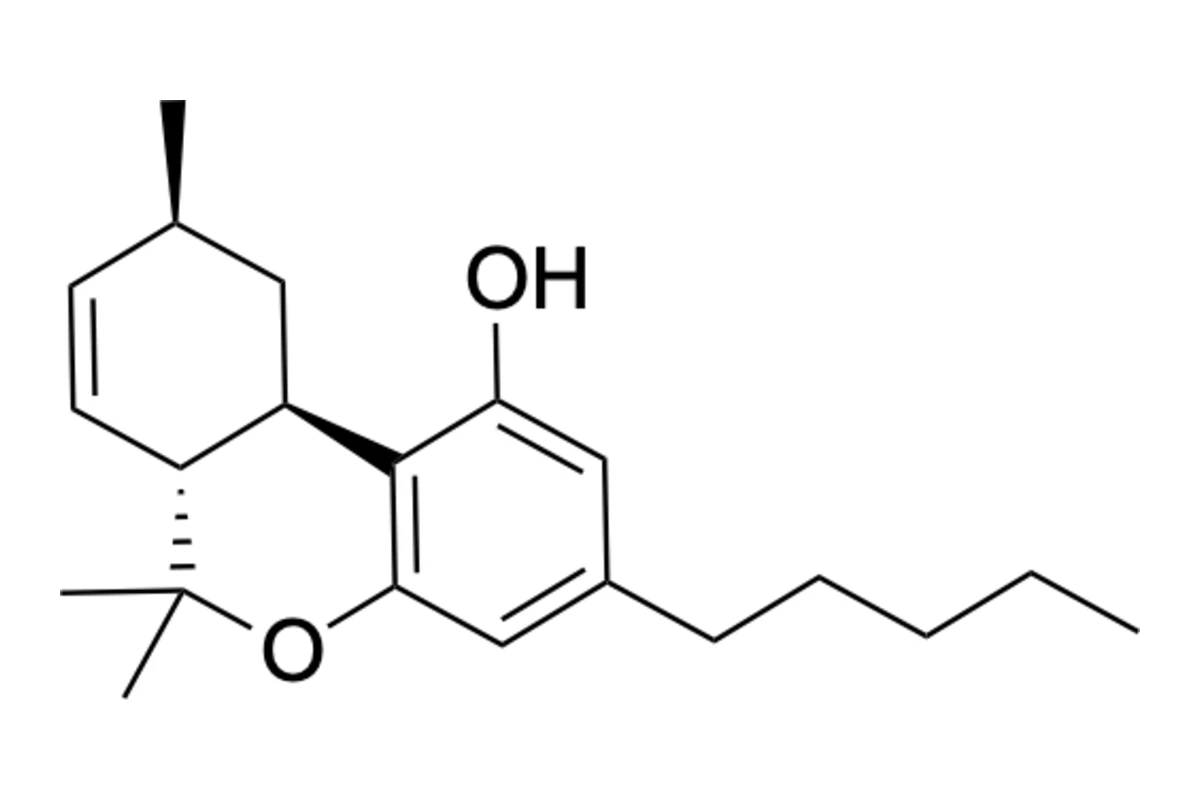
Ingredient name/basic information
| Item | Message | Source |
|---|---|---|
| common name | Delta-7-tetrahydrocannabinol | Ministry of Health, Labour and Welfare, "List of Controlled Substances" (as of December 12, 2024) |
| English name | delta-7-tetrahydrocannabinol | Primary literature (Harvey et al. 1980) |
| Abbreviation | Δ7-THC, delta-7-THC, Δ7 | Ibid. |
| Molecular formula | It is presumed to be C21H30O2. This information is unconfirmed in primary sources on this page. | Inquiry (Retrieved on 2026-10-16) |
| Molecular weight | It is estimated to be 314.5. This information is not confirmed by primary sources on this page. | Ibid. |
| CAS RN | This information was not confirmed in the investigation on this page. | Ibid. |
| PubChem CID | This information was not confirmed in the investigation on this page. | delta-7-tetrahydrocannabinol,delta7-THC No results found in the inquiry (Retrieved on 2026-10-16) |
| InChIKey | This information was not confirmed in the investigation on this page. | Ibid. |
| IUPAC name | This information was not confirmed in the investigation on this page. | Ibid. |
| Material Classification | THC isomers | Primary literature (Reggio et al. 1989) |
| Naturally existing | This information was not confirmed in the investigation on this page. | Inquiry (Retrieved on 2026-10-16) |
| First report | The original source of this information has not been identified in the research conducted on this page. | Ibid. |
In PubChem queries,delta-7-tetrahydrocannabinol with delta7-THC No registrations matching any of the above criteria were found. The molecular formula and molecular weight are estimates based on the existence of isomers and are not database reference values.
Pay attention to the correspondence with the previous naming convention. According to the dataset's investigation records, monoterpene formulas Δ5-THC In the current dibenzopyran formula... Δ7-THC It corresponds to this.The Δ5 designation is an older naming convention and refers to the same substance as Δ7-THC.
Outline
To understand Δ7-THC, the key points to keep in mind are:It is an isomer that is considered inert.That's the point.
Its structure is isomeric to Δ9-THC. The position of the double bond is different. The side chain is said to remain a pentyl group.
It is said to have no effect or activity. Studies investigating the psychopharmacological activity of cannabinoids have shown that Δ9-THC and Δ8-THC exhibited activity, while 11β-HHC showed minimal activity.Δ7-THC was classified as inactive.(Reggio et al. 1989).
This classification is based on the presence or absence of psychopharmacological activity. This does not indicate whether or not it binds to receptors, whether or not it is metabolized, or whether or not it has other effects.Being inactive doesn't mean nothing happens in the body.
Metabolism is being investigated. One study reported the identification of 26 metabolites from the liver of mice after intraperitoneal administration of Δ7-THC (Harvey et al. 1980).Metabolism does not contradict the fact that something has no effect.
Regulatory treatment is independent of whether or not it is active. Δ7-THC is listed as a controlled substance and is classified as a narcotic.Even substances considered inert are subject to regulation.
in JapanIt is a narcotic, and we do not sell it.
Chemical identity
Basic chemical information
Δ7-THC is considered to be an isomer of Δ9-THC with a different double bond position.
| Item | Δ9-THC | Δ7-THC |
|---|---|---|
| Position of the double bond | Between 7 and 10a | Different position (Δ7) |
| Third-place side chain | Pentil (C5) | Pentyl (C5) |
| Molecular formula | C21H30O2 | It is estimated to be C21H30O2 |
| Molecular weight | 314.5 | It is estimated to be 314.5. |
The molecular formula and molecular weight are estimated based on the fact that they are isomers. This is not a PubChem matching value.
The exact location of the double bond has not been confirmed from primary sources on this page. The designation Δ7 indicates the position of the double bond,The structural definition of that position needs to be confirmed in the original source.
logP and solubility are not included in this page's analysis because we were unable to confirm the values from primary sources.
Isomers and analogues
THC isomers are distinguished by the position of the double bond.
| material | Regulatory treatment (Japan) |
|---|---|
| Δ9-THC | Narcotics (List of controlled substances) |
| Δ8-THC | Narcotics (List of controlled substances) |
| Δ7-THC | Narcotics (List of controlled substances) |
| Δ10-THC | Narcotics (List of controlled substances) |
| Δ6a(10a)-THC | Narcotics (List of controlled substances) |
| Δ6a(7)-THC | Narcotics (List of controlled substances) |
| Δ9(11)-THC | Narcotics (List of controlled substances) |
All of these substances are listed as controlled substances and are classified as narcotics. Regardless of whether or not it is active, the regulatory treatment is the same.
Relationship with Δ5-THC. Monoterpene type Δ5-THC In the current dibenzopyran formula... Δ7-THC According to the dataset's research records, this is the case.This is a correspondence between the old and current naming conventions; they are not different substances.
Naturally existing
Whether Δ7-THC exists naturally is unconfirmed in the research on this page.
Differences from market-circulated products
Products containing Δ7-THC were not identified in the investigation conducted on this page.
The store's product list (84 items) did not contain any products containing Δ7-THC.
Δ7-THC is a narcotic in Japan, and possession and sale of products containing it are not permitted under the law.
Generation/Origin
Biosynthesis
The biosynthetic pathway corresponding to Δ7-THC has not been identified in the investigation on this page.
Semi-synthetic/Synthetic
The synthesis pathway for Δ7-THC has not been confirmed in the investigation on this page.
History of discovery and research
This page does not verify the first recorded mention of Δ7-THC.
There was research on metabolism in 1980. Identification of hepatic metabolites in mice has been reported (Harvey et al. 1980).A comparison of activity was made in 1989. The relationship between the orientation of the C9 substituent and activity was investigated, and Δ7-THC was classified as inactive (Reggio et al. 1989).
Analysis and identification
Analysis of Δ7-THC is,Separation from other THC isomersThe design must be based on this premise.
| Issues | Message |
|---|---|
| Main methods | Gas chromatography and mass spectrometry, or a combination of liquid chromatography and mass spectrometry (GC-MS, LC-MS/MS) |
| Objects that need to be separated | Δ7, Δ8, and Δ9 isomers. Other THC isomers. |
| Quantitative assumptions | If the separation of isomers is insufficient, only the sum can be obtained. |
| reference standard | We have not checked the supply status on this page. |
The lack of registration in PubChem suggests that the reference standard is difficult to obtain. If a standard material is unavailable, identification depends on the retention time and mass-to-charge ratio of nearby samples.
Mechanism of action
Receptors and enzymes
Receptor binding data for Δ7-THC was not found in the research conducted on this page.
| Target | Things that have been confirmed | Source |
|---|---|---|
| Psychopharmacological activity | While Δ9-THC and Δ8-THC show activity,Δ7-THC was classified as inactive. | Reggio et al. 1989 |
| metabolism | Twenty-six metabolites have been identified in mice. They are thought to undergo epoxidation of the double bond. | Harvey et al. 1980 |
| Receptor binding (Ki) | This page is unconfirmed. | Inquiry (Retrieved on 2026-10-16) |
| Functional activity (EC50) | This page is unconfirmed. | Ibid. |
Being inactive does not mean that it does not bind to the receptor. The presence or absence of psychopharmacological activity and the presence or absence of receptor binding are measured separately.
Metabolism does not contradict the fact that something has no effect. Metabolism is the transformation of substances, not the presence or absence of an effect.
Level of Evidence
L1 to L4 are classifications unique to this page. This was established to indicate the type of source to the reader, rather than using an external standard scale. The approximate correspondence is as follows:
| Level | Meaning on this page | An example |
|---|---|---|
| L1 | Human intervention research | Randomized controlled trial, controlled trial |
| L2 | Human observational research | Case reports, epidemiological studies, cross-sectional studies |
| L3 | animal research | Behavior and physiology in mice and rats |
| L4 | in vitro / in silico | Receptor binding, cells, enzymes, computation |
The classification isReport TypeIt showsThis does not indicate the certainty of the results or the magnitude of the effect.
- Comparison of activity (L3/L4)Δ9-THC and Δ8-THC were found to be active, while Δ7-THC was classified as inactive (Reggio et al. 1989).This is a classification based on the presence or absence of activity, not a measurement of dose-response.
- Metabolism (L3)Identification of hepatic metabolites in mice (Harvey et al. 1980).This is about identifying metabolites, not measuring their effects.
- Human intervention studies (None)Intervention trials involving Δ7-THC monotherapy were not found in the research conducted on this page.
Research Status
Areas of research
Research on Δ7-THC isReports from the 1980sIt is concentrated.
- metabolismIdentification of hepatic metabolites in mice (Harvey et al. 1980)
- Comparison of activityRelationship between C9 substituent orientation and activity (Reggio et al. 1989)
Recent reports have not been confirmed in the research conducted on this page. A PubMed search revealed no recent literature on Δ7-THC as a cannabinoid.
Human research
Human studies targeting Δ7-THC were not found in the research conducted on this page.
ClinicalTrials.gov delta-7-tetrahydrocannabinol The results of the inquiry were 0 piecesThis is the case (confirmed on 2026-10-16).
Data limitations
- The document is outdated. The confirmed reports are from 1980 and 1989.Recent follow-up studies are unconfirmed.
- It is not registered in PubChem. Chemical identifier unconfirmed
- I haven't checked the individual figures. Comparing activity is a classification, not a measurement of dose-response.
- We don't have any data from our own research. No Δ7-THC observations were found in the dataset.
This page is not a systematic review. This record only covers the extent of what could be confirmed and does not encompass the entirety of Δ7-THC research.
Safety
toxicity
Repeated-dose studies and genotoxicity studies targeting Δ7-THC were not found in the research conducted on this page.
Being considered inert does not mean it is safe. The classification of inactivity is based on the presence or absence of psychopharmacological activity, and does not indicate the presence or absence of toxicity.
The toxicity of metabolites requires a separate evaluation from the activity of the original substance. Although 26 metabolites have been identified in mice (Harvey et al. 1980),The toxicity of the metabolites has not been confirmed.
This page does not evaluate the safety of Δ7-THC.
Drug interactions
No drug interactions have been identified for Δ7-THC in the research conducted on this page.
Targets requiring special attention
Data specifically indicating precautions for Δ7-THC has not been found in the research conducted on this page.
Δ7-THC is a narcotic in Japan, and its use is prohibited for purposes other than medical treatment. Legal status takes precedence over consideration of precautions.
Differences from other cannabinoids
The position of Δ7-THC is,Difference from Δ9-THCIt is organized as follows.
| material | Relationship with Δ9-THC | Activity | Regulatory treatment (Japan) |
|---|---|---|---|
| Δ9-THC | Standard | Active | drug |
| Δ8-THC | Isomers with different double bond positions | Active (lower than Δ9) | drug |
| Δ7-THC | Isomers with different double bond positions | Inactive | drug |
Regardless of whether or not it is active, the regulatory treatment is the same. Even substances considered inert are treated as narcotics.
Being "inert" does not mean being "safe." Classification of activity and assessment of safety are separate measurements.
Legal status
Japan
Date of verification: 2026-10-16
Δ7-THC is a narcotic.
The Ministry of Health, Labour and Welfare's list of controlled substances (as of December 12, 2024) includes:Δ7 THC NIt is listed as (Narcotic).
The same list also includes the following substances as narcotics:
| material | Classification |
|---|---|
| Δ9 THC | N (narcotics) |
| Δ8 THC | N (narcotics) |
| Δ7 THC | N (narcotics) |
| Δ10 THC | N (narcotics) |
| Δ6a(10a) THC | N (narcotics) |
| Δ6a(7) THC | N (narcotics) |
| Δ9(11) THC | N (narcotics) |
THC isomers, regardless of their activity level, are all treated as narcotics.
Penalties
Penalties for substances classified as narcotics are governed by the Narcotics and Psychotropic Substances Control Act.This page does not provide a clause-by-clause review of the articles. The latest information should be checked in the current text of e-Gov.
Primary source
- Ministry of Health, Labour and Welfare, "List of Controlled Substances" (as of December 12, 2024).
Δ7 THCTheNListed as (narcotics).https://www.ncd.mhlw.go.jp/dl_data/keitai/cotrolled_substances_list20241212%20.pdf - e-Gov Law Search: "Law Concerning the Regulation of the Cultivation of Cannabis Plants" (Law No. 124 of 23). Includes definitions of cannabis plant and cannabis.https://laws.e-gov.go.jp/law/323AC0000000124
- e-Gov Law Search: "Act on Securing Quality, Efficacy and Safety of Pharmaceuticals, Medical Devices, etc." (Law No. 145 of 35).https://laws.e-gov.go.jp/law/335AC0000000145
History of regulations
| Date | Classification | Event | Source |
|---|---|---|---|
| 2024-12-12 | Confirm | List of controlled substances (as of December 12, 2020) Δ7 THC It is listed as a narcotic. | Ministry of Health, Labor and Welfare |
The specific designation history of Δ7-THC has not been confirmed in the research conducted on this page. This confirms that the substance is listed in the list of controlled substances, but does not specify the designated ministerial ordinance number.
Overseas
The treatment under international treaties has not been confirmed in primary sources on this page.
The legal status under U.S. federal law has not been confirmed through primary sources on this page.
The fact that it is available overseas does not mean that it is legal in Japan. Δ7-THC is a narcotic in Japan, and its regulation in other countries should not be considered the same as its treatment in Japan.
Market and social trends
Products containing Δ7-THC were not identified in the investigation conducted on this page.
The store's product list (84 items) did not contain any products containing Δ7-THC.
Market issues
- Handling of substances considered inert. Even substances that are not considered to exhibit activity are treated as narcotics.
- Confusion with the old name.
Δ5-THCThis is the old name,Δ7-THCIt refers to the same substance. It cannot be distinguished by name alone. - Uncertainty in the display. The names on the labels are not the result of identifying the ingredients.
Observation and inference must be distinguished. Market expansion or contraction cannot be described as causal based on the data on this page.
Independent research
The data in this section is based on our own research and is not third-party research. It is primary data that has not been peer-reviewed. Search indices do not directly represent the number of users, sales volume, or market size.
There are no observations of Δ7-THC in the dataset. The audit summary does not include Δ7-THC.trend_observations.csv There is no entry for Δ7-THC.Therefore, numerical values will not be included in this section.
The claims in this section are labeled as follows to distinguish between observation and interpretation.
| label | meaning | Subjects in this section |
|---|---|---|
| OBSERVED | Measured and observed facts | Dataset recording range |
| DERIVED | Aggregated values recorded by the dataset | Not applicable |
| INTERPRETATION | Interpretation from observations | Not applicable |
| HYPOTHESIS | Unverified hypothesis | Not applicable |
Survey method
research questionsHow has Google search interest for Δ7-THC in Japan changed over time?
Since there are no Δ7-THC observations in the dataset, this page does not answer this question. We will not publish search trend figures.
| Item | Message |
|---|---|
| data source | Not applicable (no Δ7-THC observations in the dataset) |
| Search Query | Not applicable |
| Acquisition period | Not applicable |
| run used for aggregation | Not applicable |
The absence of observation does not mean a lack of interest. It simply wasn't included in the dataset's collection target.
データセット
| Item | Message |
|---|---|
| Name | Japan Cannabinoid Platform Trends Dataset 2026: Google Trends and YouTube Evidence from Japan |
| Version | 1.14.7 |
| release date | 2026-11-04 |
| Author / Authors | KATO, Kyoji |
| license | CC BY 4.0 |
| DOI | 10.5281/zenodo.23390594 |
| URL | https://doi.org/10.5281/zenodo.23390594 |
This page does not cite Δ7-THC values from this dataset. This is because there are no observations of Δ7-THC in the dataset.
Search Trends
Since there are no observations of Δ7-THC in the dataset, this page does not include search trend figures.
Δ7-THC is not included among the 14 substances listed in the audit summary.trend_observations.csv with platform_coverage.csv It is not included in either.
The absence of observation does not mean a lack of interest. This simply means that the data was not included in the dataset; it does not indicate whether or not there is any search interest.
Keyword classification and presence or absence of seriesThe dataset consists of 13 compound words, 13 product words (liquids), and 2 oil words.The term "substance" on this page is not registered.Therefore, there is no lineage for either compound words or product words.This data is not yet collected, and it does not indicate zero demand.
Distinction of missing data : 未収集(Not collected by this source) and Google Trends returns below the threshold. no dataoutside the public scope 公開対象外 They are different.The absence of a related product line is not presented as a sign of a lack of demand.
Treatment of cross-sectional comparisonsSince the substance on this page is not included in the 13 compounds in the cross-sectional study, a comparison with the search index of other compounds will not be made.
SNS trends
Since there are no Δ7-THC observations in the dataset, this page does not include the number of SNS posts.
platform:X StatusNot for public release
X is not included in the public scope of the dataset.This page does not include the observed values for X.
The number of posts on social media does not directly reflect the demand for a substance, its dangers, or the public's interest in it. A high number of posts should not be used as an indicator of danger.
WITH THE
A Certificate of Analysis (COA) is a certificate proving that the ingredients in a product have been analyzed. This page will only cover the general interpretation and limitations of a COA.
What is included in the COACannabinoid profile, pesticide residues, heavy metals, solvents, microorganisms.
Products containing Δ7-THC were not identified in the investigation conducted on this page. There are no entries specific to Δ7-THC in the reading of COA.
Things to distinguish when reading a COA
- The raw material COA is not the inspection result for each individual product sold.
- The supplier's analysis is not our own analysis.
- The product's design intent is not for medical effects.
- The numerical results of the analysis do not guarantee the purity or safety of the product.
About this record
Update conditions
This page will be reviewed if any of the following issues are discovered.
- Chemical identifiers for Δ7-THC (PubChem registration, CAS RN, InChIKey)
- Collection of in-house research data on Δ7-THC (Google Trends, YouTube)
- Reporting of binding affinity (Ki) values to CB1
- Recent follow-up studies (comparison of activity, examination of metabolism)
- History of designation as a narcotic (Ministerial ordinance number, effective date)
- Addition, deletion, and modification of designated substances (Ministerial Ordinance and Official Gazette)
- Regulatory authorities publish safety assessment of Δ7-THC.
- Updating our own research data. In particular, verifying the reachability and version of the DOIs of the cited datasets.
- Quarterly regulatory and spot checks of key DOIs (covering all cited identifiers)
- Regular checks every 12 months (update of the last check date)
Update responsibility: Routeflags editor (based on the article's last update date). The changelog is managed in the changelog table on this page. Version numbers are increased when the substance of the text (claims, figures, sources, regulatory descriptions) changes. Version numbers are not increased for corrections of typos or grammatical errors only.
Reference Methods Notes
This page is a reference page, not a systematic review.
| Item | Message |
|---|---|
| Target database | PubChem, PubMed, ClinicalTrials.gov, e-Gov Law Search, Ministry of Health, Labour and Welfare |
| Target period | No restrictions (primary sources take priority, regardless of publication year) |
| Main search terms | Δ7-THC, delta-7-tetrahydrocannabinol, delta-7, delta-7-THC, designated drug, narcotic |
| Selection Criteria | Peer-reviewed articles must be accessible via DOI or PMID. Public documents must have a document number or ministerial ordinance number.We will not accept literature that only matches abbreviations. |
| Last search date | 2026-10-16 |
| Record of acquisition date | Database inquiries and clinical trial registrations will be dated with the acquisition date (2026-10-16). |
The information sources were organized as follows: chemical information from PubChem, pharmacology from PubMed-based peer-reviewed articles, and Japanese regulations from the Ministry of Health, Labour and Welfare and e-Gov. Extensive search formulas and PRISMA procedures were not used.
In describing the regulations, we separated the items that had been confirmed from those that had not. The inclusion of the substance in the list of controlled substances was confirmed in a PDF document from the Ministry of Health, Labour and Welfare. The text explicitly states that the history of its designation as a narcotic (ministerial ordinance number, effective date) has not been confirmed.
Evidence grid
"Ease of citation" refers to the degree to which a text can be reached using an identifier (DOI, PMID, or ministerial ordinance number) and to which numerical conditions are stated in the text. High indicates a level where the text can be directly cited, while medium indicates a level where confirmation of conditions or referencing the original source is necessary.
| region | Main Levels | Ease of citation |
|---|---|---|
| chemical identity | Not applicable | Not applicable (Not registered in PubChem, molecular formula is estimated) |
| Comparison of activity | L3/L4 (1989) | Medium (Classification as inactive. Individual values are not verified.) |
| metabolism | L3 (1980) | (Identification of 26 metabolites. Recent replication studies have not been confirmed.) |
| Human intervention research | Not applicable | Not applicable (no registrations or reports) |
| Drug interactions | Not applicable | Not applicable (no data) |
| Japanese regulations | Primary legal and regulatory materials | High (Confirmed to be listed as a controlled substance. The designation history is unconfirmed.) |
| Our own research (search trends) | Not applicable | Not applicable (no observations in the dataset) |
Changelog
| Version | Date | change point | the reason |
|---|---|---|---|
| 1.13 | 2026-11-06 | The version of the publicly available dataset being cited has been updated to v1.14.7 (released 2026-11-06, version DOI 10.5281/zenodo.24015951). | The dataset has been updated, but the cited aggregate values (trend_observations.csv Other metrics are the same as v1.14.4, so only the version number is updated. |
| 1.12 | 2026-11-05 | The version of the publicly available dataset being cited has been updated to v1.14.4 (released 2026-11-04, version DOI 10.5281/zenodo.23962400). | The dataset has been updated, but the observed values for the 14 cited compounds have remained the same since v1.14.1, so only the version number has been updated. |
| 1.11 | 2026-11-05 | The version of the publicly available dataset being cited has been updated to v1.14.2 (released 2026-11-04). | The dataset has been updated, but the observed values for the 14 cited compounds are the same as in v1.14.1, so only the version number has been updated. |
| 1.10 | 2026-11-04 | The version of the publicly available dataset being cited has been updated to v1.14.1 (released 2026-11-04). | The dataset had been updated, and the version number and publication date of the cited source were outdated. |
| 1.9 | 2026-11-01 | Specify the keyword classification (compound terms/product terms), whether or not there are series, whether or not there are missing data, and how cross-sectional comparisons are handled. | Because even with the same collection rules, the presence or absence of sequences differs depending on the word, period, and platform. To avoid confusing missing data with zero demand. |
| 1.8 | 2026-10-23 | Remove the note regarding unpublished DOIs from the recommended citation format. | The DOI should only be added after publication (do not include unpublished information in citations). |
| 1.7 | 2026-10-23 | The metadata at the beginning of the page has been reorganized into two items: "Legal Compliance Checks" and "Page Version" (the five lines of Last Updated, Author, ORCID, Affiliation, and License have been removed). | The same information was duplicated at the beginning and in the "Citation Method" section. |
| 1.6 | 2026-10-20 | The FAQ answers have been rephrased in the main text (eliminating word-for-word redundancy). | Addressing the issue of duplicate paragraphs on page 1 (Pointed out: sites/thch-vape/issues/20261020_duplicate_review_substance-pages.md) |
| 1.5 | 2026-10-20 | Removed the initial assertion that "there will be no pathways to the product." | Redundant wording should be streamlined (as it overlaps with the disclosure of conflicts of interest. Reference: documents/plan/20261020.md) |
| 1.4 | 2026-10-17 | Replace the internal file names (paths and internal key names of the audit summary) that remained in the published text with the names used for the audit summary. | C7 Hygiene of the published text |
| 1.3 | 2026-10-17 | The thumbnail specification (structural formula of Δ7-THC) is added to the visible meta, and the image attribution clause is added. The rendering of the thumbnail row in the public HTML is excluded on the md-html side. | To manage thumbnail specification and attribution in the manuscript. |
| 1.2 | 2026-10-17 | Unconfirmed expressions within the search scope of the published text have been standardized to "unconfirmed." Source lists, comparative expressions (confirmed and unconfirmed), and descriptions of no match have also been standardized to the same word. | Clarification of DDD terminology and alignment of validation skills with C32 expressions |
| 1.1 | 2026-10-16 | Remove the row for "Secondary use as medical advice" from the table of citable material, and add a recommendation statement outside the table. | Summary of license terms and usage precautions |
| 1.0 | 2026-10-16 | First draft. Constructed using isomers considered inactive. Activity comparisons and metabolic findings are confirmed with reports from the 1980s. Confirmation of inclusion in the list of controlled substances as narcotics in Japan. Explicitly states that search trend figures will not be included as there are no observations in our company's research dataset. | Create New |
When quoting, please include both this version and the date of last verification (2026-10-17).
Reference method
Recommended citation format:
KATO, Kyoji (ORCID: 0009-0007-5131-0374) (2026). "What is Δ7-THC?". Liquid Online Shop Substance Dictionary [Report]. Routeflags Co., Ltd. https://www.thch-vape.shop/guide/substance/delta-7-thc (Last updated: 2026-11-01 / Version 1.9 / License: CC-BY-4.0)
Permitted scope
| Target | Conditions for citation |
|---|---|
| Main text (Chemical analysis, legal positioning analysis) | CC-BY-4.0. Citation permitted as a source for scientific and regulatory information. |
| Aggregated values recorded in the datasets published by our company | Not applicable (This page does not include figures from our own research.) |
| The index itself obtained from Google Trends | Subject to the provider's terms and conditions. This page's license does not apply. |
| Cited papers and official documents | Depending on the terms of each copyrighted work |
This page is not intended as medical advice. Even when reusing this information, it is recommended that you acknowledge the limitations of scientific knowledge and not treat it as information guaranteeing medical effectiveness or safety.
Notes on citationThis page does not evaluate the efficacy or safety of Δ7-THC. Do not cite the classification as inactive as an evaluation of safety.Being "inert" does not mean being "safe."
Notes for those planning to register a DOI: To issue a DOI, it is necessary that the above URL publishes the full text equivalent to this version, and that all conflicts of interest, licenses, and change logs are in place. Do not write the DOI into the text before it is ready for publication.
FAQ
What is Δ7-THC?
These are isomers of Δ9-THC, differing only in the position of the double bond. The side chain remains a pentyl group (5 carbon atoms). Δ9-THC and Δ8-THC are the active forms, while Δ7-THC is classified as inactive. However, this classification is based on the presence or absence of psychopharmacological activity and does not indicate receptor binding or metabolism. In Japan, it is classified as a narcotic.
What are the effects of Δ7-THC?
It is considered to have no psychopharmacological activity. In studies comparing the activity of cannabinoids, Δ7-THC was classified as inactive. However, this is a classification of activity or absence, not a measurement of dose-response. Metabolism has been studied in mice, and 26 metabolites have been identified. Receptor binding data is unconfirmed. Even if it is inactive, it does not mean that nothing happens in the body.
Is Δ7-THC regulated in Japan?
Yes. It's a drug.Δ7 THC This information can be found in the Ministry of Health, Labour and Welfare's list of controlled substances (as of December 12, 2024). The classification is NIt is a narcotic. Δ9-THC, Δ8-THC, and other THC isomers are all listed as narcotics. Regulatory treatment does not change depending on whether or not they are active. Use other than for medical purposes is prohibited.
What are the current search trends for Δ7-THC?
This page does not include this information. Our company's research dataset does not contain any observations of Δ7-THC. The absence of observations does not indicate a lack of interest; it is simply because it was not included in the dataset's data collection.
Is Δ7-THC safe?
No reports on repeated-dose studies or genotoxicity studies targeting Δ7-THC have been found. The classification as "inactive" does not indicate safety. This classification is based on the presence or absence of psychopharmacological activity, not toxicity. The toxicity of metabolites has also not been confirmed. "Inactive" and "safe" are different claims. Δ7-THC is a narcotic in Japan, and its use is prohibited for purposes other than medical use.
Are Δ5-THC and Δ7-THC the same?
It refers to the same substance.Δ5-THC This is a monoterpene formula (old name), and the current dibenzopyran formula is Δ7-THC This is the same substance. The naming system differs between the old and new versions, but the substance itself is identical. Since they cannot be distinguished by name alone, it is necessary to confirm them using identifiers such as InChIKey. However, the InChIKey for Δ7-THC has not been confirmed on this page.
Do you know the chemical structure of Δ7-THC?
The molecular formula and molecular weight are estimated to be C21H30O2 and 314.5, respectively, due to the isomerism, but these are not PubChem matching values. The CAS RN, InChIKey, and IUPAC names are unconfirmed. The exact position of the double bond has not been confirmed from primary sources. Structural details need to be verified in the original sources.
Image Attribution
This page summarizes the sources and licenses of the images used. For the license scope of the article text, please refer to "About this record > Citation method".
| image | Author | source | license | Change |
|---|---|---|---|---|
| Structural formula of Δ7-THC | Vortioxetine | Wikimedia Commons File:Delta-7-THC_Structure.svg | CC BY-SA 4.0 | No change |
Latest articles in the Dictionary of Substances
What is THCNM?
Legal Regulation Confirmation: 2026-11-05 (Source: e-Gov Legal Search "Designated drugs as defined in Article 2, Paragraph 15 of the Act on Securing Quality, Efficacy and Safety of Pharmaceuticals, Medical Devices, etc. and as defined in Article 76-4 of the same Act...)
What is CBX? Current Status of Ingredients, Regulations, and Safety (2026 Edition)
Legal Regulation Confirmation: 2026-10-18 (Source: e-Gov Legal Search "Designated drugs as defined in Article 2, Paragraph 15 of the Act on Securing Quality, Efficacy and Safety of Pharmaceuticals, Medical Devices, etc. and as defined in Article 76-4 of the same Act...)
What is THC-O?
Legal Regulation Confirmation: 2026-10-16 (Source: Ministry of Health, Labour and Welfare, "Ministerial Ordinance Designating Designated Substances Announced" (Ministry of Health, Labour and Welfare Ordinance No. 21 of 5), e-Gov Legal Search "Quality, Effectiveness, etc. of Pharmaceuticals, Medical Devices, etc...")


Comment:
There are no comments yet.