
Article Text
Please comply with the laws and regulations of the country in question regarding the possession and use of drugs.
Legal Regulations Confirmation: 2026-10-16 (Source: Ministry of Health, Labour and Welfare, "Ministerial Ordinance Designating Designated Drugs Announced" (Ministry of Health, Labour and Welfare Ordinance No. 143 of 5), e-Gov Law Search, "Ministerial Ordinance Specifying Designated Drugs as Stipulated in Article 2, Paragraph 15 of the Act on Securing Quality, Efficacy and Safety of Pharmaceuticals, Medical Devices, etc. and Medical Uses as Stipulated in Article 76-4 of the same Act" (Ministry of Health, Labour and Welfare Ordinance No. 14 of 19), e-Gov Law Search, "Act on Securing Quality, Efficacy and Safety of Pharmaceuticals, Medical Devices, etc." (Act No. 145 of 35))
Page Version: 1.20
Conflict of Interest: The publisher of this page operates an e-commerce business selling cannabinoid products. This commercial relationship may influence information selection. This page is not intended to sell products and is created as a scientific reference resource. It does not constitute medical advice, a guarantee of product efficacy, a purchase recommendation, or encourage self-diagnosis.
Regarding HHCH on this page: We do not currently sell products containing HHCH. If we plan to start selling such products, we will update this section at that time.
HHCH (hexahydrocannabihexol) is a compound of HHCSemi-synthetic cannabinoids in which the side chain has been extended from a pentyl group (5 carbon atoms) to a hexyl group (6 carbon atoms).Its molecular formula is C22H34O2, and its molecular weight is 330.5, which is one more carbon and two more hydrogen atoms than HHC (C21H32O2, 316.5).
The HHCH design is a combination of two operations. The process involves hydrogenating the double bond of THC (designing HHC) and extending the side chain by one carbon (designing THCH).Both were applied.It is a substance.
| material | double bond | Side chain (position 3) | Molecular formula | Molecular weight |
|---|---|---|---|---|
| Δ9-THC | Yes (Δ9) | Pentil (C5) | C21H30O2 | 314.5 |
| THC | Yes (Δ9) | Hexyl (C6) | C22H32O2 | 328.5 |
| HHC | None (saturated) | Pentil (C5) | C21H32O2 | 316.5 |
| HHCH | None (saturated) | Hexyl (C6) | C22H34O2 | 330.5 |
This combination influences both the strength of the effect and the dose differences between behavioral indicators. In comparative studies using mice, the Hazard Proximity Index of HHCH was 33.2 % This was significantly higher than the 5.1% of HHC (Shirakura et al. 2026).By simply extending the side chain by one carbon atom, the dose difference between behavioral indicators narrowed by more than six times.
in JapanDesignated drugsTherefore, Ministry of Health, Labour and Welfare Ordinance No. 143 of 2023, promulgated on November 22, 2023, designated HHCH as substance 1. In addition, the dibenzopyran skeleton as defined in the current Ministerial Ordinance on Designated SubstancesHexahydro type groupThis includes the structure HHCH.
On this page, you can confirm the following points:
- A design combining hydrogenation and side chain extension.
- Basis for designating a drug as a controlled substance (specific designation and scope of structure)
- Pharmacological, animal, and metabolic findings confirmed from primary sources
- Trends in domestic search interest and the limitations of interpreting it.
table of contents
- Introduction
- Ingredient name/basic information
- Outline
- Chemical identity
- Basic chemical information
- Isomers and analogues
- Naturally existing
- Differences from market-circulated products
- Generation/Origin
- Biosynthesis
- Semi-synthetic/Synthetic
- History of discovery and research
- Analysis and identification
- Mechanism of action
- Receptors and enzymes
- Level of Evidence
- Research Status
- Areas of research
- Human research
- Data limitations
- Safety
- toxicity
- Drug interactions
- Targets requiring special attention
- Differences from other cannabinoids
- Legal status
- Japan
- History of regulations
- Overseas
- Market and social trends
- Independent research
- Survey method
- データセット
- Search Trends
- Google Trends 12-Month Summary
- Common scale comparison (5 years, current window)
- SNS trends
- YouTube video analysis (collection run of HHCH liquid videos)
- YouTube Monthly Number of Releases (HHCH Liquid, date_filter=all)
- Classification of mentions of X (summary of research pages)
- WITH THE
- About this record
- Update conditions
- Reference Methods Notes
- Evidence grid
- Changelog
- Reference method
- FAQ
- What is HH CH?
- What is the difference between HHCH and HHC?
- What is the difference between HHCH and THCH?
- What are the effects of HHCH?
- Is HHCH regulated in Japan?
- When was the peak of searches?
- Is HHCH safe?
- Image Attribution
- Total
- Comment:
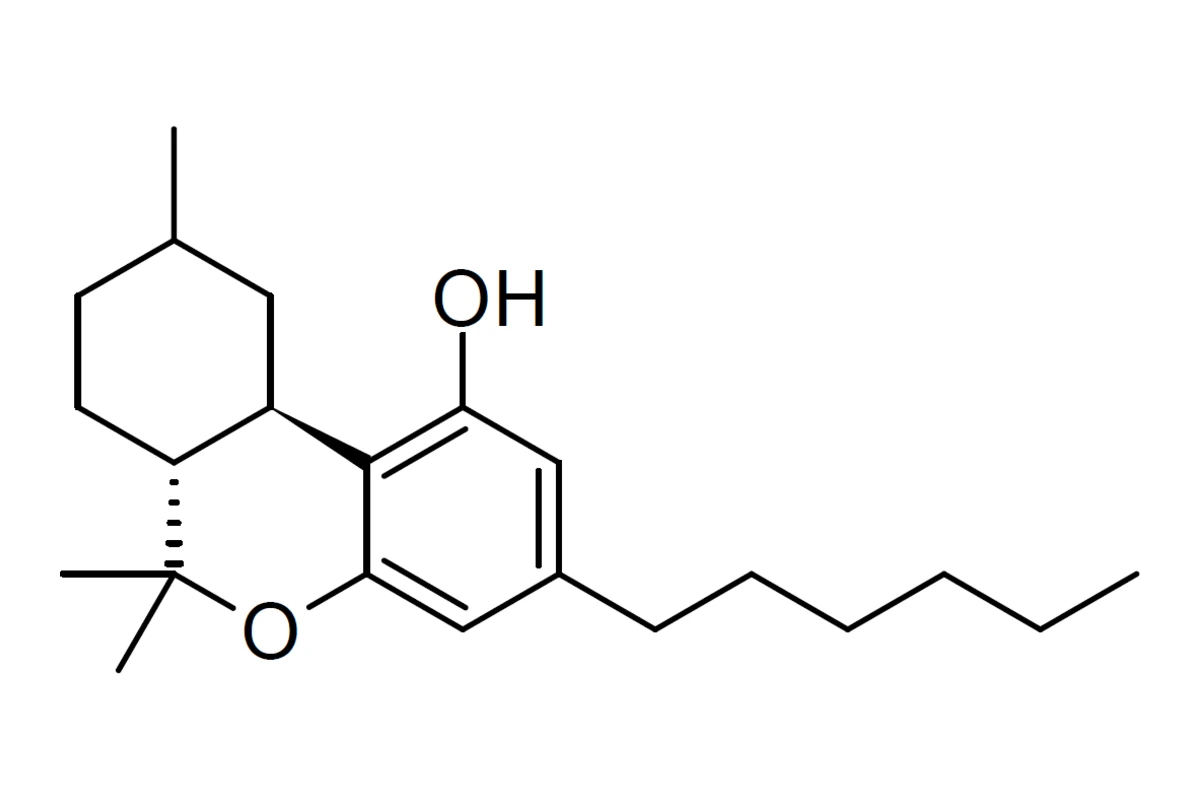
Ingredient name/basic information
| Item | Message | Source |
|---|---|---|
| common name | Hexa-tibiocannabinoid hexol | PubChem CID 175224408(Acquisition date 2026-10-16) |
| English name | hexahydrocannabihexol | Ibid. |
| Abbreviation | HHCH, HHC-H | Designated pages of the Ministry of Health, Labour and Welfare (common names, etc.) |
| Molecular formula | C22H34O2 | PubChem CID 175224408 (Acquisition date 2026-10-16) |
| Molecular weight | 330.5 g / mol | Ibid. |
| CAS RN | This information was not confirmed in the investigation on this page. | Inquiry (Retrieved on 2026-10-16) |
| PubChem CID | 175224408 | Ibid. |
| InChIKey | OKXUDFJPZMVBEH-HSFDIDPMSA-N | Ibid. |
| IUPAC name | (6aR,10aR)-3-hexyl-6,6,9-trimethyl-6a,7,8,9,10,10a-hexahydrobenzo[c]chromen-1-ol | Ibid. |
| Material Classification | Semi-synthetic cannabinoids (side-chain congeners of HHC) | Primary literature (Shirakura et al. 2026) |
| Naturally existing | There are no reports confirming its natural existence. | PubMed query (Retrieval date: 2026-10-16) |
| First report | The original source of this information has not been identified in the research conducted on this page. | Inquiry (Retrieved on 2026-10-16) |
There is only one registration in PubChem. Another name is SCHEMBL28726736 with DTXSID601359385 However, the CAS RN is not registered.This is not a situation where multiple CIDs coexist, as is the case with HHC.
Pay attention to the stereochemistry specifications. PubChem's CID 175224408 defines solids at positions 6a and 10a,The 9th place solid is not defined. Similar to HHC, the distinction between the 9R and 9S isomers remains.To distinguish between the 9R and 9S forms, their respective registrations must be checked separately.
Outline
To understand HHCH, the key points to keep in mind are:Two operations are overlapping.That is.
First operation: Hydrogenation. The double bond at positions 8 and 10a of Δ9-THC is saturated. This is the same operation as with HHC. This operation creates a new stereocenter at position 9.
Second operation: Extension of the side chain. The side chain at position 3 is extended from a pentyl group (5 carbon atoms) to a hexyl group (6 carbon atoms). This is the same operation as in THCH. This operation works to increase the affinity and activity to the receptor.
The substance that undergoes both operations is HHCH.
The results of this combination can be confirmed using animal behavioral indicators. In a study comparing dose differences in suppression of spontaneous movement and catalepsy-like symptoms after intraperitoneal administration of six substances to mice, the Hazard Proximity Index of HHCH was 33.2 % This was the case (Shirakura et al. 2026).
| material | HPI (%) | Design |
|---|---|---|
| THC | 25.6 | Standard |
| THC | 45.1 | The side chains were extended. |
| HHCH | 33.2 | Hydrogenated and the side chains were extended. |
| HHC | 5.1 | hydrogenated |
| HHCP | 3.7 | Hydrogenation was performed to further extend the side chains. |
The difference between HHC (5.1%) and HHCH (33.2%) is due to the addition of one carbon atom to the side chain. Even with the same hydrogenated compound, the dose difference between behavioral indicators varies greatly depending on the length of the side chain.On the other hand, HHCP (3.7%) had a low HPI despite further extending the side chain. The relationship between side chain length and HPI is not monotonous.
The simplistic explanation that "the longer the side chain, the more dangerous" is inconsistent with these results. While side chain length is the main factor in efficacy, HPI is the ratio of two ED50s.It depends on whether the increase in potency or the increase in toxicity is greater.
in JapanThis is a designated drug, and we do not carry it in our store.
Chemical identity
Basic chemical information
HHCH is a hydroxyl group at position 1 of 6H-benzo[c]chromene and at position 3.ヘキシル基It has a structure with two methyl groups bonded at position 6 and one methyl group bonded at position 9. Positions 6a, 7, 8, 9, 10, and 10a are all saturated.
The difference from HHC is that the side chain is one carbon longer.
| Item | HHC | HHCH |
|---|---|---|
| 6a~10a position | All are single bonds (saturated). | All are single bonds (saturated). |
| 1st place substituent | Hydroxyl group (-OH) | Hydroxyl group (-OH).the same |
| Third-place side chain | Pentil (C5) | Hexyl (C6) |
| Molecular formula | C21H32O2 | C22H34O2 |
| Molecular weight | 316.5 | 330.5 |
| 9 bit | Chiral carbon with a methyl group (9R/9S) | A chiral carbon (9R/9S) with a methyl group. |
The difference from THCH is the presence or absence of a double bond. THCH has a double bond at positions 8 and 10a, while HHCH does not.Both side chains are hexyl groups.
logP and solubility are not included in this page's analysis because we were unable to confirm the values from primary sources.
Isomers and analogues
The 9R and 9S isomers are diastereomers. They have the same molecular formula, C22H34O2, but differ only in the stereochemistry at position 9.
| Written | Relationship | How to handle this on this page |
|---|---|---|
| (9R)-HHCH | 9th place is R placement | Comparison data with the 9S body is not available on this page. |
| (9S)-HHCH | 9th place is S placement | Ibid. |
| (6aR,10aR) body | 3D shapes of 6a and 10a | The three-dimensional space defined by PubChem CID 175224408 |
The findings for HHC's 9R/9S cannot be directly applied to HHCH. The higher potency of the 9R isomer compared to the 9S isomer has been reported for HHC congeners (Durydivka et al. 2026).No reports confirming the same comparison regarding HHCH have been found in the research conducted on this page.
The following analogues are related to the same skeletal structure.
| material | Changed parts | Molecular formula | Relationship with THC |
|---|---|---|---|
| Δ9-THC | Standard | C21H30O2 | Standard |
| HHC | Hydrogenation of the double bond at positions 8,10a | C21H32O2 | Hydrogenated |
| THC | Change the side chain of the 3rd position from C5 to C6 | C22H32O2 | 同族体 |
| HHCH | Hydrogenation and the side chain C5 → C6 | C22H34O2 | Congenerates of hydrogenated products |
| HHCP | Hydrogenation and the side chain C5 → C7 | C23H36O2 | Ibid. |
| 8-OH-HHC | The hydroxyl group is ranked 8th. | C21H32O3 | Metabolites and related substances |
HHCH and THCH are different substances. Both side chains are hexyl groups, but THCH has a double bond, while HHCH does not.The similarity in names prevents confusion.
HHCH and HHC are different substances. The presence or absence of a double bond is the same, but the side chains differ between pentyl and hexyl.
Naturally existing
The report that HHCH is produced in plants has not been confirmed in the research on this page.
HHCH is a structure in which the side chains of HHC are extended, and HHC itself is a semi-synthetic compound.Since the starting point is a semi-synthetic compound, HHCH is also a semi-synthetic compound.
Differences from market-circulated products
The "HHCH" label used in the market does not guarantee the presence of a single substance.
- The ratio of 9R bodies to 9S bodies. Similar to HHC, hydrogenation creates a stereochemistry at position 9.The ratio cannot be determined from the display.
- Length of the side chain. In addition to hexyl (C6), pentyl (HHC) and heptyl (HHCP) may also be present.
- The presence or absence of a double bond. Are you distinguishing between THCH (unsaturated) and HHCH (saturated)?
- Differences in manufacturing methods. The composition of by-products depends on the manufacturing method.
Observations recorded in the datasetThe dataset referenced on this page includes information on concentrate (distillate) products distributed as HHCH, based on supplier-provided COA. HHCH was 91.45% (914.49 mg/g), while Total CBD and Total THC were both ND (Not Detected). There is a record that it was written as such. The analytical institution is listed as Food & Environment Safety Analytical Lab, and the analysis date is 2023-04-14.
All we can conclude from this record is that the COA result was that value.
- The raw material COA is not the inspection result for each individual product sold.
- The supplier's analysis is not our own analysis.
- The same results may not apply to other lots or other products.
- The value of 91.45% does not guarantee the purity or safety of the product.
The names on the labels are not the result of identifying the ingredients.
Generation/Origin
Biosynthesis
The biosynthetic pathway corresponding to HHCH has not been identified in the investigation on this page.
Cannabinoid biosynthesis leads to a tetrahydro-type skeleton.Neither reduction, which saturates the double bond, nor the operation that extends the side chain are known to occur through this pathway.
Semi-synthetic/Synthetic
HHCH can be obtained as a structure in which the side chains of HHC are extended, or as a structure in which the double bond of THCH is hydrogenated.
It's impossible to tell from the product which method it was produced through. If the starting materials and reaction conditions are different, the composition of the by-products will also be different.
Hydrogenation creates a new chiral carbon at position 9. Therefore, the product is usually a mixture of the 9R and 9S isomers.The ratio of the two depends on the reaction conditions and the stereochemistry of the starting materials.
History of discovery and research
This page does not verify the original literature in which HHCH appeared.
Its appearance in the market context is in 2023. The dataset records that in 2023, several people became ill after receiving "cannabis gummies" distributed at a festival in Tokyo, and HHCH was detected in them.This record is from a dataset and has not been verified against primary sources on this page.
In a regulatory context, it is discussed as an example of the application of Japan's comprehensive designation system. The experience of comprehensive designation for HHCH has been reviewed in a peer-reviewed paper (Yokoyama et al. 2025).
Analysis and identification
The analysis of HHCH is,Both the length of the side chain and the presence or absence of double bonds.It is necessary to separate them.
| Issues | Message |
|---|---|
| Main methods | Combination of liquid chromatography and mass spectrometry (LC-MS/MS, LC-QTOF-MS) |
| Objects that need to be separated | HHC (C5), HHCH (C6), and HHCP (C7). THCH (unsaturated) and HHCH (saturated). 9R and 9S isomers. |
| Quantitative assumptions | The key question is whether it's possible to separate substances whose side chain lengths differ by just one carbon atom.Under conditions where separation is not possible, only the sum can be obtained. |
| reference standard | We have not checked the supply status on this page. |
| Metabolite identification | Metabolic profiling of 18 substances using human liver microsomes has been reported (Watanabe et al. 2025). |
The metabolism of HHC and 18 related substances is compared. This study involved separately reacting the 9R and 9S isomers with human liver microsomes and comparing the resulting products (Watanabe et al. 2025).This will be useful for understanding the relationship between structure and metabolism.
There are plans to investigate urinary biomarkers. Metabolites have been identified from actual urine samples suspected of potentially using HHCP (Watanabe et al. 2025).No reports confirming the same considerations regarding HHCH have been found in the research on this page.
This will have an impact on drug testing. HHC and its analogues (including HHC-O, HHC-H, and HHC-P) cross-react with immunological screening tests for THC.May produce false positives(Helander et al. 2024).A positive screening test does not necessarily indicate THC use.
Mechanism of action
Receptors and enzymes
The receptor binding data for HHCH itself has not been confirmed in the research on this page.
What we were able to confirm was,Animal behavior indicatorsWhen,Study of metabolism.
| Target | Things that have been confirmed | Source |
|---|---|---|
| Animal behavior (HPI) | In a comparison of spontaneous movement suppression and catalepsy-like symptoms in mice,HPI 33.2% | Shirakura et al. 2026 |
| metabolism | Metabolic profiling of 18 substances by human liver microsomes | Watanabe et al. 2025 |
| Receptor binding (Ki) | This page is unconfirmed. | Inquiry (Retrieved on 2026-10-16) |
| Functional activity (EC50) | This page is unconfirmed. | Ibid. |
| Comparison of 9R / 9S | This page is unconfirmed. | Ibid. |
The findings for HHC's 9R/9S cannot be applied to HHCH. The higher potency of the 9R isomer compared to the 9S isomer has been reported for HHC congeners (Durydivka et al. 2026).No reports confirming the same comparison regarding HHCH have been found in the research conducted on this page.
Inference from mechanismsThe manipulation of the side chains works to increase affinity and activity to the receptor. The difference in HPI between HHC and HHCH (5.1% and 33.2%) is consistent with this direction. However,This is an inference from the structure, not data measuring the receptor binding of HHCH.
Level of Evidence
L1 to L4 are classifications unique to this page. This was established to indicate the type of source to the reader, rather than using an external standard scale. The approximate correspondence is as follows:
| Level | Meaning on this page | An example |
|---|---|---|
| L1 | Human intervention research | Randomized controlled trial, controlled trial |
| L2 | Human observational research | Case reports, epidemiological studies, cross-sectional studies |
| L3 | animal research | Behavior and physiology in mice and rats |
| L4 | in vitro / in silico | Receptor binding, cells, enzymes, computation |
The classification isReport TypeIt showsThis does not indicate the certainty of the results or the magnitude of the effect.
- Animal behavior (L3)Spontaneous motor suppression and catalepsy-like symptoms have been compared in mice. The HPI of HHCH is 33.2% (Shirakura et al. 2026).These findings were observed under the conditions of single-dose administration, intraperitoneal administration, and in mice.
- Metabolism (L4): Included in the metabolic profiling of 18 substances by human liver microsomes (Watanabe et al. 2025).This is about identifying metabolites, not measuring their effects.
- Receptor pharmacology (not applicable)Studies measuring the receptor binding or functional activity of HHCH were not found in the research conducted on this page.
- Human intervention studies (None)Intervention trials using HHCH monotherapy were not found in the research conducted on this page.
- Human cases (none)Case reports specific to HHCH were not found in the research conducted on this page.
It is not possible to estimate the strength of the effect in humans from HPI levels in animals. HPI is a ratio of two behavioral indicators, and not the therapeutic or safe range itself.
Research Status
Areas of research
HHCH research,Regulation and AnalysisIt is concentrated.
- Regulatory experienceThis is being examined in peer-reviewed papers as an example of the application of Japan's comprehensive designation system (Yokoyama et al. 2025).
- Animal behaviorComparison of psychomotor inhibition and exercise toxicity in mice (Shirakura et al. 2026)
- metabolismMetabolic profiling of 18 substances using human liver microsomes (Watanabe et al. 2025)
- The Great WarCross-reactivity with THC screening tests (Helander et al. 2024)
No reports at the receptor level have been found in the research conducted on this page. Understanding the mechanism of action relies on inferences from animal behavioral indicators and structure.
Human research
No human intervention trials targeting HHCH were found in the research on this page.
ClinicalTrials.gov hexahydrocannabihexol The results of the inquiry were 0 piecesThis is the case (confirmed on 2026-10-16).
No case reports specific to HHCH have been found in the research conducted on this page.
The following report provides relevant human data.
| report | Types | Message |
|---|---|---|
| Watanabe et al. 2025 | L4 (in vitro) | Metabolism by human liver microsomes.This measurement was not performed in a human organism. |
| Helander et al. 2024 | L2 (Test Data) | HHC and its analogues can cross-react with THC screening tests, potentially leading to false positives.The specific frequency of HHCH is unconfirmed. |
"No reports of adverse effects in humans" and "It is safe for humans" are two different claims. Regarding HHCH, neither its effects nor its safety in humans have been measured.
Data limitations
- There is no data on the receptor. Neither the binding affinity nor the functional activity of HHCH was confirmed in the investigation on this page.
- There is no comparison between 9R and 9S. The findings from HHC cannot be applied.
- There is no human data. No intervention trials or case reports have been confirmed.
- Animal indicators are limited. Based on two indicators: suppression of spontaneous movement in mice and catalepsy-like symptoms.
- Metabolic findings were observed in vitro. These results are from human liver microsomes and do not represent the rate or amount of production in vivo.
- Changes in regulations. In Japan, it was added to the list of controlled substances in December 2023.
This page is not a systematic review. This is a record of what we were able to confirm, and not proof that it does not exist.
Safety
toxicity
Repeated-dose studies and genotoxicity studies targeting HHCH were not found in the research conducted on this page.
In comparative studies in animals, HHCH showed smaller dose differences between behavioral indicators than HHC. In a study comparing dose differences in the suppression of spontaneous movement and catalepsy-like symptoms after intraperitoneal administration of six substances to mice,The Hazard Proximity Index for HHCH is 33.2%. This was significantly higher than the 5.1% of HHC (Shirakura et al. 2026).
HPI is calculated as "ED50 for spontaneous motor suppression ÷ ED50 for catalepsy-like symptoms × 100".The higher the value, the smaller the dose difference between psychomotor inhibition and motility.It means that.
These results cannot be interpreted as an assessment of safety.
- These findings are based on single-dose, intraperitoneal administration in mice.
- HPI is a ratio of two behavioral indicators, and not the therapeutic range or safety margin itself.
- This does not indicate safety in humans.
No human case reports have been found in the research conducted on this page. However,This does not indicate safety. The absence of reports and the claim that it is safe are two different things.
The claim that it is "more dangerous than HHC" is not supported by the information on this page. The difference in HPI is the difference in the ratio of the two behavioral indicators, not a comparison of risk.
Drug interactions
No drug interactions have been identified for HHCH in the research conducted on this page.
There are metabolic pathways that warrant further investigation.
- Metabolism by human liver microsomes. HHCH is included in the metabolic profiling of 18 substances (Watanabe et al. 2025).This is about identifying metabolites, not investigating interactions.
- A metabolic pathway shared with THC. HHC and its analogues follow a metabolic pathway similar to that of THC.Interactions with drugs that share the same enzyme can be a problem, but studies on HHCH have not yet been confirmed.
Distinguish between inference and reporting. The above are all inferences from the mechanism or identification of metabolites, and do not represent interactions observed with HHCH.
Targets requiring special attention
Data specifically detailing precautions for HHCH has not been found in the research conducted on this page. The following is based on reported cases of HHC and what is known about THC.General PrecautionsandThis has not been verified regarding HHCH.
- People with a history of mental illness, and young adults: There have been reports of hospitalizations due to psychotic symptoms at HHC.
- People with cardiovascular or kidney problemsCases of seizures and rhabdomyolysis have been reported in HHC.
- Pregnant or breastfeeding womenThere is a debate regarding THC exposure.
- Driving and machine operationPsychomotor inhibition has been reported in animals (Shirakura et al. 2026).
- People undergoing drug testingHHC and its analogues can cross-react with THC screening tests, potentially leading to false positives (Helander et al. 2024).A positive screening test does not indicate THC use.
HHCH is a designated drug in Japan, and its use is prohibited for purposes other than medical treatment. Legal status takes precedence over consideration of precautions.
Differences from other cannabinoids
The position of HHCH is,Which part of the molecule was changed?Organizing it this way makes it clear.
| material | Changed parts | Molecular formula | Molecular weight | Relationship with THC |
|---|---|---|---|---|
| Δ9-THC | Standard | C21H30O2 | 314.5 | Standard |
| HHC | Hydrogenation of the double bond at positions 8,10a | C21H32O2 | 316.5 | Hydrogenated |
| THC | Change the side chain of the 3rd position from C5 to C6 | C22H32O2 | 328.5 | 同族体 |
| HHCH | Hydrogenation and the side chain C5 → C6 | C22H34O2 | 330.5 | Congenerates of hydrogenated products |
| HHCP | Hydrogenation and the side chain C5 → C7 | C23H36O2 | 332.5 | Ibid. |
| THC-O | Esterify the hydroxyl group at position 1. | C23H32O3 | 356.5 | ester |
HHCH and THCH have the same side chains but differ in the presence or absence of a double bond. HHCH and HHC are the same in that they both have double bonds, but their side chains are different.Separating and organizing the information along two axes clarifies its positioning.
"Similar structures" do not necessarily mean "similar functions." HHC and HHCH differ by only one carbon in their side chains, resulting in HPI being divided into 5.1% and 33.2% (Shirakura et al. 2026).
Relationship with HHCP. HHCP is a substance with an additional carbon atom in the side chain (C7). The HPI in mice is 3.7%.Lower than HHCH. The relationship between side chain length and HPI is not monotonous.
Legal status
Japan
Date of verification: 2026-10-16
HHCH is a designated drug under the Pharmaceuticals and Medical Devices Act.
The basis for the designation is,Two pathsYou can check it from there.
Route 1: Designated in 2023. Ministry of Health, Labour and Welfare Ordinance No. 143 of 2023 (promulgated November 22, 2023, enforced December 2, 2023) designated one new substance as a controlled substance. This substance is HHCH.
| Classification | Ministerial ordinance name (system name) | Common names, etc. |
|---|---|---|
| substance 1 | 3-Hexyl-6a,7,8,9,10,10a-Hexahydro-6,6,9-trimethyl-6H-dibenzo[b,d]pyran-1-ol | HHCH, HHC-H, Hexahydrocannabihexol |
This ministerial ordinance specified only HHCH. Unlike the designation of HHC (Ministry of Health, Labour and Welfare Ordinance No. 34 of 4, 6 substances) and the designation of THC-O (Ministry of Health, Labour and Welfare Ordinance No. 21 of 5, 7 substances),Only one substance is specified.
Second route: Specification by structure scope. The current Ministerial Ordinance on Designated Substances (Ministry of Health, Labour and Welfare Ordinance No. 14 of 19) states that the dibenzopyran skeletonHexahydro type groupIt is placed there (as in the original text).
| Hydrogenation stage of the skeleton | Conditions for substituents |
|---|---|
| 6a, 7, 8, 9, 10, 10a - Hexahydro | One hydroxyl group or acetoxy group at position 1. A linear alkyl group (3-8 carbon atoms) at position 3. No substituents other than at positions 1 and 3. |
The structure of HHCH satisfies this condition.
- The substituent at position 1 is a hydroxyl group (the condition is met).
- The substituent at position 3 is a hexyl group, and the number of carbon atoms (6) falls within the range (3-8) (the condition is met).
- There are no substituents other than those at position 1 and 3 (the condition is met).
However, in the text of the article HHCH The name does not exist. Searching the main text of the ministerial ordinance that designates designated drugs,HHCH,ヘキサヒドロカンナビヘキソール,Hexahydrocannabihexol,HHC-H Both are 0 pieces.The current ministerial ordinance defines HHCH not by name, but by the scope of its structure.
There is no specification regarding the type of solid in this group. Therefore Both the 9R and 9S forms are subject to the same conditions. The presence or absence of regulations does not change depending on the epimer ratio.
Substances that contain the substance are also subject to the regulations. Substances containing the substances listed in the preceding items of the attached table are also designated as designated drugs (the last item of the ministerial ordinance).Products containing HHCH themselves are classified as designated drugs.
Furthermore, this group excludes "narcotics as defined in the Narcotics and Psychotropic Substances Control Law."When filling out the attached table, please note that substances that fall under the category of narcotics are excluded.
Penalties
The penalties for using designated drugs vary depending on the type of act.
- As a business, when manufactured, imported, sold, given away, or possessed (of which the article states "when possessed")Limited to storage and display for the purpose of sale or distribution.This offense is punishable by imprisonment for up to five years or a fine of up to 5 million yen, or both (Article 83-9).
- Other than those aboveViolations of this law (such as possession, purchase, acquisition, or use not conducted as a business) are punishable by imprisonment for up to three years or a fine of up to 3 million yen, or both (Article 84).
| action | article | Penalties |
|---|---|---|
| Manufacturing, importing, selling, or giving away as a business, or storing or displaying (possessing) for the purpose of selling or giving away. | Article 83-9 of the Pharmaceuticals and Medical Devices Act | Imprisonment for up to three years, a fine of up to 5 million yen, or both. |
| Other violations not listed above (possession, purchase, acquisition, use, etc., not conducted as a business) | Article 84 of the Pharmaceuticals and Medical Devices Act | Imprisonment for up to three years, a fine of up to 3 million yen, or both. |
The article numbers are based on the current articles found in the e-Gov Law Search (confirmed 2026-10-16). Article 84 has 29 items in paragraph 1, and the designated drugs are...No.28"When the provisions of Article 76-4 are violated (Except when the preceding article appliesThis applies to ". )". With the 2025 amendment to the Penal Code, the old law's "imprisonment with labor" has been changed to "detention."
Primary source
- The Ministry of Health, Labour and Welfare has announced the promulgation of a ministerial ordinance designating controlled substances. This document lists the promulgation (November 22, 2023) and enforcement (December 2, 2023) of Ministry of Health, Labour and Welfare Ordinance No. 143 of 2023, as well as the ordinance name and common name of the designated substance. Substance 1 is HHCH.https://www.mhlw.go.jp/seisakunitsuite/bunya/kenkou_iryou/iyakuhin/yakubuturanyou/oshirase/20231227-1.html
- e-Gov Law Search: "Ministerial Ordinance Specifying Designated Drugs as Defined in Article 2, Paragraph 15 of the Act on Securing Quality, Efficacy and Safety of Pharmaceuticals, Medical Devices, etc., and Medical Uses as Defined in Article 76-4 of the same Act" (Ministry of Health, Labour and Welfare Ordinance No. 14 of 19). Includes conditions for the hexahydro type group.https://laws.e-gov.go.jp/law/419M60000100014
- e-Gov Law Search: "Act on Securing Quality, Efficacy and Safety of Pharmaceuticals, Medical Devices, etc." (Law No. 145 of 35; Articles 83-9 and 84).https://laws.e-gov.go.jp/law/335AC0000000145
History of regulations
| Date | Classification | Event | Source |
|---|---|---|---|
| 2023-11-21 | Deliberation | The Designated Drugs Subcommittee of the Pharmaceutical Affairs and Food Sanitation Council has determined that it is appropriate to designate one substance as a designated drug. | Ministry of Health, Labor and Welfare |
| 2023-11-22 | Announce | Ministry of Health, Labour and Welfare Ordinance No. 143 of 5 was promulgated. | Ministry of Health, Labor and Welfare |
| 2023-12-02 | Enforcement | Ministry of Health, Labour and Welfare Ordinance No. 143 of 5 came into effect, and HHCH was designated as a controlled substance. | Ministry of Health, Labor and Welfare |
| 2024-01-06 | Reference | The dataset records that six synthetic cannabinoids similar to HHCH have been regulated. | Dataset recording (This page is unverified from primary sources.) |
Distinguish between the date of promulgation and the date of enforcement.We have distinguished between items that we were able to confirm and items that are only recorded in the dataset.
Overseas
The treatment under international treaties has not been confirmed in primary sources on this page.
The legal status under U.S. federal law has not been confirmed through primary sources on this page. A peer-reviewed paper states that semi-synthetic cannabinoids derived from hemp are not adequately regulated under either federal or state law (Pabon et al. 2026).
The fact that it is available overseas does not mean that it is legal in Japan. HHCH is a designated drug in Japan, and its regulatory status overseas should not be considered the same as that in Japan.
Market and social trends
HHCH was introduced to the market in 2023 as one of the semi-synthetic cannabinoids.
Market issues
- A combination of two axes. It is a substance that has undergone both hydrogenation and side chain extension.The key issue is which axis to use to explain the effect.
- Uncertainty of the epimer ratio. Similar to HHC, hydrogenation creates a stereochemistry at position 9.The ratio cannot be determined from the display.
- The spread of related species. Hydrogenated forms with different side chain lengths (HHC, HHCP) coexist.
- Impact on drug testing. HHC and its analogues can cross-react with THC screening tests, potentially leading to false positives (Helander et al. 2024).
- Experience with regulations. This is being examined as an example of the application of Japan's comprehensive designation system in a peer-reviewed paper (Yokoyama et al. 2025).
Observation and inference are distinguished.It is not possible to determine from the information on this page which of the two axes contributes to the effect. It is not possible to establish a causal relationship between market expansion and contraction based on the data on this page.
Independent research
The data in this section is based on our own research and is not third-party research. It is primary data that has not been peer-reviewed. Search indices do not directly represent the number of users, sales volume, or market size.
The claims in this section are labeled as follows to distinguish between observation and interpretation.
| label | meaning | Subjects in this section |
|---|---|---|
| OBSERVED | Measured and observed facts | Collected series and number of items |
| DERIVED | Aggregated values recorded by the dataset | 5-year series average value, peak value, latest value, non-zero week number, first week (not recalculated on this page) |
| INTERPRETATION | Interpretation from observations | Readings regarding timing |
| HYPOTHESIS | Unverified hypothesis | Inferences about the driving forces behind the fluctuations |
Survey method
research questionsGoogle search interest for HHCH in Japan has been the most recent 5 years according to Google Trends.today 5-yIn the series (262 points per week), when did it peak, and how did it progress?
The study aims to identify the average, peak, latest value, and week number for a 5-year series. Causal relationships with regulations or market movements will not be considered.
data sourceGoogle Trends (Region: Japan, Web Search).
Search Query : HHCH(The query_id of the dataset is hhch-general-ja).
Acquisition periodData is collected over the past 5 years (weekly, 262 weeks) and on October 14, 2026.
Includes criteriaRegion: Japan, Query HHCH.
Exclusion Criteria: Not applicable. No exclusion process was performed because it is a single series.
sampling:run recorded the study period as 262 weeks. The researchers did not extract any specific weeks.The published data consists of aggregated values, and the raw weekly series data is not redistributed; therefore, this page does not represent data obtained or verified by the weekly index itself. Public Archive (japan-cannabinoid-trends-v1.14.9-clean.zip) Is datasets/cannabinoid-platform-trends This includes an audit summary and weekly series. datasets/cannabinoid-multi-trends It does not include the public status of the relevant run in the public run index. published_summary On the other hand, the index itself is a relative value based on a sample extracted and compiled by Google from search activity.The fact that this page does not perform data extraction is separate from the fact that the index represents the entire population.
statistical processing: Weekly average, peak value, latest value, non-zero week number, zero week number, first week of occurrence. No other statistical processing is performed.
Comparability between data sourcesThis page only displays data from the Google Trends family.We will not directly compare this to the number of cases on other platforms. The dataset itself prohibits direct comparison between relative indices and the number of YouTube videos.
Query ambiguity : HHCH It is a four-letter abbreviation,We cannot rule out the possibility that the search is being conducted for a different purpose. The Google Trends index represents the relative volume of searches containing this string and may not necessarily capture only HHCH as a cannabinoid.This limitation affects the interpretation of the following values.
Data not to be publishedThe following data is not included in the public scope of the dataset and therefore will not be published on this page.
| Data | Reasons for not publishing |
|---|---|
| Weekly values for a 12-month series | The raw weekly series data is not redistributed (aggregated data released by the research team is published in the "Google Trends 12-Month Summary"). |
| Individual posts on X (text, username, URL) | We do not intend to redistribute this data. The classification summary (number of mentions, percentage, 95% CI) will be published under "Classification of Mentions of X". |
| YouTube video rows and top videos | We do not intend to redistribute individual video rows. Only aggregated data (number of returns, playback statistics, and monthly release dates) will be published. |
If numerical values that cannot be verified by a third party from the original source are included on a reference page, there is a risk that they may be circulated as measurements without a source.
データセット
| Item | Message |
|---|---|
| Name | Japan Cannabinoid Platform Trends Dataset 2026: Google Trends and YouTube Evidence from Japan |
| Version | 1.14.9 |
| release date | 2026-11-10 |
| Author / Authors | KATO, Kyoji |
| license | CC BY 4.0 |
| DOI | 10.5281/zenodo.23390594 |
| URL | https://doi.org/10.5281/zenodo.23390594 |
The search trend figures on this page are from a table that includes aggregated indicators published by the dataset (trend_observations.csv,platform_coverage.csv) and public run index (source_run_index.csv) corresponds to.
In the public run index, the public status of this run is published_summaryIt is recorded that (only aggregated values are published). The publicly available information under a DOI includes aggregated values and a table recording the period and number of weeks covered by the aggregation.Since the weekly series itself is not included in the publicly available data, readers can only see the same aggregate values and cannot recalculate from the series.
Search Trends
対象キーワード: HHCH Region:Japan Period:Past 5 years (weekly) Search type: Web search
5-year data (262 weeks, collected on 2026-10-14, DERIVED):
| index | value | Classification |
|---|---|---|
| 5 year average | 1.28 | DERIVED |
| peak | Week beginning April 12, 2023 (Index 100) | DERIVED |
| Latest value | 0 | DERIVED |
| Non-zero weeks | 51 (Week 0, 211) | DERIVED |
| First appearance (the first week without zeros) | 2023-01-15 (Value 1) | DERIVED |
Source is run 20261014T204859Z-google-trends-cannabinoid-multi-trends(Japan, past 5 years, collected 2026-10-14, query) HHCH).The average, peak, and latest values are available in the public table (trend_observations.csvThis is recorded in both the table and the audit summary (HHCH section). The same applies to non-zero and zero weeks. The peak week (2023-11-12) and the first week (2023-01-15 (value 1)) are recorded in the audit summary (the public table only has the value and not the week date).
The range of the sequence recorded by this runOctober 10, 2021 to October 11, 2026. The week begins on Sunday.
There were 51 non-zero weeks, representing only 19% of the 262 weeks. Week 211 is recorded as an index of 0.An average of 1.28 indicates that the index remained at a low level throughout the period.
Both the peak and the initial appearance date predate the inclusion of the drug as a controlled substance (2023-12-02) (OBSERVED). The peak occurs in the week beginning December 12, 2023, with the first appearance on August 15, 2023.While this context can be observed, it does not indicate a causal relationship where the specification reduced the search results.
This page does not confirm where non-zero weeks are distributed within the period. This is because publicly available DOI information does not include weekly series, and only aggregate values are shown.The statistic "51 weeks" does not allow us to discern the distribution or timing of these events.
The latest value recorded is 0 (OBSERVED). this is,This means that the number 0 was displayed during Google Trends' normalization and aggregation process, and does not indicate that there were actually 0 searches. The fact that 211 weeks throughout the period were recorded as 0 is consistent with the index being at a low level.
The Google Trends Index is a relative value normalized within a given time period and region, and not the actual number of searches.In addition, this term is an abbreviation and may include searches for other meanings. The exponent cannot be directly interpreted as the amount of interest in the substance HHCH.
Keyword classification and presence or absence of seriesThis page is about compound words. HHCH and product name HHCH リキッド Treat this as a separate measurement. The following table records whether the public dataset returned a series.
| word | Google Trends 5 Years | Google Trends 12 Months |
|---|---|---|
HHCH(Compound words) | Related | Related |
HHCH リキッド(Product word) | Related | Related |
Platform-specific statusYouTube does not have any runs adopted in COL-033, and the coverage table is not_collected(Not collected. Missing data, not an observed 0). Although X is not included in the publicly available dataset, the researcher's public page publishes classification summaries, so this page only lists the number of mentions, percentages, and 95% CI under "Classification of Mentions of X".
Distinction of missing data : no data This is a record of Google Trends not returning a series because it was below a threshold, and does not indicate that search demand was zero.未収集(Not collected from this source) 公開対象外(Collection is conducted, but it is outside the scope of public disclosure) is a separate matter.Do not attempt to fill in missing words with other words or values from other time periods.
Treatment of cross-sectional comparisonsThe 5-year series on this page is one of 13 compounds collected using the same rules in the dataset. However, individual series are normalized word by word,Do not directly compare the average value with the average value of other compounds. Comparisons between compounds will be performed using only the common scale run. The values for the current window will be listed under "Common Scale Comparison".
Google Trends 12-Month Summary
These are the aggregated values, individually normalized (maximum value within the period = 100), recorded in the "12-month data summary" on the researcher's public page.The 5-year series uses a different window length and normalization criteria, so we do not compare the averages of both directly.
| index | value | Classification |
|---|---|---|
| 12-month average | 3.1 | DERIVED |
| Best of the 12 months | 100 | DERIVED |
Source is run 20261002T094657Z-google-trends-hhch-12m(Japan/ query_idhhch-general-ja`` / today 12-m / Collected on 2026-10-02 / Observation period: 2025-09-28 to 2026-09-27 (53 weeks). The average is the arithmetic mean of 53 weekly scores (to one decimal place).
The first appearance was on 2026-09-20 (value 100), with 2 non-zero weeks and 51 zero weeks.
Common scale comparison (5 years, current window)
The run value includes CBD and THC anchors in the same request.Normalization is based on the maximum value within the same request (CBD 2025-08-31) = 100 Therefore, it is not converted to a single-word sequence (peak for each word = 100).
| 検索語 | average | Non-zero weeks | Classification |
|---|---|---|---|
| CBD (Anchor) | 33.0916 | 262 weeks | Derivation |
| THC (Anchor) | 5.0496 | 262 weeks | Derivation |
| HHCH | 1.0344 | 44 weeks | Derivation |
Source is run 20261104T195136Z-google-trends-cannabinoid-raw-collection(query_id comparison-5y-current-setD / Japan / today 5-y / window 2021-10-31_2026-11-08 The observation period is from 2021-10-31 to 2026-11-01 (262 weeks) / data collected on 2026-11-04T19:51:36.973389Z. The average is the arithmetic mean of 262 weekly points (to 4 decimal places).
The required terms are five (CBD, THC, HHCH, THC-O, THCNM), and this table lists CBD, THC, and HHCH.
The only thing that can be compared is within these requirements. Do not compare with values from other runs, other windows, or standalone series.
SNS trends
platformYouTube StatusCOL-033 was not adopted in any runs (summaries for other runs are listed below).
Public coverage table of the dataset (platform_coverage.csv) is HHCH's YouTube not_collectedThe number of runs used is recorded as 0. The note states, "There are no YouTube runs used in COL-033. This is a missing value and not an observed 0."
The number of runs adopted in COL-033 will not be listed. The research team's public page (v1.14.7) separately publishes the monthly publication count for runs collected on 2026-11-01 and the aggregated video analysis values for runs collected on 2026-10-09, along with the run ID and adoption declaration.This page only displays the aggregated values from section 2 as run id and date_filter Include it in the post(See Section 2 below). Individual video data (video ID, title, channel, URL) will not be included, in accordance with the research team's policy.
platform:X StatusNot for public release
X is not included in the public scope of the dataset.Since the research team publishes the classification and aggregation of X separately on their public page, this page only lists the number of mentions, percentages, and 95% CI under "Classification of Mentions of X".(Individual posts will not be published.)
The number of posts on social media does not directly reflect the demand for a substance, its dangers, or the public's interest in it. A high number of posts should not be used as an indicator of danger.
YouTube video analysis (HHCH リキッド (Collection run)
Recorded on the researcher's public page, "Analysis of YouTube Videos by HHCH,"HHCH リキッド This is an aggregate value for the collected run (acquired on 2026-10-09, 30 entries). The posting date is the absolute date obtained from the YouTube Data API. The research team discontinued the use of this API on 2026-10-12 based on a policy decision and deleted the raw data from that time, so this value is the result obtained before the deletion and will not be retrieved again.
| index | value |
|---|---|
| Number of unique videos | 30 pieces |
| Posting date range | 2022-01-22 ~ 2025-12-22 |
| Acquisition date | 2026-10-09 |
| 検索語 | HHCH リキッド |
| Average number of views | 24,943 |
| Median number of views | 20,267 |
| Maximum number of plays | 117,626 |
| Minimum number of views | 57 |
The view count is the value at the time of acquisition and will fluctuate due to the addition or deletion of videos or an increase in viewership. Individual video rows (video ID, title, channel, URL, view count) are not included, in accordance with the research team's policy.
YouTube Monthly Number of Videos Published (HHCH リキッド(date_filter=all)
This is an aggregate value for 1 run recorded on the researcher's public page, "Monthly Publication Count of HHCH Liquid." The number of returns and the observed publication date range are records returned by the run, while the peak month, annual distribution, and playback statistics are derived from those returned records.
| index | value |
|---|---|
| run | 20261101T105037Z-youtube-cannabinoid-raw-collection |
| date_filter (API requirement) | all(Request for all time periods without specifying a dateFilter) |
| Data collection start / Data collection end (UTC) | 2026-11-01T10:50:37.394Z / 2026-11-01T10:53:06.611Z |
| Number of returns | 138 pieces |
| Observation public release date range | 2012-04-09 to 2026-10-17 (UTC, publication date of return record. Half-open section is [2012-04-09, 2026-10-18)) |
| Peak month (within returned samples) | 2023-11 (17 items) |
| Playback count: Maximum / Median / Average / Minimum | 1,076,182 / 11,621 / 33,227.22 / 19 (Value at the time of acquisition) |
Annual distribution (number of publication dates in the returned sample):
| Years | number |
|---|---|
| 2012 | 1 |
| 2013 | 1 |
| 2014 | 1 |
| 2015 | 1 |
| 2016 | 1 |
| 2020 | 5 |
| 2021 | 10 |
| 2022 | 27 |
| 2023 | 48 |
| 2024 | 10 |
| 2025 | 21 |
| 2026 | 12 |
The sum of the annual distribution matches the number of returns (138). The peak month is the month with the highest number of returns in the sample, and all months with the same peak are listed together.
Constraints of this sectionMonthly and annual number of casesInside the returned sampleThis is the number of videos published on that date, not the total number of posts on YouTube (it does not cover all videos). The upper limit of the result is maxResults The declaration is recorded as 500, and the 138 returned results are below the limit. However, since the payload does not distinguish between reaching the limit and running out of search results, the number of results is not used to estimate the total. The number of plays is the value at the time of acquisition and is subject to change. Not acquired is not treated as 0 observations.date_filter We will not compare different runs, nor will we aggregate runs. We will not publish individual video rows (video ID, title, channel, URL, and view count).
Classification of mentions of X (summary of research pages)
This data is only recorded on the researcher's public page, and the cited dataset (Zenodo) does not include X. This value cannot be verified from the DOI and cannot be recalculated from the original source. Individual posts (body text, username, URL) will not be published.
| index | value |
|---|---|
| Original data count | 100 pieces |
| Number of valid classifications | 98 items (2 items excluded) |
| Language filter | Japanese(lang:ja) |
| Acquisition date | 2026-10-08 |
| Observation period (observed values) | No record available (only acquisition date is recorded) |
Content classification:
| Category | number | ratio | 95% CI |
|---|---|---|---|
| Product promotion and sales | 9 | 9.2 % | [4.9%, 16.5%] |
| Product review | 15 | 15.3 % | [9.5%, 23.7%] |
| Conversation/Quote | 19 | 19.4 % | [12.8%, 28.3%] |
| Other Information | 55 | 56.1 % | [46.3%, 65.5%] |
The classification is keyword-based rule classification, and the 95% confidence interval is calculated using the Wilson score method.There is a possibility of misclassification due to context, and this is a sample of the X search results and does not cover all posts.
The number of casesIt's neither the number of users nor the sales volume. Do not interpret the classification ratio as a representation of the market composition.
WITH THE
A Certificate of Analysis (COA) is a certificate proving that the ingredients in a product have been analyzed. This page will only cover the general interpretation and limitations of a COA.
What is included in the COACannabinoid profile, pesticide residues, heavy metals, solvents, microorganisms.
How to read COAConfirm the name and accreditation of the testing laboratory, the extraction method, the limit of quantification, and the units. For the quantification of cannabinoids, methods such as LC-MS/MS, HPLC-UV/DAD, and GC-MS are used, depending on the analyte and purpose.If there is an HHCH item, check the following points.
- Are the 9R and 9S forms reported separately? The total value alone does not reveal the three-dimensional composition of the product.
- Length of the side chain. Are you distinguishing between hexyl (C6), pentyl (HHC), and heptyl (HHCP)?
- The presence or absence of a double bond. Are you distinguishing between THCH (unsaturated) and HHCH (saturated)?
- Limit of quantification. "ND" means not detected, but does not mean zero content. The criteria for determination are based on the analytical method of the COA and the definition of its LOD/LOQ.
Observations recorded in the datasetThe dataset referenced on this page includes information on concentrate (distillate) products distributed as HHCH, based on supplier-provided COA. HHCH was 91.45% (914.49 mg/g), while Total CBD and Total THC were both ND (Not Detected). There is a record that it was written as such. The analytical institution is listed as Food & Environment Safety Analytical Lab, and the analysis date is 2023-04-14.
All we can conclude from this record is that the COA result was that value.
- The raw material COA is not the inspection result for each individual product sold.
- The supplier's analysis is not our own analysis.
- "ND" means not detected, but does not mean zero content. The criteria for determination are based on the analytical method of the COA and the definition of its LOD/LOQ.
- The same results may not apply to other lots or other products.
- The value of 91.45% does not guarantee the purity or safety of the product.
Since HHCH is a designated drug, possession and sale of products containing it are not permitted under the law. A Certificate of Authenticity (COA) is a document used to verify that the labeling matches the actual ingredients, and does not guarantee legality.
Things to distinguish when reading a COA
- The raw material COA is not the inspection result for each individual product sold.
- The supplier's analysis is not our own analysis.
- The product's design intent is not for medical effects.
- The numerical results of the analysis do not guarantee the purity or safety of the product.
Recommended products

CBD (Cannabidiol) VAPE Liquid
Taking a deep breath, you feel as if you have stepped into a coniferous forest.
Tax included ¥5,720
View product details
CBD (Cannabidiol) Menthol Vape Liquid
Ice Breath, Silent Gravity
Tax included ¥6,050
View product detailsAfter you understand, take a look at related products.
You can easily find a list of products similar to the themes featured in the article. Use this to compare products and check their details.
About this record
Update conditions
This page will be reviewed if any of the following issues are discovered.
- Reporting of receptor binding affinity (Ki) or functional activity (EC50) of HHCH
- Comparison data between 9R and 9S bodies
- Human intervention trials or case reports targeting HHCH
- Reports on animal studies involving repeated and long-term administration, and genotoxicity studies.
- Addition, deletion, and modification of designated substances (Ministerial Ordinance and Official Gazette)
- Primary sources regarding treatment under international treaties
- Supply of reference standards or publication of standard analytical methods
- Updating our own research data. In particular, verifying the reachability and version of the DOIs of the cited datasets.
- Quarterly regulatory and spot checks of key DOIs (covering all cited identifiers)
- Regular checks every 12 months (update of the last check date)
Update responsibility: Routeflags editor (based on the article's last update date). The changelog is managed in the changelog table on this page. Version numbers are increased when the substance of the text (claims, figures, sources, regulatory descriptions) changes. Version numbers are not increased for corrections of typos or grammatical errors only.
Reference Methods Notes
This page is a reference page, not a systematic review.
| Item | Message |
|---|---|
| Target database | PubChem, PubMed, ClinicalTrials.gov, e-Gov Law Search, Ministry of Health, Labour and Welfare |
| Target period | No restrictions (primary sources are prioritized regardless of publication year). Our own research is based on data collected on 2026-10-14. |
| Main search terms | HHCH, hexahydrocannabihexol, hexahydrocannabihexol, HHCH cannabinoid, HHCH CB1, designated drug, hexahydro |
| Selection Criteria | Peer-reviewed articles must be accessible via DOI or PMID. Public documents must have a document number or ministerial ordinance number.We will not accept literature that only matches abbreviations. |
| Last search date | 2026-10-16 |
| Record of acquisition date | Database inquiries and clinical trial registrations will be dated with the acquisition date (2026-10-16). |
The information sources were structured as follows: chemical information from PubChem, pharmacology and analysis from PubMed-based peer-reviewed articles, and Japanese regulations from the Ministry of Health, Labour and Welfare and e-Gov. Extensive search formulas and PRISMA procedures were not used.
In describing the regulations, we separated the items that had been confirmed from those that had not. The publication date, effective date, and names of the designated substances for Ministry of Health, Labour and Welfare Ordinance No. 143 of 5 were confirmed on the Ministry of Health, Labour and Welfare's website. The conditions for the hexahydro type group with a dibenzopyran skeleton were confirmed in the current text of e-Gov. The additional regulations of 2024-01-06 are clearly stated in the text as unconfirmed.
HHCH Since it is a 4-letter abbreviation, in search hexahydrocannabihexol This was used as the primary search term.
Evidence grid
"Ease of citation" refers to the degree to which a text can be reached using an identifier (DOI, PMID, or ministerial ordinance number) and to which numerical conditions are stated in the text. High indicates a level where the text can be directly cited, while medium indicates a level where confirmation of conditions or referencing the original source is necessary.
| region | Main Levels | Ease of citation |
|---|---|---|
| chemical identity | Database registration (PubChem) | High (CID, molecular formula, molecular weight, and InChIKey have been verified. CAS RN is not yet registered.) |
| Dose differences between animal behaviors and behavioral indicators | L3 (mouse, intraperitoneal, single dose) | High (with HPI comparison value) |
| metabolism | L4 (human liver microsome, in vitro) | (Included in the profiling of 18 substances. Specific HHCH values need to be confirmed in the original source.) |
| Receptor binding and functional activity | Not applicable | Not found (not confirmed on this page) |
| Human intervention research | Not applicable | Not applicable (no registrations or reports) |
| Human cases | Not applicable | Not applicable (No cases specific to HHCH have been identified). |
| Drug interactions | Not applicable | Not applicable (No data available. The text is distinguished as an inference from the mechanism.) |
| Japanese regulations | Primary legal and regulatory materials | Taka (Ministerial ordinance number, promulgation date, effective date, and article have been confirmed) |
| Our own research (search trends) | DERIVED | Medium (Aggregate values recorded in the public dataset. Verified in the public table. Recalculation is not possible. Weekly series are not publicly available, and abbreviations may be ambiguous.) |
Changelog
| Version | Date | change point | the reason |
|---|---|---|---|
| 1.20 | 2026-11-11 | The version of the cited public dataset has been updated to v1.14.9 (published 2026-11-10, version DOI 10.5281/zenodo.24114340), and the publication dates of the dataset table and references have been aligned with the publication date of the cited version, 2026-11-10. | v1.14.8 includes the publication of figures on the research side page and an explanation of CBD collection A/B, while v1.14.9 is a duplicate page. guide_cbx_rewrite.html Deletion of the cited aggregate values (trend_observations.csv Other metrics will not be changed because the sha256 encoding matches v1.14.7. The figures embedded on this page were released in v1.14.8. publication/figures/*.svg This aligns with the research team's decision.json file, which was re-approved with figures on 2026-11-11. |
| 1.19 | 2026-11-11 | Added an inline SVG to the researcher's public page showing the 5-year trend, annual search volume, and annual number of publications. | To allow for the visualization of numerical data to be referenced within the article (the research team added figures in 6f05373 and is currently undergoing re-approval procedures). |
| 1.18 | 2026-11-10 | The research team has added monthly YouTube video upload counts (peak month and annual distribution), view count statistics, a 12-month summary, a common scale comparison, and a classification of mentions of X. | The aggregated values added in v1.14.6 of the research page were not included in the dictionary, resulting in a discrepancy in the scope of coverage (revised scope of coverage: actual values of the common scale and classification aggregates of X were included in the scope of coverage). |
| 1.17 | 2026-11-06 | The version of the publicly available dataset being cited has been updated to v1.14.7 (released 2026-11-06, version DOI 10.5281/zenodo.24015951). | The dataset has been updated, but the cited aggregate values (trend_observations.csv Other metrics are the same as v1.14.4, so only the version number is updated. |
| 1.16 | 2026-11-05 | The version of the publicly available dataset being cited has been updated to v1.14.4 (released 2026-11-04, version DOI 10.5281/zenodo.23962400). | The dataset has been updated, but the observed values for the 14 cited compounds have remained the same since v1.14.1, so only the version number has been updated. |
| 1.15 | 2026-11-05 | The version of the publicly available dataset being cited has been updated to v1.14.2 (released 2026-11-04). | The dataset has been updated, but the observed values for the 14 cited compounds are the same as in v1.14.1, so only the version number has been updated. |
| 1.14 | 2026-11-04 | The version of the publicly available dataset being cited has been updated to v1.14.1 (released 2026-11-04). | The dataset had been updated, and the version number and publication date of the cited source were outdated. |
| 1.13 | 2026-11-01 | Specify the keyword classification (compound terms/product terms), whether or not there are series, whether or not there are missing data, and how cross-sectional comparisons are handled. | Because even with the same collection rules, the presence or absence of sequences differs depending on the word, period, and platform. To avoid confusing missing data with zero demand. |
| 1.12 | 2026-10-23 | Remove the note regarding unpublished DOIs from the recommended citation format. | The DOI should only be added after publication (do not include unpublished information in citations). |
| 1.11 | 2026-10-23 | The metadata at the beginning of the page has been reorganized into two items: "Legal Compliance Checks" and "Page Version" (the five lines of Last Updated, Author, ORCID, Affiliation, and License have been removed). | The same information was duplicated at the beginning and in the "Citation Method" section. |
| 1.10 | 2026-10-20 | The FAQ answers have been rephrased in the main text (eliminating word-for-word redundancy). | Addressing the issue of duplicate paragraphs on page 1 (Pointed out: sites/thch-vape/issues/20261020_duplicate_review_substance-pages.md) |
| 1.9 | 2026-10-20 | Removed the initial assertion that "there will be no pathways to the product." | Redundant wording should be streamlined (as it overlaps with the disclosure of conflicts of interest. Reference: documents/plan/20261020.md) |
| 1.8 | 2026-10-17 | Replace the internal file names (paths and internal key names of the audit summary) that remained in the published text with the names used for the audit summary. | C7 Hygiene of the published text |
| 1.7 | 2026-10-17 | The thumbnail specification (HHCH structural formula) is added to the visible meta, and the image attribution clause is added. The rendering of the thumbnail row in the public HTML is excluded on the md-html side. | To manage thumbnail specification and attribution in the manuscript. |
| 1.6 | 2026-10-17 | The previous explanation of how to read COA, "ND means below the limit of quantification," has been corrected to "Not detected. The criteria for judgment are based on the analytical method of the COA and the definition of its LOD/LOQ." | Limitation of analytical methods and the scope of definitive conclusions in COA. |
| 1.5 | 2026-10-17 | Where HPI was previously referred to as "safety margin" or "behavioral margin," it has been standardized to "dose difference between behavioral indicators," as per the definition. The row names in the evidence grid and meta-descriptions have also been standardized to match the same terminology. | Consistency with the distinction of pharmacological indicators (DDD Terminology C10) |
| 1.4 | 2026-10-17 | Unconfirmed expressions within the search scope of the published text have been standardized to "unconfirmed." Source lists, comparative expressions (confirmed and unconfirmed), and descriptions of no match have also been standardized to the same word. | Clarification of DDD terminology and alignment of validation skills with C32 expressions |
| 1.3 | 2026-10-16 | Added a distinction between public tables and audit summaries in the search trend sources. Added the scope of public archives (excluding weekly series) and the public status of runs to the sampling methodology. | Clear indication of the source for each value |
| 1.2 | 2026-10-16 | The classification of aggregated search trends (peak, latest value, first appearance week) has been standardized to DERIVED, and the label definitions and evidence grid have been reorganized to cite aggregated values from public datasets. The reference source has been changed from "observation table" to "table containing aggregated indicators". The COA's assertion of LC-MS/MS standards has been revised to include purpose-specific statements. The restriction row for medical advice use has been removed from the citable scope and reorganized into a recommendation statement outside the table. | Cross-sectional correction of template-derived expressions (alignment with THCH) |
| 1.1 | 2026-10-16 | The definition of DERIVED has been revised to "aggregate values recorded by the dataset," and its correspondence with OBSERVED has been clarified. The verifiability of the evidence grid has been standardized to "verifiable in the public table; recalculation is not possible." The source of the citable range has been revised to "aggregate values recorded in datasets published by our company." | Standardization of verifiability notation, and explicit indication of whether recalculation is possible. |
| 1.0 | 2026-10-16 | First draft. Structured around the combination of hydrogenation and side-chain extension. Evidence for its designation as a designated drug is confirmed through two pathways: the Ministry of Health, Labour and Welfare's publicly available page (Ministry of Health, Labour and Welfare Ordinance No. 143 of 2023, Substance 1) and the hexahydro type group in the ordinance. Animal HPI and metabolic evidence are organized by type. Search trends include five indicators within the publicly available scope, and it is noted that weekly series are not publicly available. | Create New |
When quoting, please include both this version and the date of last verification (2026-10-17).
Reference method
Recommended citation format:
KATO, Kyoji (ORCID: 0009-0007-5131-0374) (2026). "What is HHCH?". Liquid Online Shop Substance Dictionary [Report]. Routeflags Co., Ltd. https://www.thch-vape.shop/guide/substance/hhch (Last updated: 2026-11-01 / Version 1.13 / License: CC-BY-4.0)
Permitted scope
| Target | Conditions for citation |
|---|---|
| Main text (Chemical analysis, legal positioning analysis) | CC-BY-4.0. Citation permitted as a source for scientific and regulatory information. |
| Aggregated values (average, peak, latest value, and week number) recorded in the dataset published by our company. | Citations are permitted if the public table and run ID of the dataset are included. Only aggregated values are publicly available; recalculations from weekly series are not possible. |
| The index itself obtained from Google Trends | Subject to the provider's terms and conditions. This page's license does not apply. |
| Cited papers and official documents | Depending on the terms of each copyrighted work |
This page is not intended as medical advice. Even when reusing this information, it is recommended that you acknowledge the limitations of scientific knowledge and not treat it as information guaranteeing medical effectiveness or safety.
Notes on citationThis page does not evaluate the efficacy or safety of HHCH. When citing animal HPI findings as an assessment of the substance's hazards, the conditions of the original source must also be indicated.HPI is a ratio of two behavioral indicators, and not the therapeutic or safe range itself.
Notes for those planning to register a DOI: To issue a DOI, it is necessary that the above URL publishes the full text equivalent to this version, and that all conflicts of interest, licenses, and change logs are in place. Do not write the DOI into the text before it is ready for publication.
FAQ
What is HH CH?
This is a semi-synthetic cannabinoid in which the side chain of HHC is extended from a pentyl group (5 carbon atoms) to a hexyl group (6 carbon atoms). Its molecular formula is C22H34O2, and its molecular weight is 330.5, meaning it has one more carbon atom and two more hydrogen atoms than HHC. It is a substance that has undergone both the hydrogenation of the double bond in THC and the extension of the side chain. It is a designated drug in Japan.
What is the difference between HHCH and HHC?
The side chains differ by one carbon atom. HHC has 5 carbon atoms, while HHCH has 6. In terms of molecular formula, HHCH has one more carbon and two more hydrogen atoms, resulting in C22H34O2. The presence or absence of double bonds is the same, and both are saturated. Due to this difference of one carbon atom, the Hazard Proximity Index in mice has been reported to be 5.1% for HHC compared to 33.2% for HHCH. However, this is a ratio of the two behavioral indicators, not a comparison of risk.
What is the difference between HHCH and THCH?
Both side chains consist of hexyl groups (6 carbon atoms), but they differ in the presence or absence of double bonds. The double bond at positions 8,10 and 2a is present in THCH, but not in HHCH. In terms of molecular formulas, THCH is C22H32O2 and HHCH is C22H34O2, with a difference of two hydrogen atoms. Hazard Proximity Index in mice has been reported to be 45.1% for THCH and 33.2% for HHCH.
What are the effects of HHCH?
The research on this page has not found any studies that have measured the receptor binding or functional activity of HHCH itself. What has been confirmed is that it is included in behavioral indicators in mice (HPI 33.2%) and studies on metabolism by human liver microsomes.These are findings from animals and in vitro studies, and do not indicate effects in humans. There are currently 0 registrations for human intervention trials.
Is HHCH regulated in Japan?
Yes. It is a designated drug under the Pharmaceuticals and Medical Devices Act. There are two reasons for this. Firstly, Ministry of Health, Labour and Welfare Ordinance No. 143 of 2023 (promulgated 2023-11-22, enforced 2023-12-02) designated HHCH as substance 1. Secondly, the structure of HHCH falls under the hexahydro type group (hydroxyl group or acetoxy group at position 1, linear alkyl group with 3 to 8 carbon atoms at position 3) in the current Ministerial Ordinance on Designated Drugs. HHCH There is no specific name for this compound; it is only covered within the scope of its structure. Since there is no designation of stereochemistry, both the 9R and 9S isomers are included. Products containing HHCH are also classified as designated drugs.
When was the peak of searches?
In the 5-year series, the week beginning November 12, 2023, had the peak (index 100). The first appearance was January 15, 2023, both before December 2, 2023, when the drug was added to the list of designated substances. Only 51 out of 262 weeks were non-zero, with the remaining 211 weeks recorded as having an index of 0. However, since only aggregate values are publicly available, it is not possible to confirm where the non-zero weeks were distributed within the period. Only the temporal relationship can be observed, and a causal relationship between the designation and the reduction in searches cannot be shown. HHCH This is an abbreviation and may include searches with other meanings.
Is HHCH safe?
No repeated-dose or genotoxicity studies targeting HHCH have been confirmed. There are also no registered human intervention trials, and no case reports specific to HHCH have been confirmed. In comparative studies in mice, the Hazard Proximity Index (HHCH) was 33.2%, significantly higher than that of HHC (5.1%). However, this is the ratio of ED50 for spontaneous motor suppression to catalepsy-like symptoms, and is a value under single-dose, intraperitoneal administration conditions in mice. "No reports" and "safe" are different claims, and "higher HPI than HHC" and "more dangerous than HHC" are also different claims. HHCH is a designated drug, and its use is prohibited for purposes other than medical use.
Image Attribution
This page summarizes the sources and licenses of the images used. For the license scope of the article text, please refer to "About this record > Citation method".
| image | Author | source | license | Change |
|---|---|---|---|---|
| Structural formula of HHCH | Meodipt | Wikimedia Commons File:HHCH_structure.png | Public domain | No change |
Main sources
- PubChem Compound. Hexahydrocannabihexol (CID 175224408, C22H34O2, Molecular Weight 330.5, InChIKey OKXUDFJPZMVBEH-HSFDIDPMSA-N. Inquiry Date 2026-10-16). CAS RN is not registered.https://pubchem.ncbi.nlm.nih.gov/compound/175224408
- Shirakura, Ohta, Abe, Nakamura, Ishida, Tokeshi, Higashi, Takahashi & Saitoh. Forensic Toxicol. 2026 (Behavioral safety margins for 6 substances in mice. HPIs were THC 25.6%, THCH 45.1%, HHC 5.1%, HHCH 33.2%, HHCP 3.7%. THCV was not calculated. DOI: 10.1007/s11419-026-00786-z / PMID: 42734683. Confirmed in PubMed abstract on 2026-10-16)
- Watanabe, Murakami, Muratsu, Saito & Seto. Clin. Chem. 2025;71(11):1158–1168 (Metabolic profiling of 18 substances, including HHC and its analogues, using human liver microsomes. Metabolites were identified from actual urine samples suspected of HHCP use. DOI: 10.1093/clinchem/hvaf087 / PMID: 40853012. Confirmed in PubMed abstract on 2026-10-16)
- Yokoyama, Ikejiri & Hakariya. JMA J. 2025;8(1):270–272 (Experience dealing with HHCH under Japan's comprehensive designation system. Refers to its implementation on 2023-12-02. DOI: 10.31662/jmaj.2024-0110 / PMID: 39926079. Confirmed in PubMed abstract on 2026-10-16)
- Helander, Johansson, Villén & Andersson. Scand. J. Clin. Lab. Invest. 2024;84(2):125–132 (HHC and its analogues may cross-react with THC screening tests, potentially leading to false positives. DOI: 10.1080/00365513.2024.2340039 / PMID: 38619215. Confirmed in PubMed abstract on 2026-10-16)
- Pabon, Lake, Murray & Cooper. Cannabis Cannabinoid Res. 2026;11(5):396–404 (A cross-sectional study of 229 adult cannabinoid users in the United States. 3.5% had used HHC in the past year. DOI: 10.1177/25785125251391987 / PMID: 41335500)
- ClinicalTrials.gov.
hexahydrocannabihexolThe search yielded 0 results (as of 2026-10-16).https://clinicaltrials.gov/ - Ministry of Health, Labour and Welfare: "Ministerial Ordinance Designating Designated Substances Has Been Promulgated" (Ministry of Health, Labour and Welfare Ordinance No. 143 of 2023, promulgated November 22, 2023, enforced December 2, 2023. The ordinance name and common name of the designated substance are listed. Substance 1 is HHCH).https://www.mhlw.go.jp/seisakunitsuite/bunya/kenkou_iryou/iyakuhin/yakubuturanyou/oshirase/20231227-1.html
- e-Gov Law Search: "Ministerial Ordinance Specifying Designated Drugs as Defined in Article 2, Paragraph 15 of the Act on Securing Quality, Efficacy and Safety of Pharmaceuticals, Medical Devices, etc., and Medical Uses as Defined in Article 76-4 of the same Act" (Ministry of Health, Labour and Welfare Ordinance No. 14 of 19; includes conditions for the hexahydro type group).https://laws.e-gov.go.jp/law/419M60000100014
- e-Gov Law Search: "Act on Securing Quality, Efficacy and Safety of Pharmaceuticals, Medical Devices, etc." (Law No. 145 of 35; Articles 83-9 and 84, Paragraph 1, Item 28).https://laws.e-gov.go.jp/law/335AC0000000145
- e-Gov Law Search: "Law Concerning the Regulation of the Cultivation of Cannabis" (Law No. 124 of 23).https://laws.e-gov.go.jp/law/323AC0000000124
- Internal research: KATO, Kyoji, "Japan Cannabinoid Platform Trends Dataset 2026: Google Trends and YouTube Evidence from Japan," Version 1.14.9, published 2026-11-10, licensed CC-BY-4.0. DOI: 10.5281/zenodo.23390594.https://doi.org/10.5281/zenodo.23390594
Latest articles in the Dictionary of Substances
What is CBD (cannabidiol)?
Legal Regulation Confirmation: 2026-10-08 (Source: Ministry of Health, Labour and Welfare, "Partial Enforcement of the Act Amending the Cannabis Control Act and the Narcotics and Psychotropic Substances Control Act", Pharmaceutical and Medical Affairs Notification No. 1004-3, Pharmaceutical and Medical Affairs Notification No. 1112-3...)
What is THCNM?
Legal Regulation Confirmation: 2026-11-05 (Source: e-Gov Legal Search "Designated drugs as defined in Article 2, Paragraph 15 of the Act on Securing Quality, Efficacy and Safety of Pharmaceuticals, Medical Devices, etc. and as defined in Article 76-4 of the same Act...)
What is CBX? Current Status of Ingredients, Regulations, and Safety (2026 Edition)
Legal Regulation Confirmation: 2026-10-18 (Source: e-Gov Legal Search "Designated drugs as defined in Article 2, Paragraph 15 of the Act on Securing Quality, Efficacy and Safety of Pharmaceuticals, Medical Devices, etc. and as defined in Article 76-4 of the same Act...)


Comment:
There are no comments yet.