
Article Text
Please comply with the laws and regulations of the country in question regarding the possession and use of drugs.
Legal Regulations Confirmation: 2026-10-16 (Source: Ministry of Health, Labour and Welfare, "Three substances and two groups of substances newly designated as specified drugs for dangerous drugs", Ministry of Health, Labour and Welfare Ordinance No. 109 of 5, Ministerial Ordinance specifying specified drugs as defined in Article 2, Paragraph 15 of the Act on Securing Quality, Efficacy and Safety of Pharmaceuticals, Medical Devices, etc. and medical and other uses as defined in Article 76-4 of the same Act (e-Gov Law Search), Ministry of Health, Labour and Welfare, Pharmaceutical Affairs Notification No. 1201-1)
Page Version: 1.39
Conflict of Interest: The publisher of this page operates an e-commerce business selling cannabinoid products. This commercial relationship may influence information selection. This page is not intended to sell products and is created as a scientific reference resource. It does not constitute medical advice, a guarantee of product efficacy, a purchase recommendation, or encourage self-diagnosis.
Regarding THCV on this page: Our store does not sell products containing THCV. If we plan to handle such products in the future, we will update this section at that time.
THCV (tetrahydrocannabivarin) is derived from cannabis (Cannabis sativa, It is a type of plant cannabinoid found in L. (L.). While it shares the same dibenzopyran skeleton as THC, the side chain at position 3 is a propyl group (3 carbon atoms) instead of a pentyl group (5 carbon atoms), resulting in the molecular formula C19H26O2. The direction of action for each receptor is described in the summary.
On this page, you can confirm the following points:
- Chemical identity (molecular formula, CAS, and distinction from isomers)
- Relationship between the production pathway in plants and marketed products
- Research-based mechanisms of action and stages of evidence
- Current legal status, including in Japan
- Safety insights and limitations
table of contents
- Introduction
- Ingredient name/basic information
- Outline
- Chemical identity
- Basic chemical information
- Isomers and analogues
- Naturally existing
- Differences from market-circulated products
- Generation/Origin
- Biosynthesis
- Semi-synthetic/Synthetic
- History of discovery and research
- Analysis and identification
- Mechanism of action
- Receptors and enzymes
- Level of Evidence
- Research Status
- Areas of research
- Human research
- Data limitations
- Safety
- toxicity
- Drug interactions
- Targets requiring special attention
- Differences from other cannabinoids
- Legal status
- Japan
- History of regulations
- Overseas
- Market and social trends
- Independent research
- Survey method
- データセット
- Search Trends
- 共通スケール比較(5 年・現行窓)
- SNS trends
- YouTube 動画分析(THCV リキッド の収集 run)
- YouTube 月次公開日件数(THCV リキッド・date_filter=all)
- X の言及分類(研究ページの集計)
- WITH THE
- About this record
- Update conditions
- Reference Methods Notes
- Evidence grid
- Changelog
- Reference method
- FAQ
- What is THCV?
- Is THCV a natural cannabinoid?
- What is the difference between THCV and THC?
- Is THCV regulated in Japan?
- When did THCV first gain attention in Japan?
- Has the safety of THCV been confirmed?
- Image Attribution
- Total
- Comment:
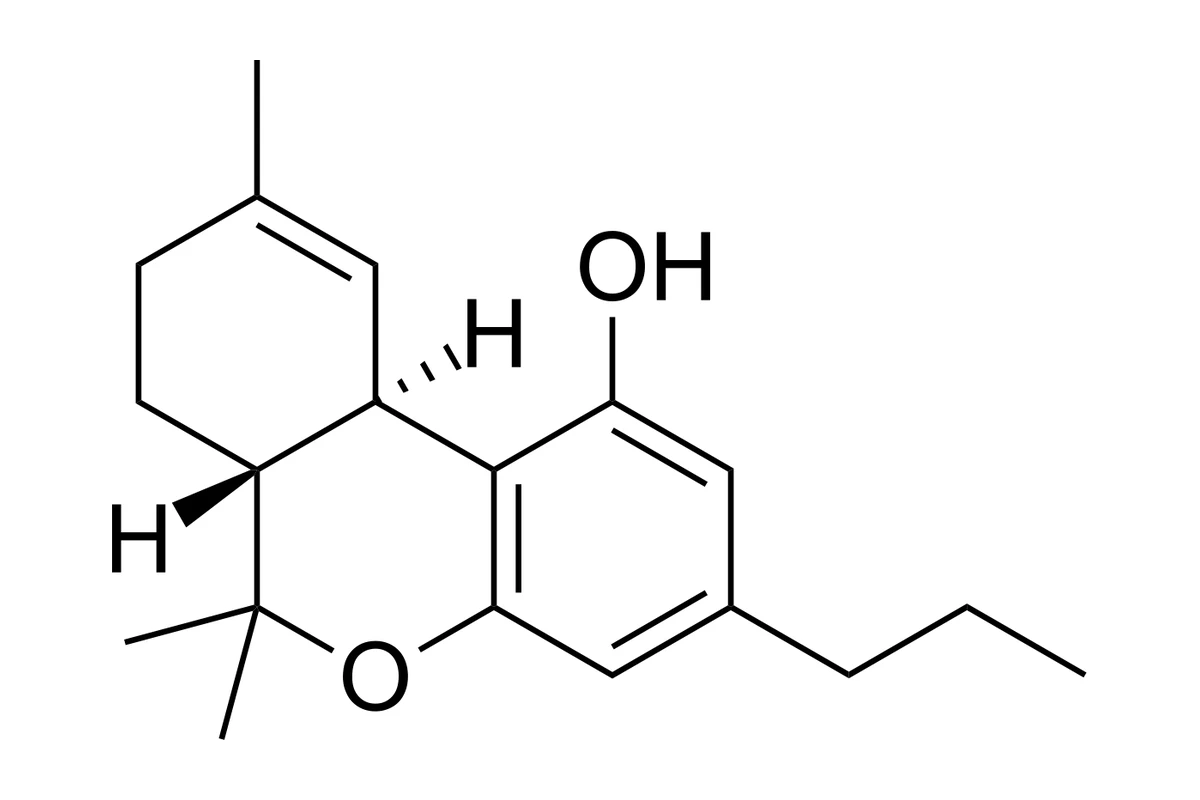
Ingredient name/basic information
| Item | Message | Source |
|---|---|---|
| common name | Tetrahydrocannabivarin | Pubchem(Acquisition date 2026-10-15) |
| English name | tetrahydrocannabivarin | Pubchem(Acquisition date 2026-10-15) |
| Abbreviation | THCV, Δ9-THCV | Pubchem / ChEBI(Acquisition date 2026-10-15) |
| Molecular formula | C19H26O2 | Pubchem / ChEBI(Acquisition date 2026-10-15) |
| Molecular weight | 286.4 g/mol (single isotope mass 286.193) | Pubchem / ChEBI(Acquisition date 2026-10-15) |
| CAS RN | 31262-37-0 ((-)-trans-Δ9-THCV, natural enantiomer) | Pubchem(Acquisition date 2026-10-15) |
| PubChem CID | 93147 | Pubchem(Acquisition date 2026-10-15) |
| ChEBI ID | CHEBI:755032 | ChEBI(Acquisition date 2026-10-15) |
| InChIKey | ZROLHBHDLIHEMS-HUUCEWRRSA-N | Pubchem / ChEBI(Acquisition date 2026-10-15) |
| Material Classification | Phytocannabinoids (dibenzopyran type, propyl derivatives) | Walsh et al. 2021 |
| Naturally existing | can be(Cannabis sativa, L.) | Hillig & Mahlberg 2004 |
| First report | 1971 (Separation. Reported by Merkus and Gill in the same year) | Merkus 1971 / Gill 1971 |
This table uniquely defines the entity of a substance. CAS 31262-37-0 corresponds to the (-)-trans isomer found in plants. CAS codes specific to defined racemic or (+)- isomers have not been found in the research on this page.
Outline
In plant cannabinoid research, THCV has been treated not as a "weak substance with a structure similar to THC," but as a substance whose direction of action differs depending on the receptor. At the CB1 receptor, it behaves as an antagonist that suppresses agonist signaling at low concentrations, while also exhibiting agonist activity. At the CB2 receptor, it has been reported as a partial agonist. This divergence in direction between CB1 and CB2 receptors is at the heart of THCV research interest.The direction of action depends on the experimental system and concentration.
Note that the concentration referred to here is the value obtained in an in vitro experimental system. The effect in animals is expressed in terms of dosage (mg/kg), which is a different hierarchical level from concentration. In the following, both will be distinguished.
In vitro receptor data and human efficacy represent different levels of knowledge. Studies involving the administration of THCV to humans are limited in number and scale (see "Research Status > Human Studies" for details).
The areas where human research is concentrated are obesity and metabolism. In clinical trial registration, a Phase 2 trial targeting type 2 diabetes was conducted in the 2010s, and a metformin combination trial (NCT02053272) that began in 2014 has been completed, but the results have not been published on the registration site. No approved drugs containing THCV as an active ingredient have been found in the research on this page.
In Japan, THCV is a designated drug under the Pharmaceuticals and Medical Devices Act. With the enforcement of the Act on September 10, 2023, the group of substances including Δ9-THCV and Δ8-THCV were comprehensively designated. For patients with refractory epilepsy who have difficulty maintaining their quality of life through other means, the use of THCV-containing CBD products is subject to separate notification regarding procedures for approval as a medical or other use.
What you'll learn on this page
- THCV is not an isomer of THC, but a different substance with a shorter side chain.
- How do our understandings of the mechanism of action differ between in vitro and human studies?
- The status of designated drugs in Japan and the conditions for their use in medical and other applications.
- The scope of search demand observed in our own research and the reasons for not including data that is not publicly available, such as social media data.
Chemical identity
Basic chemical information
THCV has a structure in which one hydroxyl group is bonded to a dibenzopyran ring. Its IUPAC name is (6aR,10aR)-6,6,9-trimethyl-3-propyl-6a,7,8,10a-tetrahydro-6H-benzo[c]chromen-1-ol. The propyl group substituent at position 3 is the structural difference from Δ9-THC, which has a pentyl group.
Its molecular formula is C19H26O2 and its molecular weight is 286.4, which is two fewer carbon atoms than Δ9-THC (C21H30O2, 314.5). Since Δ9-THC and THCV have different molecular formulas, they are not isomers. The natural form is the trans isomer with a stereochemistry of (6aR,10aR).
Regarding the physical properties, logP and solubility are not listed here because no values could be confirmed from primary sources during the investigation of this page. The available data confirms that the standard is commercially available as methanol or acetonitrile solution.
Isomers and analogues
This document clarifies substances that are often confused with THCV. In particular, the common misconception that Δ9-THC is an isomer of THCV is incorrect.
| material | Relationship | Reasons why they are easily confused |
|---|---|---|
| Δ9-THC | A supercongener (not an isomer) with a long side chain. | The names are similar, but the molecular formulas are different: C21H30O2. |
| Δ8-THCV | True isomers with different double bond positions | The names differ by only one letter, but the precise mass is the same. |
| THCVA | Acid form (precursor) of THCV | It is necessary to distinguish between neutral and neutral substances when interpreting the analytical values. |
| CBDV | Cannabidiol-type propyl congeners | They are both valine-based and are listed together on the product label. |
| THCP | THC type with a heptyl group (7 carbon atoms) as a side chain | They have similar names, but they are different substances. |
Δ9-THCV and Δ8-THCV differ only in the position of their double bonds. Because they yield the same precise mass in mass spectrometry, separating them in instrumental analysis presents a challenge. Japanese law designation also included these two compounds as a single group of substances.
The explanation that THCV is an isomer of THC is not valid.Because their molecular formulas are different, they are not structurally isomers. THCV is C19H26O2 and THC is C21H30O2; they are congeners differing in the number of carbon atoms in their side chains, which are 3 and 5, respectively.
This structural relationship is a separate issue from the presence or absence of a conversion path.
- within the plantNo pathway has been reported for the generation of THCV from THC.
- inside a test tubeStudies using human liver microsomes and primary hepatocytes have reported that THCV is converted to THC and CBD (Rao et al. 2023).
The latter is an experimental finding and does not indicate the pathways within plants or the production of THC at concentrations that produce psychoactive effects in humans after oral ingestion.
Naturally existing
THCV is Cannabis sativa, It is a minor cannabinoid found in L. The propyl side chain is determined by the number of carbon atoms in the precursor incorporated before prenylation. In the case of THCV, this precursor is divarinic acid (2,4-dihydroxy-6-propylbenzoic acid). It is also written as varinolic acid in English literature.
The production ratio of propyl and pentyl compounds is genetically controlled and has been reported to exhibit complex segregation deviating from Mendelian ratios (de Meijer & Hammond 2016, Welling et al. 2019). Plants containing relatively high levels of THCV and CBDV areC There are reports that it is biased towards (Hillig & Mahlberg 2004).
Regarding the typical concentration of THCV in dried flower heads, this page's research has not yielded a single authoritative figure. The only quantitative value confirmed is an EFSA evaluation report stating that THCV was 1.73–3.03% w/w in eight lots of hemp extract containing 57–65% CBD.
Differences from market-circulated products
THCV-containing products on the market can be categorized into those with added purified THCV, those using THCV-containing extracts, and full-spectrum products containing multiple cannabinoids. Even if "THCV" is displayed on the label, it is not possible to determine from the label alone whether that number represents the amount of neutral THCV or a converted value including the acidic form (THCVA).
The production of THCV involves both plant extraction and semi-synthesis from cannabidiol-based raw materials. Semi-synthetic products may contain the isomer Δ8-THCV. Since Δ8-THCV and Δ9-THCV yield the same values in mass spectrometry, they may be indistinguishable under certain analytical conditions.
A study of 80 unregulated CBD products included Δ9-THCV and Δ9-THCVA in its analysis. The most frequently detected minor cannabinoids in this study were CBDV (100%), CBG (77%), CBC (72%), CBN (67%), CBL (67%), and CBDA (51%) (Johnson et al. 2025). The breakdown of THCV detection frequency is not available on this page.
Generation/Origin
Biosynthesis
In plants, acidic forms are produced sequentially from the precursor, and then the neutral form is formed through decarboxylation.
Divarinic acid (C3 precursor) ↓ Prenylated CBGVA (cannabigerovalic acid) ↓ Cyclized Δ9-THCVA (tetrahydrocannabivaric acid) ↓ Decarboxylation (heating and long-term storage) THCV (neutral)
During the cyclization stage, there is also a pathway that branches off towards CBDVA, which becomes CBDV. Since it mainly exists in the acidic form in plant material, the content of the neutral form depends on the drying and storage conditions after harvest.
Semi-synthetic/Synthetic
Commercially available THCV standards are supplied both by decarboxylating THCVA isolated from plants and by synthesis from other cannabinoids. Synthetic Δ9-THCV used in pharmacological research is assigned the research code O-4394.
In the semi-synthetic pathway, isomers with different double bond positions may coexist. In a Phase 1 trial involving humans, it was reported that Δ9-THCV and Δ9-THCV-COOH were detected in post-administration plasma, even though Δ9-THCV was not detected when the administered formulation was analyzed by a third-party organization (Sempio et al. 2024). It remains unresolved whether this finding is due to isomerization in the body or a limitation of the analytical method.
History of discovery and research
1971Merkus isolated and reported cannabivarin and tetrahydrocannabivarin from hashish (Merkus 1971). In the same year, Gill... Cannabis A propyl congener was isolated from the compound, and its properties and synthesis were reported (Gill 1971). The order in which this was published could not be determined through the research on this page.
1977Shoyama et al. from Thailand Cannabis Four propyl cannabinoid acids were isolated and their structures determined. THCVA is included among them.
2005Thomas et al. reported that Δ9-THCV exhibits antagonism at CB1 and CB2, suppressing the effects of the agonist (Thomas et al. 2005).
2007Pertwee et al. showed that Δ8-THCV and Δ9-THCV antagonize the effects of Δ9-THC in mice.
2015McPartland et al. systematically reviewed the effects of CBD and Δ9-THCV on the endogenous cannabinoid system.
2016Jadoon et al. reported the results of a randomized controlled trial involving 62 patients with type 2 diabetes.
Analysis and identification
For the quantification of cannabinoids, various methods are used depending on the analyte and purpose, including LC-MS/MS, HPLC-UV/DAD, and GC-MS. Recent LC-MS/MS methods have reported the analysis of 18 cannabinoids in 11 minutes, with baseline separation of structural isomers (Liu et al. 2026). For plasma concentration measurement, LC/LC-APCI-MS-MS combined with online capture is used, allowing simultaneous quantification of Δ8 and Δ9 THC and THCV, as well as major metabolites (Sempio et al. 2024). The limit of quantification is 0.5–2.5 ng/mL.
The difficulty in identification lies not in distinguishing between THCV and THC. Since they have different molecular formulas, they can be distinguished by MRM transitions. The difficulty lies in separating the Δ8 and Δ9 forms within the same series. Their exact masses and fragmentation are nearly identical, making them indistinguishable unless separated by chromatography. Errors occur not due to insufficient separation, but at the peak assignment stage.
Caution is required when using GC-MS. It has been reported that under conditions without derivatization, decarboxylation of acidic cannabinoids is insufficient, leading to an underestimation of the total cannabinoid content (Franzin et al. 2025).
In Japan, THCV is designated as a controlled substance, making the meaning of analytical values crucial during import and quality control. What is measured in controlled substance testing and what is written on the product label are separate pieces of information. The interpretation of COA will be covered later in "Our Own Research > COA".
Mechanism of action
Receptors and enzymes
Receptor activity (binding affinity) and actual effects in humans are two different things. This section summarizes research findings and does not indicate the efficacy of the product.
| Target | Types of activity | Values and findings | Experimental System | Level | Source |
|---|---|---|---|---|---|
| CB1 | Bond (Ki) | 75.4 nM | Mouse meninges, in vitro | L4 | Thomas et al. 2005 |
| CB1 | Bond (Ki) | 22 nM (95% CI 5.0-140 nM) | Human CB1, in vitro | L4 | Zagzoog et al. 2020 |
| CB1 | Equals (apparent KB) | 93.1 nM | [35S]GTPγS, mouse brain | L4 | Thomas et al. 2005 |
| CB1 | antagonist (pA2) | 7.62 (cerebellum), 7.44 (piriform cortex) | [35S]GTPγS, mouse brain | L4 | Dennis et al. 2008 |
| CB1 | cAMP suppression (EC50) | 260 nM (Emax is 59% of CP55,940) | Human CB1, in vitro | L4 | Zagzoog et al. 2020 |
| CB1 | β-arrestin2 mobilization | EC50 > 10,000 nM | Human CB1, in vitro | L4 | Zagzoog et al. 2020 |
| CB2 | Bond (Ki) | 62.8 nM | CHO Human CB2, in vitro | L4 | Thomas et al. 2005 |
| CB2 | cAMP suppression (EC50) | 38 nM | CHO Human CB2, in vitro | L4 | Bolognini et al. 2010 |
| CB2 | [35S]GTPγS binding | Accelerator (like an agonist) | Human CB2, mouse spleen membrane | L4 | Bolognini et al. 2010 |
| 5-HT1A | Enhanced binding and activation | Increased binding of 8-OH-DPAT enhances stimulatory activity at 100 nM. | Rat brainstem, in vitro | L4 | Cascio et al. 2015 |
| GPR55 | Inhibition including antagonism | LPI-induced ERK1/2 phosphorylation is inhibited. Whether this is antagonistic or inverse is inconsistent across reports. | vitro | L4 | Anavi-Goffer et al. 2012 |
| TRPV6 | Inhibition | The complex with the channel structure was analyzed using a cryo-electron microscope. | vitro | L4 | Neuberger et al. 2023 |
| TRPV5, TRPV6 | Inhibition | Inhibits epithelial calcium transport | vitro | L4 | Janssens et al. 2018 |
The binding affinity of CB1 varies from 22 nM to 75 nM depending on the experimental system. In particular, the 95% confidence interval for human CB1 at 22 nM is wide, ranging from 5.0 to 140 nM, and the reporter himself points out the possibility that complete competition is not established. This value cannot be treated as a precise constant.
While 5-HT1A is commonly described as an "agonist," primary studies have shown that it enhances activation through agonist stimulation. It is not reported to be an agonist that directly binds to and activates the receptor.
Level of Evidence
L1 to L4 on this page areThis page and our series are categorized as defined by ourselves.It is not an external, standardized evaluation scale. The definition is as follows:
| Level | Definition |
|---|---|
| L1 | Human intervention studies (randomized controlled trials, crossover trials, etc.) |
| L2 | Human observational studies, case reports |
| L3 | animal research |
| L4 | in vitro, in silico |
The levels of argumentation are described as follows:
- Binding affinity (L4)Both CB1 and CB2 have been reported in in vitro binding experiments. The values depend on the experimental system.
- Functional activity (L4, partially L3)In CB1, antagonism that suppresses the action of agonists has been reported, while weak agonist activity has also been reported (Zagzoog et al. 2020, cAMP suppression EC50 260 nM, Emax 59% of CP55,940). In CB2, cAMP suppression as a partial agonist has been reported. In animals, a dose-dependent switching has been reported, where THCV suppresses the action of Δ9-THC at low doses and exhibits THC-like effects at high doses (Kayir et al. 2025, drug discrimination task using 16 Sprague-Dawley rats). In mice, O-4394 attenuated the analgesic effect and hypothermia of Δ9-THC at 0.1–3 mg/kg, and THCV itself exhibited THC-like effects at 3–10 mg/kg (Pertwee et al. 2007).In vitro concentrations and in vivo doses belong to different hierarchical levels and cannot be treated as the same thing.
- Effects in humans (L1)There are randomized controlled trials targeting type 2 diabetes and small-scale trials targeting healthy individuals. In the type 2 diabetes trials, the primary endpoint (HDL cholesterol) was not met. Other trials have small sample sizes and mainly use indicators such as tolerability and neuronal activity, resulting in limited estimation accuracy for some endpoints.
- Receptor occupancy in humans (not applicable)No studies measuring THCV receptor occupancy in humans were found in the research on this page.
It is not possible to estimate the strength of psychoactive effects in humans from CB1 binding data. The difference in effects between THCV and THC cannot be explained solely by receptor binding values.
Research Status
Areas of research
Research on THCV is scattered across various fields, including metabolism, central nervous system, pain, inflammation, and epilepsy. The focus is primarily on the metabolic domain.
Animal studies have reported improved insulin sensitivity in two types of obese mouse models (Wargent et al. 2013). A follow-up study using GPR55-deficient mice suggested that changes in glucose metabolism may not be mediated by GPR55 (Wargent et al. 2020). Several reviews in the metabolic field have been published, but all are primarily based on preclinical data (Mendoza 2025).
In the field of epilepsy, there are reports that THCV suppressed epilepsy-like activity in rats (Hill et al. 2010). However, this is based on animal studies, and no clinical trials of THCV for human epilepsy have been registered. Clinical trials are currently underway for CBDV, which is a different substance.
Outside of the metabolic field, animal studies have been reported in areas such as nicotine dependence, neuropathic pain, and anticancer drug resistance (Xi et al. 2019, Schwarz et al. 2024, Kalvala et al. 2023). None of these have been confirmed in humans.
Human research
Clinical trialSearch for THCV on ClinicalTrials.gov (THCV or sending us a message on tetrahydrocannabivarinThe following registrations were confirmed (confirmation date: 2026-10-15). This is not an exhaustive search.
| Registration number | Target | phase | sponsor | of people | Status | Publication of results |
|---|---|---|---|---|---|---|
| NCT01217112 | Type 2 diabetes, dyslipidemia | Phase 2 | Jazz Pharmaceuticals | 62 | Completed (2010-2012) | drop-off service |
| NCT02053272 | Type 2 diabetes (with metformin) | Phase 2 | Jazz Pharmaceuticals | 207 | Completed (2014-2016) | None |
| NCT01491490 | Olanzapine-induced weight gain in schizophrenia | Phase 2 | GW Research | 2 | Cancel | Yes (for registration of 2 people only) |
| NCT05210634 | Healthy adults (Δ8-THCV) | Phase 1 | Canopy Growth | 21 | Completed (2022) | None |
| NCT05574049 | Body weight, blood sugar, blood lipids | Early phase 1 | Medical Life Care Planners | 56 | Completed (2022) | None |
| NCT04842383 | Male pattern baldness (Valine and CBD-containing topical hemp oil) | Early phase 1 | Gregory L. Smith, MD | 40 (planned) | Condition unknown | None |
| NCT05396638 | Cannabinoid use during adolescence | Not applicable | University of Colorado Denver | 30 (planned) | Recruitment suspended / ongoing | None |
| NCT06213064 | Effects on motivation and vitality (consumer-direct research) | Not applicable | Phylos Bioscience | 58 (planned) | Condition unknown | None |
| NCT07636356 | Smoking (Δ9-THCV oral gummies) | Phase 2 | UCLA | 32 (planned) | Before registration (scheduled to start in October 2026) | None |
The number of participants is from the registration site. The registration site maintains separate records for actual and estimated participants, and this table follows that distinction. Completed trials are recorded as actual participants on the registration site. Estimated participants are marked with "estimated". The number of registered participants may not match the number of participants analyzed in published literature.While there are 56 registered individuals for NCT05574049, the corresponding published paper (Smith 2025) includes only 44 individuals in its analysis. The difference is thought to be due to dropouts or other factors, but the reason has not been confirmed on this page.
Published human trials :
- Jadoon et al. (2016, type 2 diabetes, 62 subjects, 13 weeks): The primary endpoint, HDL cholesterol, did not differ from placebo. Differences were reported in fasting blood glucose (estimated treatment difference -1.2 mmol/L, p<0.05), HOMA2 β-cell function (-44.51 points, p<0.01), adiponectin, and apolipoprotein A in the THCV monotherapy group. No significant differences were observed in any of the endpoints in the CBD combination therapy group.
- Englund et al. (2016, 10 healthy men, 5 days): THCV 10 mg was administered orally for 5 days, followed by intravenous administration of Δ9-THC 1 mg. THCV was well-tolerated and indistinguishable from placebo. Suppression of heart rate increase and impaired delayed recall occurred only in the placebo condition. On the other hand, the Δ9-THC dose in this trial did not sufficiently induce psychiatric symptoms or memory impairment, and the authors themselves pointed out problems with dose selection.
- Rzepa et al. (2016, 20 healthy subjects, single dose of 10 mg) and Tudge et al. (2015, 20 healthy subjects, single dose of 10 mg) both reported changes in neural activity as measured by functional MRI. No subjective changes in experience were detected.
- Peters et al. (2023, healthy adults, Δ8-THCV, 12.5–200 mg): Dose escalation study. Most adverse events were mild, with euphoria being the most common. THC-like effects were observed at high doses, and most urine samples after administration were positive for THC immunological testing.
- Smith (2025, 44 participants, 90 days): A study of oral mucosal strips containing THCV and CBD (corresponding to NCT05574049 on ClinicalTrials.gov). 56 participants were enrolled, with 44 included in the published analysis. Statistically significant changes were reported in body weight, waist circumference, systolic blood pressure, total cholesterol, and LDL cholesterol. This was a combination product of THCV and CBD, not THCV alone, and the dosage settings included 8 mg or 16 mg of THCV. The authors themselves cite the small sample size in the high-dose and placebo groups as a limitation. These results cannot be interpreted as solely attributable to the effects of THCV alone.
Data limitations
The current state of research has the following limitations:
- The largest Phase 2 trial (NCT02053272, 207 enrolled) has been completed, but the results have not been released. Correlation with published literature has also not been confirmed.
- The major human intervention studies reviewed on this page are relatively small-scale studies involving 10 to 62 participants. Estimation accuracy may be limited for some evaluation parameters, and caution is needed when generalizing the results.Meanwhile, a Phase 2 trial (NCT02053272) with 207 registered participants has also been completed, but the results have not been confirmed in the investigation on this page. The number of people analyzed and the number of registered users may not match.
- No studies have measured receptor occupancy in humans, and the pathway linking in vitro binding levels to human action has not been identified.
- The effects on 5-HT1A are limited to in vitro studies and animal studies, and have not been verified in humans.
- While there are reports on the pharmacokinetics specific to THCV for the Δ8 strain, human data for the Δ9 strain are limited.
- While there are reports that THCV, one of the metabolites, is converted to THC and CBD in vitro (Rao et al. 2023, liver microsomes and primary hepatocytes), it has not been confirmed whether THC levels sufficient to produce psychoactive effects are produced in humans after oral ingestion. Findings in experimental systems cannot be directly translated to what happens in humans.
- Identification of CYP molecular species specific to THCV and quantitative data on drug interactions are available.This information was not confirmed in the investigation on this page..
- Funding bias cannot be ruled out. The 2023 dose-escalation study (Peters et al.) had several authors affiliated with cannabinoid companies, and the 2025 oral mucosal strip study (Smith) was reported by authors affiliated with the manufacturer. Neither can be considered an independent replication study on its own.
- There is a practical gap regarding the availability of reference standards and the standardization of analytical methods. The supply status of standards capable of separating isomers has not been confirmed in the investigation on this page.
- Human studies are mixed, with some using the Δ8 and others the Δ9 isomer. While most published studies use Δ9-THCV, a 2023 dose-escalation study and pharmacokinetic research focused on the Δ8 isomer. The pharmacological properties of the two isomers are considered different (Sempio et al. 2024), and it is not possible to discuss their effects without distinguishing between the isomers.
- Human data on abuse and addiction areThis information was not confirmed in the investigation on this page.In mice, cannabimimeric behavior has been reported to occur only in females (Schwarz et al. 2024). Evaluation in humans, including sex differences, has not been conducted.
- There is a lack of independent, unfunded replication studies. Much of the key findings are reported by authors involved in the cannabinoid business.
Safety
This information is based on verified research and public data. This section is not a substitute for medical advice. Consult a healthcare professional if you have any health concerns.
toxicity
Adverse events in humans have been reported in a 13-week trial for type 2 diabetes. There were no serious adverse events in the THCV monotherapy group (12 patients), and non-serious adverse events were widely distributed across all groups. Serious events recorded included myocardial ischemia in the placebo group, myocardial infarction in the 20:1 CBD and THCV combination group, self-injurious thoughts in the 1:1 combination group, and suicidal ideation in the 20:1 combination group.
These are isolated events in groups of 11-14 people and do not indicate a causal relationship. At the same time, it is impossible to conclude that "THCV is safe" based on a trial of 62 subjects over 13 weeks. Claiming safety is different from claiming that no adverse events have been reported.
In dose-escalation studies of Δ8-THCV, the safety profile was favorable in the range of 12.5–200 mg, with 55 of the 60 adverse events being mild. The most common adverse event was euphoria. Ratings of "feeling the drug's effects" and "liking the drug's effects" increased from 100 mg to 200 mg.
The specific no-observed-adverse-effect level (NOAEL) and acceptable daily intake for THCV were not confirmed in the study on this page. Cannabis sativa, In evaluating the extract as a novel food, the NOAEL (No Observed Adverse Energy Value) testing at the extract level was deemed insufficient, and a NOAEL for THCV alone has not been established.
Drug interactions
Data on THCV-specific drug interactions were not found in the research conducted on this page. No reports were found regarding the identification of CYP molecular species, quantification of inhibition or induction, or pharmacokinetic interactions in humans that target THCV.
Human studies on cannabinoid drug interactions have focused on formulations primarily composed of CBD and Δ9-THC. One report (Bansal et al. 2023, human; evidence level L1) indicates that the combined use of CBD and Δ9-THC inhibits CYP2C19, CYP2C9, CYP3A, and CYP1A2. This study evaluated CBD and Δ9-THC, but did not include THCV. It has not been confirmed whether the same inhibition occurs with THCV.
The lack of a basis for judgment cannot be treated as a justification for safety. The impact of concomitant medications cannot be evaluated at this time.
Targets requiring special attention
- Pregnant and breastfeeding women: Safety data for THCV are available.This information was not confirmed in the investigation on this page..
- Minors: Data on THCV in children and adolescents are available.This information was not confirmed in the investigation on this page..
- Individuals with impaired liver or kidney function: Pharmacokinetic data for THCV are limited, making it impossible to assess its effects.
- For individuals using multiple medications: CYP interaction data for THCV is not available in this study, and therefore, the effects of concomitant use cannot be predicted.
- Individuals with a history of mental illness: Effects on the central nervous system have been reported, and THC-like effects have been observed at high doses. Individual risk assessment is necessary.
- Patients with schizophrenia: A phase 2 trial targeting olanzapine-induced weight gain was discontinued due to insufficient enrollment. Safety in this population has not been established.
Instructions regarding dosage and administration methods are not covered on this page. Consult a healthcare professional if you are considering using this medication.
Differences from other cannabinoids
Since there is no direct comparative data in humans, we will not rank them as "strong" or "weak." We will organize them using comparable axes. The table will cover three substances: THCV, Δ9-THC, and CBD. CBDV will be excluded from the table and discussed in the paragraph below the table.
| 軸 | THCV | Δ9-THC | CBD |
|---|---|---|---|
| side chain | Propyl (C3) | Pentil (C5) | Pentil (C5) |
| Molecular formula | C19H26O2 | C21H30O2 | C21H30O2 |
| CB1 binding affinity | 22–75 nM (Human CB1 22 nM, Mouse 75.4 nM) | 25.1 nM (human CB1) | This page does not show numerical values. |
| Legal treatment (Japan) | Designated drugs | drug | There is no independent designation for this ingredient. The product's handling is determined by the part of the raw material used and the amount of residual THC. |
Source: THCV CB1 affinity is based on Zagzoog et al. 2020 (human CB1) and Thomas et al. 2005 (mouse). Δ9-THC is based on a meta-analysis by McPartland et al. 2007. CBD is not shown because, as confirmed on 2026-10-16, the abstract of the same meta-analysis states that "sensitivity analysis did not support the validity of the CBD value."
The binding affinity values in the table are based on the conditions indicated in the source (human/animal, tissue/expressing cells). Since the values vary depending on the experimental system, it is not possible to directly compare the strengths of different substances. Details of the receptor's action are described in "Mechanism of Action".
THCV and CBDV belong to the same propyl group, but their skeletons are different. THCV is the THC type (cyclized dibenzopyran), while CBDV is the CBD type. Due to the similarity of their names, they are sometimes mistakenly considered the same. The pharmacological properties of CB1 and CB2 do not overlap, but both have been reported to show activity in the same experimental system for GPR55 and TRP channels (Anavi-Goffer et al. 2012, De Petrocellis et al. 2011).
Legal status
Japan
Date of verification: 2026-10-16
THCV is under the Pharmaceuticals and Medical Devices ActDesignated drugsDesignated drugs are prohibited from being manufactured, imported, sold, given away, possessed, purchased, acquired, or used for purposes other than medical use.
The designation is made not as a single substance name, but as a group of substances. The current ministerial ordinance designates the following two groups (as written in the original text):
6a,7,8,10a-tetrahydro-6,6,9-trimethyl-6H-dibenzo[b,d]pyran is a compound in which one hydroxyl group or acetoxy group is bonded to the 1st position and a linear alkyl group (limited to those having 3 to 8 carbon atoms) is bonded to the 3rd position, and no substituents are bonded to any position other than the 1st and 3rd positions, as well as salts thereof. However, this excludes narcotics as defined in the Narcotics and Psychotropic Substances Control Law.
6a,7,10,10a-tetrahydro-6,6,9-trimethyl-6H-dibenzo[b,d]pyran is a compound in which one hydroxyl group or acetoxy group is bonded to the 1st position and a linear alkyl group (limited to those having 3 to 8 carbon atoms) is bonded to the 3rd position, and no substituents are bonded to any position other than the 1st and 3rd positions, as well as salts thereof. However, this excludes narcotics as defined in the Narcotics and Psychotropic Substances Control Law.
The source is the current text of Ministry of Health, Labour and Welfare Ordinance No. 14 of 2007 (Ordinance Specifying Designated Drugs and Their Uses in Medicine, etc.). The first corresponds to type Δ9, and the second to type Δ8.
THCV is included in this group of substances because its substituent at position 3 is a propyl group (3 carbon atoms). Both Δ9-THCV and Δ8-THCV are included. Δ9-THC, which is treated as a narcotic, is excluded from this group of designated drugs due to an exclusion clause.
Medical and other uses
The medical and other uses of designated drugs are limited to those specified by ministerial ordinance. Regarding THCV, the use of CBD products containing THCV for the purpose of maintaining quality of life (QOL) is permitted for individuals with intractable epilepsy who have difficulty maintaining their QOL through other means (Pharmaceutical Affairs Bureau Notification No. 1201-1, December 1, 2023).
This framework has conditions.
- This applies only to CBD products containing THCV. Products mixed with other designated drugs such as THCH are not included.
- The target disease is limited to intractable epilepsy. Other diseases and general health purposes are not covered.
- Before using or purchasing the product, you must submit a "Report on Use for Medical and Other Purposes" to the Ministry of Health, Labour and Welfare and obtain a confirmation certificate.
- The report must include product information, a doctor's diagnosis, instructions for use, dosage, duration, and storage methods. Depending on the content of the submission, additional documents may be requested.
- The confirmation document specifies a range of quantities that have been verified, and obtaining more than that range is not permitted.
- When importing, import procedures will be carried out based on the confirmation document.
- Acquisition should be limited to the minimum necessary amount, and management measures are required to prevent theft and unauthorized removal. Proper disposal methods are also necessary.
The issuance of a confirmation document does not unconditionally authorize its use. It is permitted as long as the conditions regarding the target disease, product, quantity, and storage are met.
The information provided here outlines the legal framework and does not constitute an endorsement of use or acquisition. THCV is regulated as a substance that may cause health hazards if used on the human body.
Penalties
Penalties for manufacturing, importing, selling, giving away, possessing, purchasing, receiving, or using for purposes other than medical use vary depending on the type of act.
- As a business, when manufactured, imported, sold, given away, or possessed (of which the article states "when possessed")Limited to storage and display for the purpose of sale or distribution.This offense is punishable by imprisonment for up to five years or a fine of up to 5 million yen, or both (Article 83-9).
- Other than those aboveViolations of this law (such as possession, purchase, acquisition, or use not conducted as a business) are punishable by imprisonment for up to three years or a fine of up to 3 million yen, or both (Article 84).
The article numbers are based on the current articles from e-Gov's legal search (confirmed 2026-10-16). Article 83-9 stipulates a sentence of 5 years or less when "in violation of the provisions of Article 76-4, one manufactures, imports, sells, or gives away designated drugs as a business, or when one possesses designated drugs (limited to when one stores or displays them for the purpose of sale or giving them away)." Article 84 has 29 items in paragraph 1, and stipulates a sentence of 3 years or less when any of the items apply. Regarding designated drugs:No.28"When the provisions of Article 76-4 are violated (Except when the preceding article appliesThis applies to acts that do not fall under Article 83-9.
With the 2025 amendment to the Penal Code, the old term "imprisonment with hard labor" has been changed to "detention."
Primary source
- Ministry of Health, Labour and Welfare: "Three substances and two groups of substances that make up dangerous drugs have been newly designated as controlled substances" (August 31, 2023)
- Ministry of Health, Labour and Welfare Ordinance No. 109 of 2023, "Ministerial Ordinance Partially Amending the Ministerial Ordinance Specifying Designated Drugs as Defined in Article 2, Paragraph 15 of the Act on Securing Quality, Efficacy and Safety of Pharmaceuticals, Medical Devices, etc., and the Uses for Medical and Other Purposes as Defined in Article 76-4 of the same Act" (Promulgated 2023-08-31, enforced 2023-09-10).https://laws.e-gov.go.jp/law/505M60000100109
- Ministerial Ordinance Specifying Designated Drugs as defined in Article 2, Paragraph 15 of the Act on Securing Quality, Efficacy and Safety of Pharmaceuticals, Medical Devices, etc., and the Uses for Medical and Other Purposes as defined in Article 76-4 of the same Act (Ministry of Health, Labour and Welfare Ordinance No. 14 of 19, e-Gov Laws and Regulations Search).https://laws.e-gov.go.jp/law/419M60000100014
- Ministry of Health, Labour and Welfare, Pharmaceutical Affairs Bureau Notification No. 1201-1, "Regarding the procedures related to Appendix 3 concerning the establishment of ministerial ordinances specifying designated drugs as defined in Article 2, Paragraph 14 of the Pharmaceutical Affairs Law and medical and other uses as defined in Article 76-4 of the same Law" (December 1, 2023)
History of regulations
| Date | Classification | Event | Source |
|---|---|---|---|
| 2023-08-30 | Deliberation | The Designated Drugs Subcommittee of the Pharmaceutical Affairs and Food Sanitation Council has determined that it is appropriate to designate the group of substances in question as designated drugs. | Ministry of Health, Labour and Welfare Press Release |
| 2023-08-31 | Announce | Ministry of Health, Labour and Welfare Ordinance No. 109 of 5 was promulgated. | Ministry of Health, Labour and Welfare Press Release |
| 2023-09-10 | Enforcement | Two groups of substances, including Δ9-THCV and Δ8-THCV, have been designated as controlled substances and are now subject to regulation. | Ministry of Health, Labour and Welfare Press Release / Ministry of Health, Labour and Welfare Ordinance No. 109 of 5 |
| 2023-12-01 | notification | Procedures for the use of THCV-containing CBD products for medical and other purposes in patients with intractable epilepsy will be established. | Pharmaceutical Affairs Bureau Notification No. 1201-1 |
Distinguish between the publication date and the effective date. Regulations change, so always check the latest primary sources before selling or importing.
Overseas
No approved drugs containing THCV as an active ingredient have been found in the research conducted on this page. In the EU,Cannabis sativa, There have been instances where extracts have been evaluated as novel food products, and the THCV content has been reported in those evaluations. However, this evaluation was for the extract as a whole, and not for THCV alone.
Regulatory treatment in the United States and other countries varies depending on the origin of the raw materials and state laws, and this information is not verified through primary sources. Do not assume that overseas treatment is equivalent to legality in Japan.
Market and social trends
Products containing THCV are available in various forms, including liquids, oils, and oral strips. Overseas, it has been reported that the product has gained popularity as a nickname for weight management, based on references to blood glucose and appetite in preclinical studies (Haghdoost et al. 2025). This type of explanation preempts results from animal and cell studies.
In Japan, the designation of this drug as a controlled substance in 2023 served as the catalyst for media coverage. The continued research reports in the metabolic field overseas are being used as explanatory material by product manufacturers (INTERPRETATION). This page's internal research focuses only on search trends within Japan and does not observe mention trends overseas.
The issues at stake in the market are as follows:
- The label information does not match the actual ingredients. Some products contain mixed isomers, and the indication of whether or not they contain the acid form is unclear.
- Confusion of regulatory classifications. While a substance is a designated drug in Japan, it is legally sold in some regions overseas, which can lead to misunderstandings regarding classifications in cross-border trade.
- The gap between preclinical data and consumer-facing representations. There are instances where results from animal studies are directly used to describe subjective experiences.
Observation and inference must be distinguished. Market expansion or contraction cannot be described as causal based on the data on this page.
Independent research
The data in this section is based on our own research and is not third-party research. It is primary data that has not been peer-reviewed. Search indices do not directly represent the number of users, sales volume, or market size.
The claims in this section will be labeled to distinguish between observation and interpretation.
| label | meaning | Subjects in this section |
|---|---|---|
| OBSERVED | Measured and observed facts | Collected series and number of items |
| DERIVED | Aggregated values recorded by the dataset | Average value, peak value, latest value (not recalculated by this page) |
| INTERPRETATION | Interpretation from observations | Readings regarding the timing |
| HYPOTHESIS | Unverified hypothesis | Inferences about the driving forces behind the fluctuations |
Survey method
research questions: Google search interest for THCV in Japan has been the most recent 5 years according to Google Trends (today 5-yDuring the period covered by the weekly total of 262 points, when did the peak occur, and how did it change over time?
The study aims to identify the average, peak, and latest values over a 5-year period, as well as the timing of the peak. Causal relationships with regulations and market movements will not be considered.
The period is the collection run. timeframe: today 5-yThis covers the most recent 5 years as of the collection date. The number of weeks is 262, which is the same as the recorded value in the dataset (including run summaries).
The data published is aggregated, and the weekly series themselves are not included in the public archive. The run record includes the first appearance (2022-02-27, value 38), 45 non-zero weeks / 217 zero weeks, and the period for which data is available (2021-10-17 to 2026-10-18). The data acquisition date is 2026-10-23. Because Google Trends weeks are aggregated according to the divisions defined by the provider, the most recent week may include values that were not finalized at the time of collection.
| Item | Message |
|---|---|
| data source | Google Trends (Region: Japan, Web Search) |
| Search Query | THCV(The query_id of the dataset is thcv-general-ja) |
| Acquisition period | Last 5 years (weekly, 262 weeks) |
| Data acquisition date | 2026-10-23 |
| run used for aggregation | 20261023T160436Z-google-trends-thcv-5y |
| Includes criteria | Region: Japan, Period: Today, 5-Y, Query THCV |
| Exclusion Criteria | Not applicable (no exclusion process required due to being a single series) |
| statistical processing | The weekly average, peak value, and latest value are all recorded. Nothing else is recorded. |
The collection date and run identifier are separate pieces of information. The date and time included in the run identifier (2026-10-23) is the recording date and time of the run, which is the same day as the data acquisition date (2026-10-23). The dataset also... run_id with collection_date It is kept as a separate item.
samplingThe dataset records the period as 262 weeks. The researchers did not extract weeks. Public archive (japan-cannabinoid-trends-v1.14.9-clean.zip) Is datasets/cannabinoid-platform-trends This includes an audit summary and weekly series. datasets/cannabinoid-multi-trends It does not include the public status of the relevant run in the public run index. published_summary On the other hand, the index itself is a relative value based on a sample extracted and compiled by Google from search activity.The fact that this page does not perform data extraction is separate from the fact that the index represents the entire population. Please note that this run does not contain raw data for weekly series, therefore the weekly indices on this page were not obtained by this page.
Comparability between data sourcesOnly one source, Google Trends, is included. The dataset itself prohibits direct comparison between relative indices and YouTube counts.
Data not to be published:先行して公開された調査ページの YouTube と X の集計値は、抽出条件の一部が未記録であり、そのままは掲載しない。データセットの公開テーブルは THCV の YouTube を「未収集」(COL-033 の採用状況)と明示している。研究側の公開ページが run と条件を記録して公開した集計値のみ「SNS動向」以降に掲載する。
データセット
| Item | Message |
|---|---|
| Name | Japan Cannabinoid Platform Trends Dataset 2026: Google Trends and YouTube Evidence from Japan |
| Version | 1.14.9 |
| release date | 2026-11-10 |
| Author / Authors | KATO, Kyoji |
| license | CC BY 4.0 |
| DOI | 10.5281/zenodo.23390594 |
| URL | https://doi.org/10.5281/zenodo.23390594 |
The search trend figures on this page are from a table that includes aggregated indicators published by the dataset (trend_observations.csv,platform_coverage.csv) and its original source, run 20261023T160436Z-google-trends-thcv-5y This corresponds to [the original source]. Readers can check the original source from the DOI.
About the cited datasetThe dataset cited on this page was released as v1.14.9 on 2026-11-10, and the conceptual DOI (10.5281/zenodo.23390594) resolves to the latest version. (Older version records (v1.14.4) 23962400 v1.14.5 23964186 v1.14.6 24015482 v1.14.7 24015951 v1.14.8 24114004 (See also the following) (verified on November 6, 2026). This page quotes the current Version 1.14.9 and its conceptual DOI. See the changelog for details.
Search Trends
対象キーワードTHCV Region:Japan Period:Past 5 years (weekly) Search type: Web search
5-year data (262 weeks, collected on 2026-10-23, DERIVED):
| index | value | Classification |
|---|---|---|
| 5 year average | 7.43 | DERIVED |
| peak | Week beginning April 03, 2023 (Index 100) | DERIVED |
| Latest value | 0 | DERIVED |
The dataset for THCV records the mean, peak, and latest value of the 5-year series, as well as the week of first appearance, the number of non-zero weeks, and the period for which data is available (first appearance 2022-02-27, value 38, non-zero weeks 45 / zero weeks 217).
Source is run 20261023T160436Z-google-trends-thcv-5y(Japan, past 5 years, collected on 2026-10-23, query) THCV).The average, peak, and latest values are available on the public table.trend_observations.csvIt is recorded on ), first appearance (2022-02-27, value 38), non-zero weeks 45 / zero weeks 217, and the period for which data is available (2021-10-17 to 2026-10-18) is based on run records. The peak week (2023-09-03) is recorded in the audit summary (the public table only has values and does not have week dates).
The peak week corresponds to the original source of the dataset. 2023-09-03 to 2023-09-09 This is recorded.September 3, 2023 is the start of the week. The weekly division is defined by the provider.
About the 12-month series:集計テーブル(trend_observations.csv)に 12ヶ月系列の行は無い。研究側の公開ページには、2026-10-23 収集の run 20261023T161929Z-google-trends-thcv-12m による 12ヶ月平均 1.9(観測 2025-10-19 〜 2026-10-18、53 週)が記録されている。以前の記録にあった 3.1 は別 run の値である。5 年系列とは窓の長さも正規化の基準も別であり、両者の平均を比較しない。
Reference to weekly seriesThis page displays aggregated data over a 5-year period. Weekly trends are not shown on this page, and the weekly series itself is not included in the public archive.Therefore, it is not possible to recalculate and verify the results from the original source's sequence. The values on this page are aggregated values (week number, mean, peak, latest value, non-zero week number) recorded by the dataset.
The Google Trends Index is a relative value normalized within a given time period and region, and not the actual number of searches. The fact that the latest value is 0 means thatThis means that the number 0 was displayed during Google Trends' normalization and aggregation process, and does not indicate that there were actually 0 searches. This page can only disclose the fact that "the exponent was recorded as 0," and the reason for this (low search volume, rounding, normalization) cannot be determined from the data on this page.
The peak was recorded in the week of September 3-9, 2023 (original record). 2023-09-03 to 2023-09-09 (According to [source]). This week falls after the date of promulgation of the designation as a controlled substance (August 31, 2023) and before the enforcement date (September 10, 2023) (INTERPRETATION). However, this temporal proximity does not indicate that the regulation caused a change in search interest. To identify the cause, it is necessary to examine the weekly series itself, and this page does not include the series.
The source of the dataset notes that the condition where many weeks since December 2023 are recorded with an index of 0 is "below the detection limit."This is a record and interpretation from the dataset itself, and cannot be derived from the three metrics listed on this page. The reason why 0 was recorded cannot be determined from the data on this page.
Keyword classification and presence or absence of seriesThis page is about compound words. THCV and product name THCV リキッド Treat this as a separate measurement. The following table records whether the public dataset returned a series.
| word | Google Trends 5 Years | Google Trends 12 Months |
|---|---|---|
THCV(Compound words) | Related | Related |
THCV リキッド(Product word) | Related | does not date |
Platform-specific statusYouTube did not have any runs that were adopted.not_collected(未収集。欠測であり、観測された 0 ではない)。X はデータセットの公開対象外だが、研究側の公開ページが分類集計を公開しているため、本ページは件数・比率・95% CI のみを「X の言及分類」に掲載する。
Distinction of missing data : no data This is a record of Google Trends not returning a series because it was below a threshold, and does not indicate that search demand was zero.未収集(Not collected from this source) 公開対象外(Collection is conducted, but it is outside the scope of public disclosure) is a separate matter.Do not attempt to fill in missing words with other words or values from other time periods.
Treatment of cross-sectional comparisonsThe 5-year series on this page is one of 13 compounds collected using the same rules in the dataset. However, individual series are normalized word by word,Do not directly compare the average value with the average value of other compounds. 化合物間の比較は共通スケールの run のみで行う。現行窓の値は「共通スケール比較」に掲載する。
共通スケール比較(5 年・現行窓)
同じ要求に CBD・THC のアンカーを含む run の値である。正規化は同一要求内の最大値(CBD の 2025-08-31)= 100 であり、単独系列(各語のピーク = 100)とは換算しない。
| 検索語 | average | Non-zero weeks | Classification |
|---|---|---|---|
| CBD (Anchor) | 33.0916 | 262 weeks | Derivation |
| THC (Anchor) | 5.0496 | 262 weeks | Derivation |
| THCV | 0.0878 | 22 weeks | Derivation |
Source is run 20261104T195126Z-google-trends-cannabinoid-raw-collection(query_id comparison-5y-setA / 日本 / today 5-y / 窓 2021-10-31_2026-11-08 / 観測 2021-10-31 〜 2026-11-01(262 週) / 2026-11-04T19:51:26.401407Z 収集)である。平均は週次 262 点の算術平均(小数第 4 位)。
要求語は 5 語(CBD・THC・CBG・HHC・THCV)で、本表はこのうち CBD・THC と THCV を載せる。
比較できるのは、この要求の中だけである。 別の run・別の窓・単独系列の値とは比較しない。
SNS trends
本ページは、X の個別投稿と YouTube の動画単位の行を掲載しない。 研究側の公開ページが公開する集計値(X の分類、YouTube の収集結果と月次公開日件数)は、以下の節に run と条件を付けて掲載する。
Public coverage table of the dataset (platform_coverage.csv) describes THCV as follows (OBSERVED):
| platform | Status | Remarks |
|---|---|---|
| Google Trends | observed | Only the average, peak, and latest values for the 5-year series are shown. |
| YouTube | not_collected | COL-033 で採用された run がない。欠測であり、観測された 0 ではない(別 run の集計は「SNS動向」以降に掲載) |
| X | Not for public release | データセットの公開スコープから除外されている(研究ページの分類集計は「X の言及分類」に掲載) |
先行して公開された調査ページには、YouTube と X の集計値(動画 23 件、投稿 40 件など)が掲載されていた。これらはデータセットの公開対象に採用されておらず、クエリや抽出条件の一部も記録されていない。また、当該の YouTube データは THCV 以外の物質を扱う動画を多く含んでいた。**研究側の公開ページ(v1.14.7)には、THCV リキッドの動画分析(取得日 2026-10-09、23 件)と 2026-11-01 収集 run の月次公開日件数、X の分類集計が、run と条件つきで記録されている。**本ページは、その記録がある集計だけを「YouTube 動画分析」「X の言及分類」の各節に掲載する。
The fact that the index after the regulation is recorded as 0 and the decrease in mentions on social media are two separate events. This page does not monitor the timeline of social media activity.
The number of posts on social media does not indicate the number of users or sales volume. A distinction is made between "changes in posts before and after regulations" and "changes in posts due to regulations."
YouTube 動画分析(THCV リキッド の収集 run)
研究側の公開ページ「THCV の YouTube 動画分析」に記録された、THCV リキッド の収集 run(取得日 2026-10-09、23 件)の集計値である。投稿日は YouTube Data API から取得した絶対日付である。研究側は同 API の利用を 2026-10-12 の方針判断で取り止め、当時の raw を削除しているため、この値は削除前の取得結果であり、再取得しない。
| index | value |
|---|---|
| ユニーク動画数 | 23 pieces |
| 投稿日範囲 | 2018-03-15 ~ 2025-08-21 |
| Acquisition date | 2026-10-09 |
| 検索語 | THCV リキッド |
| 再生数 平均 | 40,870 |
| 再生数 中央値 | 9,850 |
| 再生数 最大 | 624,294 |
| 再生数 最小 | 61 |
再生数は取得時点の値であり、動画の追加・削除や視聴の増加で変動する。動画単位の行(動画 ID・タイトル・チャンネル・URL・再生数)は、研究側の方針と同じく掲載しない。
YouTube 月次公開日件数(THCV リキッド・date_filter=all)
研究側の公開ページ「THCV リキッドの月次公開日件数」に記録された 1 run の集計値である。返却件数と観測公開日範囲は run が返した記録、ピーク月・年次分布・再生数統計はその返却レコードからの派生値である。
| index | value |
|---|---|
| run | 20261101T112534Z-youtube-cannabinoid-raw-collection |
| date_filter(API 要求条件) | all(dateFilter を指定しない無制限要求) |
| 収集開始 / 収集終了(UTC) | 2026-11-01T11:25:34.395Z / 2026-11-01T11:33:17.639Z |
| 返却件数 | 435 pieces |
| 観測公開日範囲 | 2011-08-15 〜 2026-10-14(UTC、返却レコードの公開日。半開区間は [2011-08-15, 2026-10-15)) |
| ピーク月(返却サンプル内) | 2023-05(17 件) |
| 再生数 最大 / 中央値 / 平均 / 最小 | 9,560,084 / 1,689 / 101,656.57 / 5(取得時点の値) |
年次分布(返却サンプル内の公開日件数):
| Years | number |
|---|---|
| 2011 | 1 |
| 2012 | 3 |
| 2013 | 3 |
| 2014 | 1 |
| 2015 | 3 |
| 2016 | 8 |
| 2017 | 12 |
| 2018 | 12 |
| 2019 | 19 |
| 2020 | 24 |
| 2021 | 55 |
| 2022 | 97 |
| 2023 | 112 |
| 2024 | 35 |
| 2025 | 34 |
| 2026 | 16 |
年次分布の合計は返却件数と一致する(435 件)。ピーク月は返却サンプル内の最多月で、同点の月はすべて併記している。
本節の制約:月次・年次件数は返却サンプル内の公開日件数であり、YouTube 全体の投稿数ではない(全動画を網羅しない)。結果上限は maxResults=500 と記録され、返却 435 件はその上限未満である。ただし返却サンプルは一致する動画の総数ではなく、検索の到達範囲も記録からは確定できないため、件数は総数の推定に使わない。再生数は取得時点の値であり、変動する。未取得を 0 観測として扱わない。date_filter の異なる run とは比較せず、run を合算しない。動画単位の行(動画 ID・タイトル・チャンネル・URL・再生数)は公開しない方針である。
X の言及分類(研究ページの集計)
この集計は研究側の公開ページにのみ記録されており、引用しているデータセット(Zenodo)には X が収録されていない。 DOI からは確認できず、原典から再計算もできない値である。個別投稿(本文・ユーザー名・URL)は掲載しない。
| index | value |
|---|---|
| 元データ件数 | 40 pieces |
| 有効分類数 | 40 件(0 件除外) |
| 言語フィルタ | 日本語(lang:ja) |
| Acquisition date | 2026-10-08 |
| 観測期間(観測値) | 記録なし(取得日のみ) |
コンテンツ分類:
| Category | number | ratio | 95% CI |
|---|---|---|---|
| 製品宣伝・販売 | 0 | 0.0 % | [0%, 8.8%] |
| Product review | 1 | 2.5 % | [0.4%, 12.9%] |
| 会話・引用 | 18 | 45.0 % | [30.7%, 60.2%] |
| Other Information | 21 | 52.5 % | [37.5%, 67.1%] |
分類はキーワードベースのルール分類であり、95% 信頼区間は Wilson スコア法による。文脈による誤分類の可能性があり、X 検索結果のサンプルであって全投稿を網羅しない。
件数は使用した人の数でも、販売量でもない。 分類の比率を、市場の構成比として読まない。
WITH THE
A Certificate of Analysis (COA) is a certificate proving that the ingredients in a product have been analyzed. This page will only cover the general interpretation and limitations of a COA.
What is included in the COADepending on the tests performed, the COA may include results for cannabinoid profiles, pesticide residues, heavy metals, solvent residues, microorganisms, and other related tests.
How to read COAConfirm the name and accreditation of the testing laboratory, the extraction method, the limit of quantification, and the units. For the quantification of cannabinoids, methods such as LC-MS/MS, HPLC-UV/DAD, and GC-MS are used, depending on the analyte and purpose. In the case of GC-MS, insufficient decarboxylation of acidic cannabinoids will lead to an underestimation of the total amount. If THCV is included, confirm whether the Δ8 or Δ9 form was measured, and whether the acidic form is included.
Lot-to-lot variations in natural productIn plant-derived ingredients, the cannabinoid composition varies from batch to batch. A Certificate of Analysis (COA) is an analytical record for a specific batch and does not guarantee other batches or other manufacturing processes.
Reasons why buyers should check the Certificate of Authenticity (COA)This is to confirm that the label information matches the actual ingredients. In products containing THCV, a designated drug, a discrepancy between the label and the actual ingredients directly leads to legal problems.
Things this page does not cover
- Presentation of analysis results for products sold in our store.
- Guarantee of the purity and safety of our products.
- Presenting a supplier-provided COA as if it were our own analysis.
Things to distinguish
- The raw material COA is not the inspection result for each individual product sold.
- The supplier's analysis is not our own analysis.
- The product design intent is not for medical effects.
Recommended products
CBD (Cannabidiol) VAPE Liquid
Taking a deep breath, you feel as if you have stepped into a coniferous forest.
Tax included ¥5,720
View product details
CBD (Cannabidiol) Menthol Vape Liquid
Ice Breath, Silent Gravity
Tax included ¥6,050
View product detailsAfter you understand, take a look at related products.
You can easily find a list of products similar to the themes featured in the article. Use this to compare products and check their details.
About this record
Update conditions
This page will be reviewed if any of the following issues are discovered.
- New reports from human studies (especially randomized controlled trials and safety reports)
- Changes to the indications and age restrictions of approved drugs
- Addition, deletion, or change in the definition of designated substances (Ministerial Ordinance/Official Gazette)
- Revision of notifications regarding medical and other uses (including follow-up notifications to Pharmaceutical Affairs Bureau Notification No. 1201-1)
- Revisions to residual limits and conversion factors for acid types (government ordinance/notification). This is because it relates to the regulatory classification of products, not to the limit value of THCV itself.
- New publications and revisions of safety assessments for novel foods, such as those by EFSA.
- Publication of large-scale meta-analyses and systematic reviews
- Practical changes in analytical methods and reference standards
- Results for NCT02053272 released
- Updating our own research data. In particular, verifying the reachability and version of the DOIs of the cited datasets.
- Quarterly regulatory and spot checks of key DOIs (covering all cited identifiers)
- Regular checks every 12 months (update of the last check date)
Update responsibility: Routeflags editor (based on the article's last update date). The changelog is managed in the changelog table on this page. Version numbers are increased when the substance of the text (claims, figures, sources, regulatory descriptions) changes. Version numbers are not increased for corrections of typos or grammatical errors only.
Reference Methods Notes
This page is a reference page, not a systematic review.
| Item | Message |
|---|---|
| Target database | PubChem, ChEBI, PubMed, ClinicalTrials.gov, Crossref, e-Gov Law Search, Ministry of Health, Labour and Welfare, EFSA |
| Target period | No restrictions (primary sources are prioritized regardless of publication year). Our own research uses a 5-year series of data collected up to 2026-10-23. |
| Main search terms | tetrahydrocannabivarin, THCV, GWP42004, THCVA, cannabidivarin, designated drug, cannabis, THCV liquid |
| Selection Criteria | Peer-reviewed papers must be accessible via DOI or PMID. Public documents must have document numbers or ministerial ordinance numbers. Secondary commentary articles will not be used as the basis for judgment. |
| Last search date | 2026-10-15 |
| Search range upon update | The above database and the latest information from the Ministry of Health, Labour and Welfare will be searched again in accordance with the update condition triggers. |
| Record of acquisition date | Database queries and clinical trial registrations will have the acquisition date (2026-10-15) added to each item. Peer-reviewed articles can be permanently referenced by their identifiers (DOI/PMID), so individual access dates will not be added. |
The information sources were organized as follows: chemical information from PubChem and ChEBI; pharmacology and clinical information from PubMed-based peer-reviewed articles; Japanese regulations from the Ministry of Health, Labour and Welfare and e-Gov; and safety assessments from public institutions such as EFSA. Extensive search formulas and the PRISMA procedure were not used. The claims on this page are presented in a way that allows for individual verification at each source.
Evidence grid
Guidelines for citation ease:high= The original source can be accessed using the persistent identifier (CID / ministerial ordinance number).中= While a DOI exists, it's difficult to cite without specifying conditions such as experimental system dependency, scale, and time period.
| region | Main Levels | Ease of citation |
|---|---|---|
| chemical identity | Database matching | High (CID, InChIKey, ChEBI ID) |
| Receptor pharmacology | L4 (in vitro), some L3 | Medium (paper DOI) |
| Human pharmacokinetics | L1 (derived from Phase 1 human intervention trials) | Intermediate (DOI available, primarily Δ8-mediated. Pharmacokinetic data obtained from administration studies) |
| Blood glucose indicators for type 2 diabetes | L1 (Randomized controlled trial, 62 participants) | Intermediate (Primary evaluation criteria not met) |
| Weight and metabolic markers | L1 (small-scale, THCV and CBD blend product) | Low (cannot be interpreted as the action of a single component) |
| Safety | L1 (small scale), public evaluation | Moderate (small absolute number of adverse events) |
| Japanese regulations | Primary legal and regulatory materials | High (Ministerial ordinance number, notification number, URL) |
| Our own research (search trends) | OBSERVED / DERIVED | Medium (Can be viewed in the public table. Recalculation is not possible.) |
Changelog
| Version | Date | change point | the reason |
|---|---|---|---|
| 1.39 | 2026-11-11 | The version of the cited public dataset has been updated to v1.14.9 (published 2026-11-10, version DOI 10.5281/zenodo.24114340), and the publication dates of the dataset table and references have been aligned with the publication date of the cited version, 2026-11-10. | v1.14.8 includes the publication of figures on the research side page and an explanation of CBD collection A/B, while v1.14.9 is a duplicate page. guide_cbx_rewrite.html Deletion of the cited aggregate values (trend_observations.csv Other metrics will not be changed because the sha256 encoding matches v1.14.7. The figures embedded on this page were released in v1.14.8. publication/figures/*.svg This aligns with the research team's decision.json file, which was re-approved with figures on 2026-11-11. |
| 1.38 | 2026-11-11 | Added an inline SVG to the researcher's public page showing the 5-year trend, annual search volume, and annual number of publications. | To allow for the visualization of numerical data to be referenced within the article (the research team added figures in 6f05373 and is currently undergoing re-approval procedures). |
| 1.37 | 2026-11-10 | 研究側が公開する YouTube の月次公開日件数(ピーク月・年次分布)と再生数統計、12ヶ月サマリー、共通スケール比較、X の言及分類を追加 | 研究ページの v1.14.6 で追加された集計値が辞典に無く、掲載範囲の差が残っていたため(掲載範囲の見直し: 共通スケールの実値と X の分類集計を掲載対象に含めた) |
| 1.36 | 2026-11-06 | The version of the publicly available dataset being cited has been updated to v1.14.7 (released 2026-11-06, version DOI 10.5281/zenodo.24015951). | The dataset has been updated, but the cited aggregate values (trend_observations.csv Other metrics are the same as v1.14.4, so only the version number is updated. |
| 1.35 | 2026-11-05 | Remove the phrase "previous records have been deleted" from the quoted explanation and add a note stating that older versions of the records (v1.14.1 to v1.14.3) are still accessible. | We confirmed that Zenodo edition records 23955338, 23961329, and 23961844 are actually obtainable, and the description was inaccurate. |
| 1.34 | 2026-11-05 | The version of the publicly available dataset being cited has been updated to v1.14.4 (released 2026-11-04, version DOI 10.5281/zenodo.23962400). | The dataset has been updated, but the observed values for the 14 cited compounds have remained the same since v1.14.1, so only the version number has been updated. |
| 1.33 | 2026-11-05 | The version of the publicly available dataset being cited has been updated to v1.14.2 (released 2026-11-04). | The dataset has been updated, but the observed values for the 14 cited compounds are the same as in v1.14.1, so only the version number has been updated. |
| 1.32 | 2026-11-04 | The 5-year series of search trends has been updated to reflect the recollected values from the public dataset v1.14.1 (average 7.43, 262 weeks, first published 2022-02-27, non-zero weeks), and the description of the publication status for the 12-month series (average 3.1) has been corrected. | The cited `run` dataset was replaced through recollection, and the 12-month series was made public, so the statement that it "does not exist in the dataset" was incorrect. |
| 1.31 | 2026-11-01 | Specify the keyword classification (compound terms/product terms), whether or not there are series, whether or not there are missing data, and how cross-sectional comparisons are handled. | Because even with the same collection rules, the presence or absence of sequences differs depending on the word, period, and platform. To avoid confusing missing data with zero demand. |
| 1.30 | 2026-10-23 | Remove the note regarding unpublished DOIs from the recommended citation format. | The DOI should only be added after publication (do not include unpublished information in citations). |
| 1.29 | 2026-10-23 | The metadata at the beginning of the page has been reorganized into two items: "Legal Compliance Checks" and "Page Version" (the five lines of Last Updated, Author, ORCID, Affiliation, and License have been removed). | The same information was duplicated at the beginning and in the "Citation Method" section. |
| 1.28 | 2026-10-20 | Removed the initial assertion that "there will be no pathways to the product." | Redundant wording should be streamlined (as it overlaps with the disclosure of conflicts of interest. Reference: documents/plan/20261020.md) |
| 1.27 | 2026-10-17 | Replace the internal file names (paths and internal key names of the audit summary) that remained in the published text with the names used for the audit summary. | C7 Hygiene of the published text |
| 1.26 | 2026-10-17 | Standardize the thumbnail row format with other articles (remove internal assets paths; C7 compliant). | Standardize the format of thumbnail rows |
| 1.25 | 2026-10-17 | Added an attribution clause for the image (thumbnail specification was already implemented in Version 1.24). | To manage thumbnail specification and attribution in the manuscript. |
| 1.24 | 2026-10-17 | The thumbnail specification (THCV structural formula) is added to the visible meta. Its rendering in the public HTML is excluded on the md-html side. | To manage thumbnail specifications in the manuscript. |
| 1.23 | 2026-10-17 | Unconfirmed expressions within the search scope of the published text have been standardized to "unconfirmed." Source lists, comparative expressions (confirmed and unconfirmed), and descriptions of no match have also been standardized to the same word. | Clarification of DDD terminology and alignment of validation skills with C32 expressions |
| 1.22 | 2026-10-16 | Added a distinction between public tables and audit summaries in the search trend sources. Added the scope of public archives (excluding weekly series) and the public status of runs to the sampling methodology. | Clear indication of the source for each value |
| 1.21 | 2026-10-16 | Instead of presenting LC-MS/MS as the sole standard method, organize it as an analytical technique for specific purposes. | Avoiding definitive statements about analytical methods |
| 1.20 | 2026-10-16 | The evidence grid explicitly states that the human pharmacokinetics are "derived from Phase 1 human intervention trials." | L1 is based not on the fact that it is a human subject, but on the design of the intervention trial involving administration. |
| 1.19 | 2026-10-16 | The source of the search trends is described as a "table containing aggregated indicators" rather than an "observation table." | Avoiding the misinterpretation that raw data for weekly series is publicly available. |
| 1.18 | 2026-10-16 | The three search trend indicators have been standardized to DERIVED. The COA (Certificate of Analysis) items have been changed to examples corresponding to the test content. The medical advice text in the citation method has been reorganized from a license condition to a note on use. | Consistency with the assumption that raw data is not yet available, avoidance of definitive statements regarding COA items, and consistency with CC-BY-4.0. |
| 1.17 | 2026-10-16 | Revised the citable phrase "aggregate values calculated by our company" to "aggregate values recorded in datasets published by our company." Improved the relationship between peak weeks and regulation dates (clearly stating the week after publication and before implementation to maintain the denial of causality). Relaxed the criteria for determining human trial size (changed from effect size judgment based solely on number of participants to a consideration of estimation accuracy and generalization). Unified the timing expression in the FAQ with the main text. Simplified the description of trial size in the summary to a reference in the human studies section. | Clarification of the creator, distinction between temporal proximity and causality, appropriateness of the scope of assertions, consistency between the main text and FAQ, and elimination of duplication. |
| 1.16 | 2026-10-16 | Moved the paragraph on "concentration" to the summary section (removed the demonstrative pronoun at the beginning). Restored the citation of Article 83-9 to the table footnote. | Elimination of demonstrative pronouns, clarification of correspondence with legal provisions. |
| 1.15 | 2026-10-16 | The CB1 description in the introductory paragraph has been simplified to a reference to the summary. Duplication of citations in the penalties section has been eliminated (consolidated into table notes). The changelog has been narrowed to the four most recent versions (1.12-1.15), with earlier versions being summarized. | Eliminate redundancy and simplify for the reader. |
| 1.14 | 2026-10-16 | The safety answers in the FAQ have been standardized to a polite, formal style. The introductory text of the comparison table now clearly states the scope of the table (THCV, Δ9-THC, CBD) and how CBDV is handled. The description of the peak week has been weakened to only include facts, and the mention of internal file names has been removed. | Consistency in writing style, clear indication of table scope, restraint of inference, and reader-friendly expression. |
| 1.13 | 2026-10-16 | Corrected inconsistencies with the assumption that weekly series could not be verified. Revised the sampling paragraph to "The dataset records 261 weeks," added "According to the original records" to the description of the peak week, and explicitly stated that the 0s from December 2023 onward are records from the dataset. Revised the definition of DERIVED to "Aggregate values recorded by the dataset," and revised the evidence grid to "Verifiable in the public table (cannot be recalculated)." Unified the safety response in the FAQ to "Not confirmed in the study." Removed the CBDV column from the comparison table. | Consistency with unverifiable assumptions, standardization of expression, and organization of tables. |
| 1.12 | 2026-10-16 | The statement that data or research does not exist has been standardized to "Not confirmed in the survey on this page" (5 locations). | Adjust the scope of the assertion to match the scope of the investigation. |
| v1.0 to 1.11 | 2026-10-15〜16 | Corrections to bibliographic and chemical facts, verification of regulatory descriptions (up to Article 84, Item 28), limitation of the scope of independent research, revision of table structure, and organization of comparison tables. | Accuracy of citations, verification of legal provisions, and consistency with public indicators. |
When quoting, please include both this version and the date of last verification (2026-10-17).
Reference method
Recommended citation format:
KATO, Kyoji (ORCID: 0009-0007-5131-0374) (2026). "What is THCV?". Liquid Online Shop Substance Dictionary [Report]. Routeflags Co., Ltd. https://www.thch-vape.shop/guide/substance/thcv (Last updated: 2026-11-01 / Version 1.31 / License: CC-BY-4.0)
Citation Permitted: This information may be cited as a source for scientific and regulatory information. Search trend figures may be cited if the public table and run ID of the cited dataset are included. This page is not intended as medical advice. When reusing this information, it is recommended that it not be treated as information guaranteeing medical efficacy or safety, taking into account the limitations of scientific knowledge.
Scope of License Application :
| Target | Condition |
|---|---|
| The main text of this page (consisting of explanations, tables, and figures) | CC BY 4.0 |
| Aggregated values recorded in the datasets published by our company (5-year average, peak, latest value, etc., limited to the range of publicly available indicators). | CC-BY-4.0 (Citation permitted with attribution) |
| The weekly index itself obtained from Google Trends | Subject to Google's terms of service. This page's license does not apply. |
| Cited peer-reviewed papers and official documents | Subject to the terms and conditions of each copyrighted work. |
Google Trends indices are relative values provided by Google, and this page does not hold the rights to them. If you wish to redistribute the indices as they are, please check the terms of use of the source.
Notes for those planning to register a DOI: To issue a DOI, it is necessary that the above URL publishes the full text equivalent to this version, and that all conflicts of interest, licenses, and change logs are in place. Do not write the DOI into the text before it is ready for publication.
FAQ
What is THCV?
THCV (tetrahydrocannabivarin) is a type of plant cannabinoid found in cannabis. Its molecular formula is C19H26O2, and it has two fewer carbon atoms than THC. At the CB1 receptor, it has been reported to antagonize agonists at low concentrations (Thomas et al. 2005), and it has also been reported to have weak agonist activity (Zagzoog et al. 2020). At the CB2 receptor, it is considered a partial agonist. The way its effects manifest depends on the experimental system and concentration, so it is not simply a matter of being either an "antagonist" or an "agonist."
Is THCV a natural cannabinoid?
Yes.Cannabis sativa, This is a minor cannabinoid found in L. phytocarpus. In plants, it primarily exists in an acidic form (THCVA), becoming neutral through decarboxylation via heating or long-term storage. Synthetic versions are also available for research purposes.
What is the difference between THCV and THC?
Structurally, the difference lies in whether the side chain at position 3 is a propyl group (3 carbon atoms) or a pentyl group (5 carbon atoms). Because the molecular formulas are different, THCV is not an isomer of THC. Their receptor pharmacology is also different; at low concentrations, it acts as an antagonist on CB1, but weak agonist activity has also been reported, and its effect depends on the experimental system and concentration. However, there are no direct comparative studies in humans, so it is not possible to numerically compare the perceived strength.
Is THCV regulated in Japan?
Yes. THCV is a designated drug under the Pharmaceuticals and Medical Devices Act. Since September 10, 2023, a group of substances including Δ9-THCV and Δ8-THCV have been comprehensively designated. Manufacturing, importing, selling, giving away, possessing, purchasing, receiving, and using it for purposes other than medical use is prohibited. If a patient with intractable epilepsy uses a THCV-containing CBD product for the purpose of maintaining their quality of life, it will be recognized as a medical use after prior reporting to the Ministry of Health, Labour and Welfare and obtaining a confirmation document.
When did THCV first gain attention in Japan?
The catalyst for THCV being mentioned in Japan was its designation as a controlled substance in 2023. The ministerial ordinance was promulgated on August 31, 2023, and came into effect on September 10, 2023.
The dataset records show that the Google Trends search index peaked in the week beginning September 3, 2023. While a peak was recorded in the week before the regulation came into effect following its designation as a controlled substance, this is simply a coincidence of the recorded data and does not indicate a causal relationship between the regulation and the increase in searches. The latest value shown is 0, which does not indicate that there were zero searches.
Has the safety of THCV been confirmed?
The scope of confirmed safety is limited. In a 13-week trial targeting type 2 diabetes, no serious adverse events were reported in the THCV monotherapy group, and it was considered well-tolerated. However, with a sample size of only 62 subjects, long-term safety cannot be evaluated. THCV-specific drug interaction data, no-observed-adverse-effect levels, and data for pregnant women and minors could not be found in the research presented on this page. Claims of "safety" and "no reported adverse events" are not the same thing. Consult a healthcare professional if you are considering using this drug.
Image Attribution
This page summarizes the sources and licenses of the images used. For the license scope of the article text, please refer to "About this record > Citation method".
| image | Author | source | license | Change |
|---|---|---|---|---|
| Structural formula of THCV | Edgar181 | Wikimedia Commons File:Thcv.svg | Public domain | No change |
Main sources
- PubChem Compound Summary: Tetrahydrocannabivarin (CID 93147).https://pubchem.ncbi.nlm.nih.gov/compound/93147 (Acquisition date 2026-10-15)
- ChEBI: tetrahydrocannabivarin (CHEBI:755032).https://www.ebi.ac.uk/chebi/searchId.do?chebiId=CHEBI:755032 (Acquisition date 2026-10-15)
- Merkus, FWHM Nature. 1971;232(5312):579–580 (Isolation of cannabivarin and tetrahydrocannabivarin from hashish, DOI: 10.1038/232579a0 / PMID: 4937510)
- Gill, EW J. Chem. Soc. C: Organic. 1971;579–582 (Isolation, properties, and synthesis of THCV. DOI: 10.1039/J39710000579. Only the starting page was confirmed on Crossref.)
- Shoyama, Hirano, Makino, Umekita & Nishioka. Chem. Pharm. Bull. 1977;25(9):2306–2311 (Isolation of propyl cannabinoid acids. DOI: 10.1248/cpb.25.2306)
- Hillig & Mahlberg. Am. J. Bot. 2004;91(6):966–975 (Distribution of propyl cannabinoids, DOI: 10.3732/ajb.91.6.966 / PMID: 21653452)
- de Meijer & Hammond. Euphytica. 2016;210(2):291–307(プロピル系とペンチル系の生成比、DOI: 10.1007/s10681-016-1721-3)
- Welling, Liu, Raymond, Kretzschmar, Ansari & King. Science. Rep. 2019;9:11421 (Inheritance of generation ratio, DOI: 10.1038/s41598-019-47812-2 / PMID: 31388099)
- Thomas, Stevenson, Wease, Price, Baillie, Ross & Pertwee. Br. J. Pharmacol. 2005;146(7):917–926 (Antagonism between CB1 and CB2, DOI: 10.1038/sj.bjp.0706414 / PMID: 16205722)
- Pertwee, Thomas, Stevenson, Ross, Varvel, Lichtman, Martin & Razdan. Br. J. Pharmacol. 2007;150(5):586–594 (Δ9-THC antagonism in mice, DOI: 10.1038/sj.bjp.0707124 / PMID: 17245367)
- Pertwee. Br. J. Pharmacol. 2008;153(2):199–215 (Pharmacology of three plant cannabinoids, DOI: 10.1038/sj.bjp.0707442 / PMID: 17828291)
- Dennis, Whalley & Stephens. Br. J. Pharmacol. 2008;154(6):1349–1358 ([35S]GTPγS binding and antagonism, DOI: 10.1038/bjp.2008.190 / PMID: 18493244)
- Bolognini, Costa, Maione, Comelli, Marini, Di Marzo, Parolaro, Ross, Gauson, Cascio & Pertwee. Br. J. Pharmacol. 2010;160(3):677–687 (CB2 partial activation and inflammatory pain, DOI: 10.1111/j.1476-5381.2010.00756.x / PMID: 20590571)
- Cascio, Zamberletti, Marini, Parolaro & Pertwee. Br. J. Pharmacol. 2015;172(5):1305–1318 (Effects on 5-HT1A, DOI: 10.1111/bph.13000 / PMID: 25363799)
- Anavi-Goffer, Baillie, Irving, Gertsch, Greig, Pertwee & Ross. J. Biol. Chem. 2012;287(1):91–104 (GPR55 inhibition, DOI: 10.1074/jbc.M111.296020 / PMID: 22027819)
- Neuberger, Trofimov, Yelshanskaya, Khau, Nadezhdin, Khosrof, Krylov, Efremov & Sobolevsky. Nat. Common. 2023;14:4630 (Complex structure with TRPV6, DOI: 10.1038/s41467-023-40362-2 / PMID: 37532722)
- Janssens, Silvestri, Martella, Vanoevelen, Di Marzo & Voets. Pharmacol. Res. 2018;136:83–89 (Inhibition of TRPV5 and TRPV6, DOI: 10.1016/j.phrs.2018.08.021 / PMID: 30170189)
- De Petrocellis, Ligresti, Moriello, Allarà, Bisogno, Petrosino, Stott & Di Marzo. Br. J. Pharmacol. 2011;163(7):1479–1494 (TRP Channel, DOI: 10.1111/j.1476-5381.2010.01166.x / PMID: 21175579)
- Zagzoog, Mohamed, Kim, Kim, Frank, Black, Jadhav, Holbrook, Laprairie et al. Science. Rep. 2020;10:20405 (In vitro evaluation of human CB1 and CB2, DOI: 10.1038/s41598-020-77175-y / PMID: 33230154)
- Kayir, Kouroukis, Aziz & Khokhar. Biomolecules. 2025;15(9):1329 (Dose-dependent effect in rats, DOI: 10.3390/biom15091329 / PMID: 41008636)
- Wargent, Zaibi, Silvestri, Hislop, Stocker, Stott, Guy, Duncan et al. Nutrition. Diabetes. 2013;3:e68 (Insulin sensitivity in obese model mice, DOI: 10.1038/nutd.2013.9 / PMID: 23712280)
- Wargent, Kepczynska, Zaibi, Hislop, Arch & Stocker. PeerJ. 2020;8:e9811 (GPR55 deficient mouse, DOI: 10.7717/peerj.9811 / PMID: 32904155)
- Hill, Weston, Jones, Smith, Bevan, Williamson et al. Epilepsy. 2010;51(8):1522–1532 (Epilepsy-like activity in rats, DOI: 10.1111/j.1528-1167.2010.02523.x / PMID: 20196794)
- Jadoon, Ratcliffe, Barrett, Thomas, Stott, Bell, O'Sullivan & Tan. Diabetes Care. 2016;39(10):1777–1786(2型糖尿病の無作為化比較試験、DOI: 10.2337/dc16-0650 / PMID: 27573936)
- Englund, Atakan, Kralj, Tunstall, Murray & Morrison. J. Psychopharmacol. 2016;30(2):140–151 (5-day administration in healthy males, DOI: 10.1177/0269881115615104 / PMID: 26577065)
- Rzepa, Tudge & McCabe. Int. J. Neuropsychopharmacol. 2016;19(2):pyv092 (Functional connectivity, DOI: 10.1093/ijnp/pyv092 / PMID: 26362774)
- Tudge, Williams, Cowen & McCabe. Int. J. Neuropsychopharmacol. 2015;18(6):pyu094 (Neural responses to reward and aversion, DOI: 10.1093/ijnp/pyu094 / PMID: 25542687)
- Peters, MacNair, Harrison, Feldner, Eglit, Babalonis et al. Cannabis Cannabinoid Res. 2023;8(S1):S71–S82 (Dose escalation study of Δ8-THCV, DOI: 10.1089/can.2023.0038 / PMID: 37721990)
- Sempio, Campos-Palomino, Klawitter, Peters, MacNair, Haghdoost, Bonn-Miller, Harrison et al. Pharmaceuticals. 2024;17(12):1603 (Pharmacokinetics of oral Δ8-THCV, DOI: 10.3390/ph17121603 / PMID: 39770444)
- Sempio, Campos-Palomino, Klawitter, Harrison, Peters, MacNair, Haghdoost, Bonn-Miller et al. J. Anal. Toxicol. 2024;48(7):499–506 (Quantification of isomers and metabolites in plasma, DOI: 10.1093/jat/bkae048 / PMID: 38836589)
- Sempio, Campos-Palomino, Klawitter, Peters, MacNair, Haghdoost, Bonn-Miller, Harrison et al. Forensic Toxicol. 2026;44(2):437–444(尿中代謝物と免疫学的検査の交差反応、DOI: 10.1007/s11419-026-00772-5 / PMID: 42250012)
- Tinto, Villano, Kostrzewa, Ligresti, Straker & Manzo. J.Nat. production 2020;83(6):2060–2065 (oxidized metabolites, DOI: 10.1021/acs.jnatprod.9b00831 / PMID: 32649196)
- Rao, Zhang, Pu, Li, Zhao, Yan, Wu & Li. Xenobiotics. 2023;53(1):46–59 (Metabolic Map, DOI: 10.1080/00498254.2023.2194981 / PMID: 36951512)
- Smith. Cannabis 2025;8(1):109–120 (Oral mucosal strips with THCV and CBD, DOI: 10.26828/cannabis/2024/000206 / PMID: 39968488)
- Haghdoost, Peters, Roberts & Bonn-Miller. Cannabis Cannabinoid Res. 2025;10(1):1–5 (THCV is not THC, DOI: 10.1089/can.2024.0051 / PMID: 38995871)
- Walsh, McKinney & Holmes. Front. Pharmacol. 2021;12:777804 (Review of minor cannabinoids, DOI: 10.3389/fphar.2021.777804 / PMID: 34916950)
- Mendoza AIMS Neurosci. 2025;12(1):32–43 (Review in the field of metabolism, DOI: 10.3934/Neuroscience.2025003 / PMID: 40270953)
- McPartland, Glass & Partwee. Br. J. Pharmacol. 2007;152(5):583–593 (Meta-analysis of cannabinoid ligand receptor binding. Integration of 211 studies. The mean Ki of Δ9-THC was 25.1 nM on human CB1. Sensitivity analysis for CBD did not support the validity of the figures. DOI: 10.1038/sj.bjp.0707399 / PMID: 17641667. Checked the PubMed abstract on 2026-10-16. Numerical tables in the text were not referenced.)
- McPartland, Duncan, Di Marzo & Pertwee. Br. J. Pharmacol. 2015;172(3):737–753 (Systematic review of CBD and Δ9-THCV, DOI: 10.1111/bph.12944 / PMID: 25257544)
- Schwarz, Kobeci, Mancuso, Moreno-Rodríguez, Seekins, Bui, Welborn, Carr & Streicher. J. Pharmacol. Exp. Ther. 2024;391(2):214–221 (Cannabimimetic effects in mice, DOI: 10.1124/jpet.124.002212 / PMID: 38834356)
- Piscitelli, Pagano, Lauritano, Izzo & Di Marzo. Anal Chem. 2017;89(8):4749–4755 (Quantitative analysis by LC-MS/MS, DOI: 10.1021/acs.analchem.7b01094 / PMID: 28343385)
- Liu, Schoener, Rimi, Hossain, Regunathan, Powers & Song. molecules. 2026;31(10):1684 (18 Simultaneous analysis of cannabinoids, DOI: 10.3390/molecules31101684 / PMID: 42197238)
- Xi, Muldoon, Wang, Bi, Damaj, Lichtman, Pertwee & Gardner. Br. J. Pharmacol. 2019;176(24):4773–4784 (Effects of Δ8-THCV on nicotine dependence, DOI: 10.1111/bph.14844 / PMID: 31454413)
- Kalvala, Nimma, Bagde, Surapaneni, Patel, Arthur et al. Biochimie. 2023;208:19–30 (Effects on doxorubicin resistance, DOI: 10.1016/j.biochi.2022.12.008 / PMID: 36535544)
- Franzin, Di Lenardo, Ruoso & Addobbati. Pharmaceuticals. 2025;17(3):334 (Incomplete decarboxylation by GC-MS, DOI: 10.3390/pharmaceutics17030334 / PMID: 40142998)
- Johnson, Kilgore, Nuzzo & Babalonis. Cannabis Cannabinoid Res. 2025;10(2):220–227 (Analysis of commercially available CBD products, DOI: 10.1089/can.2024.0058 / PMID: 39478329)
- EFSA NDA Panel (Turck, Bohn, Cámara, Castenmiller, De Henauw, Maciuk et al.). EFSA J. 2026;24(9):e10319 (Cannabis sativa, L. Safety of extract as a novel food, DOI: 10.2903/j.efsa.2026.10319 / PMID: 42769758)
- ClinicalTrials.gov: NCT01217112, NCT02053272, NCT01491490, NCT05210634, NCT05574049, NCT04842383, NCT05396638, NCT06213064, NCT07636356.https://clinicaltrials.gov/ (Acquisition date 2026-10-15)
- e-Gov Law Search: "Act on Securing Quality, Efficacy and Safety of Pharmaceuticals, Medical Devices, etc." (Law No. 145 of 35; Penalties are stipulated in Articles 83-9 and 84).https://laws.e-gov.go.jp/law/335AC0000000145
- The Ministry of Health, Labour and Welfare designated three substances and two groups of substances that constitute dangerous drugs as newly designated controlled substances (August 31, 2023).https://www.mhlw.go.jp/stf/houdou/0000212475_00046.html
- Ministry of Health, Labour and Welfare Ordinance No. 109 of 5 (Ordinance Amending Part of the Ordinance Specifying Designated Drugs as Defined in Article 2, Paragraph 15 of the Act on Securing Quality, Efficacy and Safety of Pharmaceuticals, Medical Devices, etc. and Medical Uses as Defined in Article 76-4 of the same Act)
- e-Gov Law Search: "Ministerial Ordinance Specifying Designated Drugs as Defined in Article 2, Paragraph 15 of the Act on Securing Quality, Efficacy and Safety of Pharmaceuticals, Medical Devices, etc., and the Uses for Medical and Other Purposes as Defined in Article 76-4 of the same Act" (Ministry of Health, Labour and Welfare Ordinance No. 14 of 19).https://laws.e-gov.go.jp/law/419M60000100014
- Ministry of Health, Labour and Welfare, Pharmaceutical Affairs Bureau Notification No. 1201-1, "Regarding the procedures related to Appendix 3 concerning the establishment of ministerial ordinances specifying designated drugs as defined in Article 2, Paragraph 14 of the Pharmaceutical Affairs Law and medical and other uses as defined in Article 76-4 of the same Law" (December 1, 2023).https://www.mhlw.go.jp/web/t_doc?dataId=00tc8111&dataType=1&pageNo=1
- Internal research: KATO, Kyoji, "Japan Cannabinoid Platform Trends Dataset 2026: Google Trends and YouTube Evidence from Japan," Version 1.14.9, published 2026-11-10, licensed CC-BY-4.0. DOI: 10.5281/zenodo.23390594.https://doi.org/10.5281/zenodo.23390594
Latest articles in the Dictionary of Substances
What is CBD (cannabidiol)?
Legal Regulation Confirmation: 2026-10-08 (Source: Ministry of Health, Labour and Welfare, "Partial Enforcement of the Act Amending the Cannabis Control Act and the Narcotics and Psychotropic Substances Control Act", Pharmaceutical and Medical Affairs Notification No. 1004-3, Pharmaceutical and Medical Affairs Notification No. 1112-3...)
What is THCNM?
Legal Regulation Confirmation: 2026-11-05 (Source: e-Gov Legal Search "Designated drugs as defined in Article 2, Paragraph 15 of the Act on Securing Quality, Efficacy and Safety of Pharmaceuticals, Medical Devices, etc. and as defined in Article 76-4 of the same Act...)
What is CBX? Current Status of Ingredients, Regulations, and Safety (2026 Edition)
Legal Regulation Confirmation: 2026-10-18 (Source: e-Gov Legal Search "Designated drugs as defined in Article 2, Paragraph 15 of the Act on Securing Quality, Efficacy and Safety of Pharmaceuticals, Medical Devices, etc. and as defined in Article 76-4 of the same Act...)


Comment:
There are no comments yet.