

SafetywithAdvantagesConsideringRecommendedcomesCBD ProductsWe have carefully selected. You can expect a relaxing effect,Illegality,RiskIt is also taken into account, so you can use it safely.
- all
- |
- Choose by ingredients
- |
- CBD Liquid Online Shopping | Legality, Effects, and Side Effects Explained
CBD
List of sales products

CBD Isolate 99.6%
A quiet presence, like clear light trapped in crystal.
¥1,760

Premium 90 CBD Wax (Shatter) 1g - High concentration 90%
For those looking for the ultimate CBD experience! Maximizes the power of CBD with over 90% purity. Featuring energetic and creative effects! Obtained food import license (Ministry of Health, Labor and Welfare).
¥3,080

CBD x Oregano x Receptor 2.5g
This product is tailored for beginners to those with medium tolerance. Please enjoy the rich aroma while feeling the ancient breeze.
¥4,180

CBD BATH Neroli Scent (6 sets)
The moment you immerse yourself in the bath, your time begins, quietly and deeply.
¥4,928

CBD (Cannabidiol) VAPE Liquid
Taking a deep breath, you feel as if you have stepped into a coniferous forest.
¥5,720 ~ ¥8,250

CBD (Cannabidiol) Menthol Vape Liquid
Ice Breath, Silent Gravity
¥6,050 ~ ¥8,580

PharmaHemp CBD Oil Drops 15% Hemp Seed Oil Base 10ml
• CBD content: 15% • Volume: 10ml • Carrier oil: Hemp seed oil • Brand: PharmaHemp (Europe) • Allows simultaneous intake of Omega-3 and Omega-6 fatty acids • How to use: Sublingual administration (with dropper)
¥6,600

CBD FACE MASK 30 sheets (3 sets)
The CBD FACE MASK is a gentle light that shines between your skin and your heart.
¥7,128

CBD (Cannabidiol) POD System, 1ml
Taking a deep breath, you feel as if you have stepped into a coniferous forest.
¥7,150

CBD (Cannabidiol) x Menthol POD (1ml)
Ice Breath, Silent Gravity
¥7,480

CBD Gummies (1500mg CBD/25mg per Gummie) Turmeric & Spirulina - 60 Gummies
When the yellow of the earth meets the green of the sea, each drop quietly regulates circulation.
¥9,020

CBD Gummies (1500mg CBD/25mg per Gummie) Sleep - 60 Gummies
Beneath the sweetness lies a quiet choice. With each bite, your mind and body will unwind.
¥9,020

CBD Gummies (1500mg CBD/25mg per Gummie) Mixed Berry - 60 Gummies
The sweet and sour berries will help you take a deeper breath today. Each gentle drop calms your mind and body.
¥9,020

Brown Hashish (H4CBH)
This is a challenging product designed for advanced users. Enjoy various arrangements, such as wrapping it in joints with your favorite herbs.
¥18,700 ~ ¥34,100


<Description based on the Premiums and Representations Act>
We always incorporate the latest research and strive to improve the quality of our products. However, as research on new ingredients contained in our products is still ongoing and there are individual differences, we cannot guarantee their effectiveness for the body. Our store does not sell products for medical purposes.
Regarding handling of ingredient information
The nature of information
The information provided here is not the actual product but is a reference to the ingredients contained in the product.
How information is generated
Ingredient information is generated from publicly available information using an algorithm, based on user behavior.
No guarantee of effectiveness
The ingredient information provided does not guarantee any effects or efficacy.
What is CBD? The world's most researched non-psychoactive cannabinoid
CBD (Cannabidiol)is found in the cannabis plant (Cannabis sativa)One of over 100 cannabinoidsIt is currently the most researched and widely used cannabinoid in the world.Non-psychoactiveHowever, due to its potential for a wide range of physiological effects, it is attracting attention worldwide in the fields of medicine, wellness, and beauty.
CBD was first isolated and identified in the 1940s and in 1963 by Israeli chemistsDr. Raphael MechoulamIts chemical structure was completely elucidated by researchers at the University of California, San Diego, and others. It has the longest history of research compared to other cannabinoids.In 2018, the US FDA (Food and Drug Administration) officially approved Epidiolex®, a prescription drug containing pure CBD as the world's first CBD drug.This approval marks a historic milestone, marking one of the biggest turning points in the history of cannabinoid research, as a national agency has officially recognized the scientific efficacy of CBD in the treatment of intractable epilepsy.
A critical review published in 2018 by the World Health Organization (WHO) Expert Committee on Drug Dependence (ECDD) concluded that CBD"Generally well tolerated with a good safety profile"It was concluded thatNo abuse risk or dependency observedIt has also been confirmed.
The mechanism by which CBD is produced – the biosynthetic process
Unlike CBN, CBD is not a breakdown product of THC, but rather a product of the plant's growth process.Direct enzymatic biosynthesisAs the cannabis plant matures, CBGA is converted and then converted into the active form, CBD, by heating and decarboxylation.
| Stage | Compound | Conversion Factors | Notices |
|---|---|---|---|
| ① Starting point of biosynthesis | CBGA(Cannabigerolic acid) | Enzyme reaction (CBGA synthase) | The precursor to all cannabinoids |
| ② Enzyme conversion | CBDA(Cannabidiolic acid) | CBDA synthase converts CBGA | Acidic form found in raw (uncooked) plants |
| ③ Activation (decarboxylation) | CBD | Decarboxylation reaction due to heating and time | Non-psychoactive. Abundant in the cannabis plant |
Industrial hemp contains CBDMaximum around 20%The CBD content of hemp has been improved, and most of the CBD products currently on the market are derived from hemp.THC content 0.3% or less (US standards)This refers to a method that allows CBD to be efficiently extracted from the whole plant.
What's the difference between CBD, CBG, CBN, and THC? - Comparison Chart
CBD is one of the cannabinoidsThe most extensive researchIt is the only cannabinoid for which there is an FDA-approved drug (Epidiolex®). Understanding how it differs from other major cannabinoids is the first step in choosing the right product for you.
| Item | CBD | CBG | CBN | THC |
|---|---|---|---|---|
| psychoactive | None | None | Almost none | Highly psychoactive |
| Content in plants | Maximum around 20% (maximum) | Less than 1% (rare) | 0.1-1.6% (trace amount) | Depends on the variety |
| Generation mechanism | Plant biosynthesis (CBGA → CBDA → CBD) | Plant biosynthesis (direct conversion of CBGA) | Oxidation and breakdown products of THC | Plant biosynthesis |
| FDA-approved drugs | Epidiolex® (approved in 2018) | None (research stage) | None (research stage) | Marinol, etc. (some indications) |
| Research accumulation | Most abundant | Rapidly increasing | Increasing in the sleep field | Rich (psychoactivity is an issue) |
| Main noteworthy properties | Anti-anxiety, anti-convulsant, anti-inflammatory, neuroprotective | Anti-anxiety, memory improvement, antibacterial | Sleep improvement and sedation | Pain relief and appetite stimulation (psychoactive) |
| Effect on appetite | Possible appetite suppression | May increase appetite | May increase appetite | Strong appetite stimulation |
| Regulations in Japan | THC-free products are not regulated (as of January 2024) | No regulations | No regulations | Regulated |
The Endocannabinoid System (ECS) and CBD
CBD isEndocannabinoid System (ECS)CBD acts on the CB1 and CB2 receptors through a unique approach that differs from THC and CBN.Functions as a negative allosteric modulator of the receptorCBD indirectly regulates various pathways, such as suppressing excessive activation caused by THC. This is one of the reasons why CBD is said to "mitigate the effects of THC."
| Receptor/Target | Main distribution in the body | CBD effects |
|---|---|---|
| CB1 receptor | Brain and nervous system | Negative allosteric regulation (does not bind directly, suppresses THC overactivity) |
| CB2 receptor | Immune cells/peripheral tissues | Inverse agonist action → immunomodulation and anti-inflammatory |
| 5-HT1A (serotonin) receptor | Brain and intestine | Agonist →Anti-anxiety and anti-depressant effectsOne of the main routes |
| TRPV1 (vanilloid) receptor | Pain nerves and spinal cord | Agonist → Regulating pain, body temperature, and inflammatory signals |
| GPR55 receptor | Brain, bones, digestive tract | Antagonist → Suggested involvement in bone density and cancer cell proliferation |
| PPAR-γ receptor | Adipose tissue/immune cells | Activation → Suppression of neuroinflammation (NF-κB) and metabolic regulation |
| Anandamide (endogenous cannabinoid) | whole body | Inhibition of the degradative enzyme (FAAH) → Increase in anandamide concentration → Pleiotropic effects |
このMulti-target and indirect mechanism of actionThis is a major feature of CBD, and is said to be the reason why it has few side effects and can potentially treat a wide range of conditions.PMCThe published review (Bergamaschi et al.) analyzed 132 original studies and found that:CBD has neuroprotective antioxidant properties that surpass those of vitamins C and EIt has also been reported to show
CBD's notable properties and research trends
The following is a summary of the major ongoing and published studies: CBD compared to CBG and CBNThe vast majority of human clinical trials have been conductedIn some areas, scientific evidence at the pharmaceutical level has been accumulated.Research stageAlthough it includes other ingredients, it can be said that it has the most scientific evidence of the three ingredients.
| Research area | Key findings | Level of Evidence | Main references |
|---|---|---|---|
| Epilepsy (intractable) | FDA approved for Dravet syndrome, Lennox-Gastaut syndrome, and tuberous sclerosis complex. Significantly reduced seizure frequency in multiple Phase III trials. Over 55,000 families have used Epidiolex®. | FDA approved (highest level) | FDA/Greenwich Biosciences, 2018~ |
| Anxiety disorders (GAD, SAD, PTSD) | A meta-analysis of 316 participants found that CBD significantly reduced anxiety (Hedges' g = -0.92). A randomized controlled trial of 300-600 mg of CBD demonstrated positive results for GAD, SAD, and PTSD. A 12-week study also demonstrated improvements in mood, sleep, quality of life, and executive function in addition to reducing anxiety. | Multiple human trials (promising) | Han et al., Psychiatry Research, 2024 / Dahlgren et al., Communications Medicine, 2022 |
| Chronic pain/neuropathic pain | A systematic review (2024) based on the PRISMA guidelines, which selected 40 studies from over 500 papers, confirmed the analgesic and anti-inflammatory effects of CBD. RCTs for various pain conditions, including osteoarthritis of the hands, muscle pain, and temporomandibular joint disorders, are ongoing or have been published. | There are several RCTs (promising) | Cásedas et al., Pharmaceuticals, 2024 |
| Sleeping disorder | In a study of 14 people with moderate to severe anxiety, sleep quality, mood, and quality of life significantly improved after four weeks of CBD administration. Numerous studies have also reported indirect improvements in insomnia caused by chronic pain and anxiety. In some cases, CBD alone is more effective than combined administration with CBN. | Human trials available (including indirect evidence) | Dahlgren et al., Communications Medicine, 2022 |
| Addiction and drug withdrawal | In a study of former heroin addicts, CBD reduced cravings by two to three times compared to a placebo. It was also reported that CBD reduced the number of cigarettes smoked by 40% in nicotine addicts. Research into its application to alcohol, opioid, and cocaine addiction is underway. | Human trials available (small scale) | WHO ECDD Report, 2018 / AAMC, 2024 |
| Anti-inflammatory/autoimmune | A multifaceted anti-inflammatory mechanism has been confirmed via the CB2 receptor, NF-κB pathway, and PPAR-γ. Research into its application to various inflammatory diseases, including rheumatoid arthritis, IBD, and multiple sclerosis (approved in Europe and Canada as Sativex®), is progressing. | Preclinical and partial human trials | Sativex® (approved in Europe) / Multiple preclinical trials |
| Schizophrenia and mental illness | Multiple RCTs have confirmed that schizophrenia patients have fewer extrapyramidal symptoms, weight gain, and metabolic side effects, and show a tendency for improvement in positive and negative symptoms. This suggests the possibility of using it as an adjunct to antipsychotics. | Multiple human studies | Multiple RCTs (ScienceDirect, 2019 systematic review) |
| Anti-cancer (early stage) | Preclinical studies have confirmed its apoptosis-inducing, proliferation-suppressing, and metastasis-suppressing effects on multiple cancer cell lines. It may also be involved in regulating tumor-induced immune evasion. | Preclinical trial subjects | Multiple in vitro/animal studies |
What do global experts and research institutes think about CBD?
He is a lecturer at Harvard Medical School and a cannabis specialist at Massachusetts General Hospital.Peter Grinspoon MDwrote in a Harvard Health Publishing article:The strongest scientific evidence for the health benefits of CBD is in the treatment of childhood epilepsies, including Dravet syndrome and Lennox-Gastaut syndrome. It has also been shown to be useful for anxiety, insomnia, and chronic pain in animal and human studies. While more research is needed, CBD is beginning to show promise as a useful, relatively non-toxic option for these conditions.. "
Neuroscientist and Director of the Addiction Research Institute at Mount Sinai Hospital (USA)Yasmin Hurd, PhDIs "We hope that within the next few years we will have concrete information on optimal administration protocols for specific symptoms and conditions, which is essential for evidence-based use." He expressed great expectations for the results of the ongoing drug craving research.
WHO (World Health Organization) Expert Committee on Drug Dependence (ECDD)In a critical review in 2018, the authors wrote about CBD:No risk of addiction or abuse" and concluded that "physical dependence and withdrawal symptoms have not been confirmed in either animal or human tests.""Generally well tolerated with a good safety profile"This is widely cited as the basis for countries to consider deregulating it as a pharmaceutical.
CBD Safety Profile – Side Effects and Precautions
A large body of literature supports the good safety profile of CBD, including a review by Bergamaschi et al. that pooled and analyzed 132 original studies.Doses up to 1,500 mg per day have been repeatedly tolerated in humansHowever, you should be aware of the following points:
| Item | Details |
|---|---|
| Common side effects (mild) | Drowsiness, diarrhea, loss of appetite, fatigue, nausea, etc. These were also reported in clinical trials of Epidiolex®, but all were mild to moderate. |
| Elevated liver enzymes (high doses) | Elevated liver enzymes have been reported in some cases when using high doses (Epidiolex® levels). Regular monitoring is recommended. |
| Drug interactions | CBD may inhibit or induce CYP450 enzymes in the liver (especially CYP3A4 and CYP2D6).Blood clotting drugs, antiepileptic drugs, antidepressantsThere is a risk of drug interactions with multiple medications, so if you are taking other medications, be sure to consult your doctor. |
| Psychoactive/addictive | WHO and multiple clinical trials have confirmed that it is non-psychoactive, non-addictive, and has no withdrawal symptoms. |
| Use by pregnant women, breastfeeding women, and children | The FDA does not recommend the use of CBD in these groups, and caution is advised due to a lack of sufficient data. |
The main forms of CBD products and how to choose them
Of all cannabinoids, CBD is available in the most diverse product forms on the market. Since the rate of absorption and bioavailability vary greatly depending on the route of administration, it is important to choose the right one for your purpose.
| Product form | Characteristics/Absorption | For those who |
|---|---|---|
| CBD oil (sublingual administration) | Absorbed directly into the capillaries under the tongue. Onset of effect in 15-45 minutes. High bioavailability allows precise dosage adjustment. | Those who want to try it first or those who want to fine-tune the amount |
| CBD Capsules and Softgels | Absorbed via the digestive tract. Onset of effect takes 1-2 hours. The amount of content is clear, making it easy to continue taking. | Those who want to incorporate it into their daily routine |
| CBD Gummies and Edibles | Taken as a food. Absorption is similar to that of capsules. Wide variety of flavors makes it easy to continue. | Those who want to easily incorporate it into their daily lives |
| CBD Topicals (Cream/Balm) | It is a localized approach to the skin, joints, and muscles. It hardly reaches the systemic circulation. There is research into its application to arthritis, muscle pain, etc. | Those who want to use it for care of specific areas |
| Full spectrum (contains all ingredients) | In addition to CBD, it also contains CBG, CBN, terpenes, and trace amounts of THC. A synergistic effect known as the "entourage effect" is expected. | Those seeking a complex effect |
| Broad Spectrum (Zero THC) | A multi-ingredient product with only THC removed. Combines the entourage effect with THC-free. | Those who want to completely avoid THC but still want to incorporate other compounds |
| CBD Isolate (99% Pure) | Highly purified CBD only, containing no other cannabinoids or terpenes. | Those who are concerned about allergies or who want to try CBD purely |
When choosing a product, we recommend checking the following points:
- COA (Certificate of Analysis / Third-Party Inspection Certificate)Is it published?
- THC content below standard limitsHas it been proven to be
- Is the CBD content (mg) accurately labeled? (A JAMA study found significant discrepancies between the labeled and actual CBD content in commercially available CBD products.)
- Are tests carried out for pesticides, heavy metals, and residual solvents?
- Is the distinction between full spectrum, broad spectrum, and isolate clear?
CBD, CBG, and CBN: A guide to choosing the right one for your needs
| Purpose/Interest | CBD | CBG | CBN |
|---|---|---|---|
| Interest in anxiety and stress | The most researched | Significant results in clinical trials in 2024 | There are few direct studies |
| Interest in improving sleep | Indirect improvement effect | There is still little research | Most studies are dedicated to sleep |
| Chronic inflammation and pain | The largest research accumulation | Animal testing for IBD, joints, etc. | Research into topical formulations for neuropathic pain |
| Memory and cognitive function | Neuroprotection and BDNF increase | Improved memory performance in human trials | Limited research |
| Antibacterial (infectious disease prevention) | Some studies | Its effect on MRSA etc. has been studied the most | MRSA study available (2008) |
| Trying cannabinoids for the first time | The most abundant and reliable research and products | A reliable entrance | Individual products may be somewhat difficult to obtain |
| Seeking maximum synergy | Full-spectrum products (containing CBD, CBG, CBN, and terpenes) offer the best "entourage effect." | ||
Legal Status of CBD (Regulations in Japan)
As of January 2024, CBD is not regulated in Japan.Japan's Cannabis Control Act and Narcotics and Psychotropic Substances Control Act regulate psychoactive ingredients such as THC.CBD that does not contain THC (or has a THC content below the standard limit) can be legally distributed, sold, and used..
However, with the amendment of the Cannabis Control Act in 2023, legal interpretations regarding the "regulation of cannabis-derived ingredients" are being clarified.Always check the latest legal informationWe strongly recommend that you always read the following before purchasing a product.Products from trusted manufacturers that are THC-free and certified with a COAplease choose.
psychoactive chart
Psychoactiveness Chart (Personal Opinion/For Reference Only): This chart shows the perceived intensity of our products based on their ingredients. Please note that the use of designated drug components (THC, HHCP, etc.) is prohibited by law for purposes other than medical use.
*The above are merely personal opinions based on comparing our products, so please use them as a reference only.
*HHCPM, HHC, HHCH, HHCP, HHCPO, THCP, THCPO, THCH, THCO, THC, THCB, THCBO, THCV, and THCJD are designated substances under Article 2, Paragraph 15 of the Pharmaceuticals and Medical Devices Act, and it is a violation to manufacture, import, sell, provide, possess, purchase, or receive these substances for purposes other than medical use, or to use them for purposes other than medical use.
INGREDIENTSearch by ingredients
Choose from popular products
- Go to product details for CBX CORE Premium VAPE liquid.
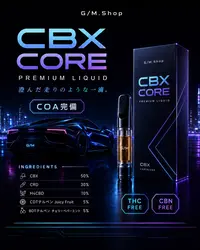
- CBX CORE Premium VAPE Liquid
- ¥7,920 ~ ¥15,180
- Go to product details for MamaWako (H4CBH(k) 70% CBX 10%) VAPE liquid.

- MamaWako (H4CBH(k) 70% CBX 10%) VAPE Liquid
- ¥8,800 ~ ¥22,330
- Go to product details for MDMA × MM Analog [For Research Use]

- MDMA × MM Analog [For Research Use]
- ¥12,100
- HHBD 60% VAPE Liquid product details

- HHBD 60% VAPE liquid
- ¥8,690 ~ ¥18,040